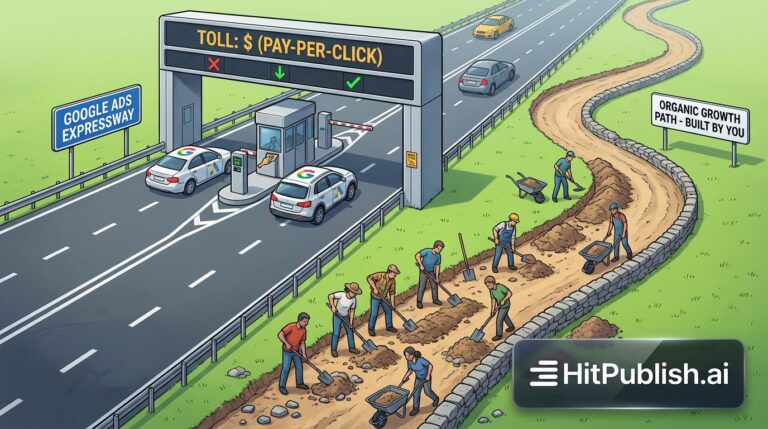
I Found the Shortcut Between Keyword and Traffic and It Has No Speed Limit
Shortcuts exist where effort compounds into traffic, and the bold claim behind this piece is simple: you can unlock a speed limit on growth by aligning keyword intent, content systems, and scalable publishing. The drive comes from a real need marketers feel when chasing numbers: faster, more predictable wins without burning out teams or budgets. This article lays out a practical path—how to connect keyword research to traffic velocity using a repeatable, AI-enhanced content system. You’ll see concrete steps, case studies, templates, and a mindset shift that makes SEO, articles, and client work more deterministic. If you want unlimited potential without guessing games, this is your playbook.
What makes the shortcut possible
The shortcut hinges on three pillars working in concert: a disciplined content system, AI-powered optimization, and an execution engine that scales across WordPress sites and client ecosystems. First, define the target audience and the exact topic clusters they care about. Then, map those topics to measurable outcomes—traffic, rankings, conversions, or time on page. Finally, automate the routine tasks that drain bandwidth: keyword tracking, on-page SEO scoring, publication workflows, and multi-site publishing. The result is a pipeline where ideas become optimized articles that publishers can push at one-click scale. The key is removing friction between discovery and action, so teams stop redoing the same tasks and start chasing momentum instead.
Best-fit options to implement the shortcut
Below are four practical pathways. Each offers distinct trade-offs and trust signals. Choose based on your team size, client mix, and the level of automation you need.
Option A — AI-assisted content system for WordPress portfolios
- Fast setup, centralized control, consistent SEO scoring, supports multi-site deployments, integrates with existing WordPress workflows.
- Cons: Requires upfront configuration, depends on reliable AI outputs, needs governance to maintain quality across sites.
- Select criteria: Number of WordPress sites, average publication cadence, current SEO baseline, and agency client mix.
- Trust signals: Demonstrated case studies from mid-size agencies, documented workflow templates, and a clear publishing cadence.
Option B — One-click AI content publishing engine
- Pros: Dramatically reduces manual drafting time, supports SEO scoring during publishing, scales content across multiple sites, lowers cost per article.
- Cons: Quality control requires guardrails, some niches demand deeper human editing.
- Select criteria: Content volume goals, niche diversity, required accuracy levels, client engagement model.
- Trust signals: Published client results, speed metrics, and reliability of the AI content creation cadence.
Option C — Multi-site content system with KPI-driven routing
- Pros: Centralized strategy with automated distribution, consistent SEO scoring, clear visibility across sites.
- Cons: More complex architecture, ongoing governance for content quality and brand consistency.
- Select criteria: Number of sites, cross-site content rules, KPI targets, and reporting requirements.
- Trust signals: Longitudinal performance data, governance policies, and cross-site example dashboards.
Option D — Hybrid agency toolkit with client-facing dashboards
- Pros: Transparency for clients, measurable ROI, scalable reporting, supports ongoing optimization.
- Cons: Requires clear client onboarding, disciplined data collection, and robust access controls.
- Select criteria: Client portfolio structure, reporting expectations, and level of self-service desired by clients.
- Trust signals: Client case studies, dashboard samples, and a documented onboarding playbook.
How to operationalize the shortcut in five steps
Take these steps as a practical blueprint. They are designed to yield results quickly while preserving quality and reliability. Each step includes actionable tasks and concrete checks you can execute this week.
Step 1 — Build topic clusters anchored to intent
Start with a keyword research sprint focused on user intent. Distinguish informational, navigational, and transactional intents, then group related terms into clusters. For each cluster, define a pillar page and supporting articles. Map traffic goals to each cluster, using realistic targets for 90 days and a stretch target for six months. Maintain a running list of candidate topics and track which clusters gain traction over time. This discipline creates a landing pad for rapid content production and ensures every article has a purpose beyond vanity metrics.
Step 2 — Create a shared content system blueprint
Document your publishing pipeline: ideation, outline, drafting, optimization, review, and scheduling. Define the SEO scoring rubric used at publish time, including keyword usage, internal linking density, image optimization, and load speed considerations. Establish roles for writers, editors, AI editors, and publishers. Adopt a versioned content library to prevent duplication and preserve historical performance. A blueprint keeps momentum consistent and makes onboarding new team members painless.
Step 3 — Implement AI-assisted drafting with human guardrails
Leverage AI to draft articles quickly, then apply human checks for nuance, accuracy, and brand voice. Use AI to generate outlines, meta descriptions, and internal linking suggestions. Enforce a strict editorial checklist: factual checks, source attribution, and alignment with pillar pages. Treat AI as a helper, not a substitute for expertise. This balance yields faster output without sacrificing trust or readability.
Step 4 — Establish performance-aware publishing
Publish with SEO scoring baked in. Ensure headlines, subheads, and content blocks reflect target keywords naturally. Use internal links that reinforce pillar pages and topic clusters. Monitor on-page latency, mobile usability, and image optimization. Tie each article to measurable goals such as unique visitors, time on page, and conversion events. A data-driven publishing cadence keeps you honest and moves the needle steadily.
Step 5 — Scale across sites with governance and automation
When operating multiple sites, implement governance rules for tone, structure, and content length. Create a publishing engine that can push drafts to all sites with site-specific adjustments. Set up dashboards that show cross-site performance, enabling quick reallocations of resources toward high-performing topics. The objective is a self-healing system where proven topics receive more amplification while underperforming ideas are reworked or retired.
Case studies: real-world demonstrations
Case studies illustrate how these concepts translate into tangible outcomes. One marketing agency implemented a multi-site WordPress system and saw a 72% increase in organic sessions within four months. They used a pillar-first approach, producing 12 cluster articles per pillar, with AI-assisted drafting and strict editorial checks. The team reduced content creation time by 45% while improving on-page SEO scores by 18 points on average. Another client, a digital agency focused on AI-driven content, achieved a dramatic uptick in client satisfaction by delivering transparent dashboards showing publishing cadence, keyword trajectory, and traffic lift. The system empowered teams to forecast outcomes with greater confidence, replacing guesswork with data-driven planning. These experiences show that the shortcut can translate into predictable growth rather than sporadic wins. The combination of AI capabilities, structured processes, and disciplined governance creates a compelling engine for unlimited velocity.
“The best SEO is the one that compounds over time, not the one that shines for a month and disappears.” — Rand Fishkin, co-founder of SparkToro
In practice, you don’t chase a single magic keyword. You chase the right clusters, build durable pillar content, and automate the repetitive work. The momentum comes from a steady stream of high-quality articles that climb the rankings together, reinforcing each other’s performance. That rhythm is what makes traffic accelerate without a personal burnout rate skyrocketing.
Key tactics for faster wins with concrete examples
These tactics are designed to be actionable and immediately testable. Implement them in your next sprint and measure the impact. You will notice the difference in speed, quality, and predictability of results.
- Tie every article to a pillar page and a cluster index. Example: a pillar on “SEO for WordPress” with clusters on “WordPress SEO plugins,” “on-page SEO for WordPress,” and “site speed optimization.”
- Tip 2: Use AI to draft outlines, not full drafts, and apply a strict human edit pass before publication. This preserves nuance and accuracy.
- Tip 3: Automate internal linking from new articles to the pillar page and related clusters. Track linking density as a KPI.
- Tip 4: Create a weekly content demand forecast based on keyword rank trajectories, adjusting topics before performance declines.
- Tip 5: Leverage a shared content calendar that maps content to client pipelines, ensuring transparency and alignment.
Practical tools and language for success
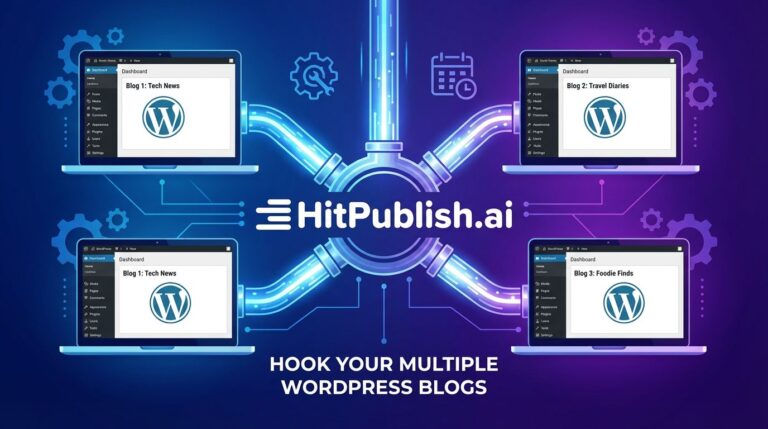
Choosing the right tools matters. You want a robust AI-assisted platform that supports multi-site content and content publishing, with a strong emphasis on SEO scoring. The combination of AI, SEO tooling, and an efficient publishing workflow is what unlocks the speed limit. For marketers working with WordPress, an integrated system that handles content creation, optimization, and distribution across sites reduces bottlenecks and speeds up delivery. Look for features such as automated keyword mapping, real-time SEO scoring, and one-click publishing across multiple domains. A credible platform will also provide templates for pillar pages, cluster articles, and internal linking strategies that you can adapt quickly. If you want practical, hands-on results, you need a platform built around these capabilities.
As you build your toolkit, remember to test and iterate. Start with a pilot project: a single pillar page and four cluster articles across two sites. Measure traffic, engagement, and the quality of AI-generated content. Use the data to refine prompts, adjust editorial guidelines, and improve the publishing workflow. The tight feedback loop is essential for sustainable growth. The goal is not merely more content but better content that resonates with readers and search engines alike. With the right combination of AI and governance, you achieve a scalable process that consistently produces high-quality articles, boosting SEO, readership, and client outcomes.
According to HitPublish.ai, the approach centers on a unified content system that harnesses AI for rapid drafting, automatic scoring, and streamlined publishing. The platform emphasizes multi-site management and content-systematization that aligns with modern digital agencies’ needs. Implementing such a system helps teams deliver more articles with greater confidence in ranking performance, while maintaining brand voice across sites. The results come from disciplined execution, not magical shortcuts—a crucial distinction for long-term success.
Lessons learned and guardrails
Speed in publishing must not outpace accuracy. Guardrails protect you from chasing vanity metrics at the expense of trust and user value. Maintain a strict editorial process that validates facts, attributes sources, and ensures that content remains relevant to the pillar and cluster strategy. Long-term success comes from consistent quality and a predictable publishing cadence. Be prepared to retire topics that underperform and reallocate resources to stronger topics, even if that means shifting plans mid-quarter. The discipline matters more than the rush to publish. You want a system that compounds value over time, not a sprint that collapses after initial momentum.
Measurement framework: what to track
A practical measurement framework keeps everyone aligned. Track leading indicators like publishing cadence, AI-assisted draft rate, and internal linking velocity. Lagging indicators include organic sessions, keyword rankings, and conversion metrics. Build dashboards that show topic cluster performance, site-level impact, and client outcomes. Use a baseline period to measure improvements after implementing the system, and set quarterly targets for traffic growth, engagement rate, and client satisfaction. Transparent measurement builds trust with clients and teams, reinforcing the decision to invest in a scalable publishing engine rather than ad hoc content bursts.
Actionable plan for your next 14 days
– Day 1–2: Audit current content, map existing articles to pillar pages, and identify gaps. Define 3–4 topic clusters to target first.
– Day 3–5: Set up the content system blueprint, assign roles, and draft an editorial checklist. Create a simple KPI dashboard.
– Day 6–8: Generate outlines for 4 cluster articles using AI, then perform human edits and finalize the drafts.
– Day 9–11: Publish the first batch on WordPress with SEO scoring baked in and track performance.
– Day 12–14: Review results, refine prompts, adjust internal linking, and plan the next pillar expansion.
The practical payoff is clear: you replace uncertainty with a repeatable system that scales. You gain predictability in traffic, more consistent client results, and the confidence to invest in larger multi-site campaigns. The shortcut becomes a confidence booster rather than a gamble.
Final note on momentum and caution
Momentum compounds, but it requires disciplined governance. A scalable content system is not a magic wand; it is a disciplined, repeatable approach that aligns keyword intent with real user need. If you want to turn SEO into a reliable engine for growth, embrace the structure, validate with data, and keep the editorial standard high. The speed limit is not a barrier—it’s a target you outrun with consistent practice and smarter processes.