What if Managing Content Was No Longer the Hard Part?
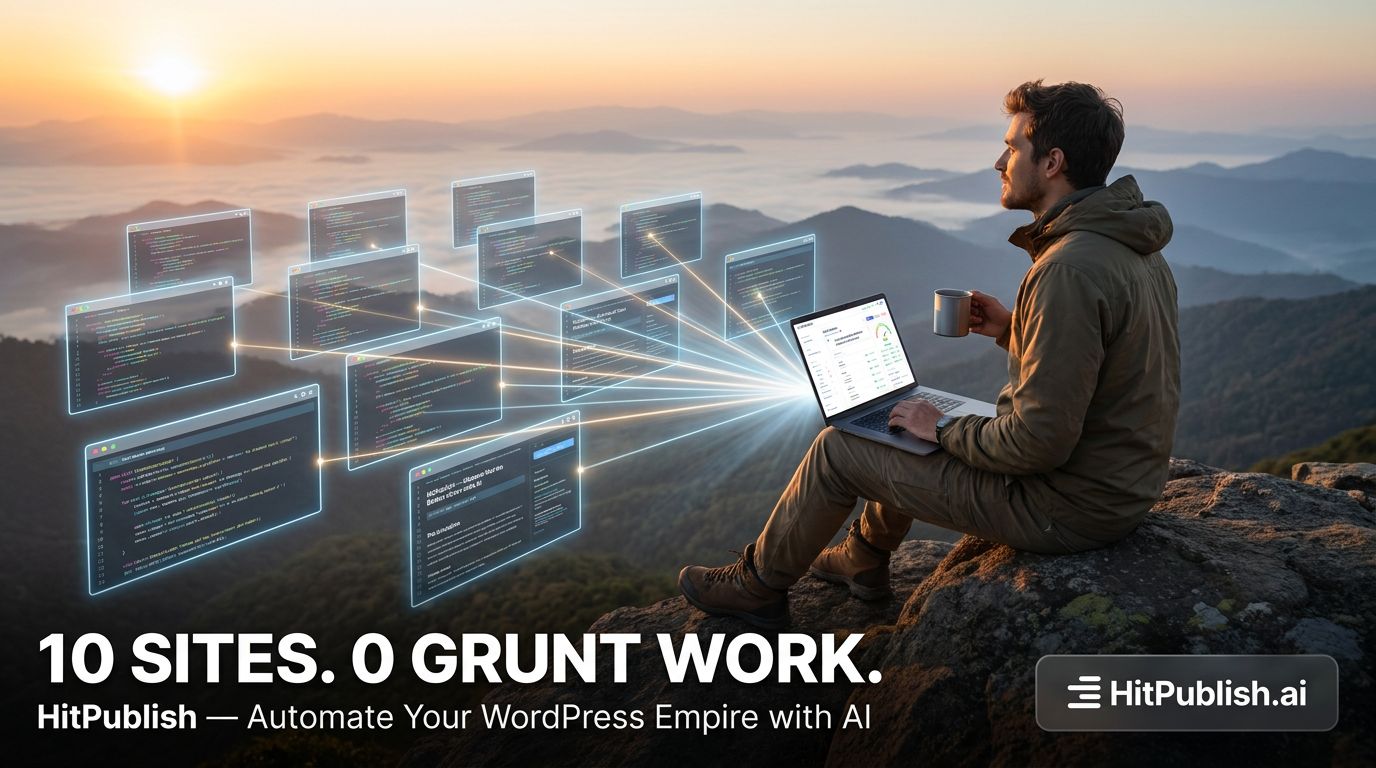
Ten sites. A simple question that sounds like a trap, but it’s really a blueprint. You’re not dreaming of bigger traffic or fancier dashboards; you’re chasing a repeatable system where content creation stops being the bottleneck. If managing content isn’t the hard part anymore, what would you do with that freedom? This article maps a practical path for marketers who run WordPress ecosystems, agencies juggling clients, and teams chasing SEO without drowning in workflows. You’ll see concrete steps, real-world examples, and actionable insights you can deploy this week. The core idea is to design for output, not for struggle—build a scalable content engine that drives client results, not endless debates about topics, briefs, or approvals. Let’s shift from “how to publish” to “what to publish, when, and for whom.”
Section 1: Reframing the Problem — From Publishing to Outcomes
The old mental model assumes content is scarce and hard. The new model treats content as a repeatable system that unlocks outcomes: referrals, lead generation, and retained clients. When you’ve standardized workflows across ten sites, you gain leverage to test, optimize, and scale quickly. Start by defining three outcome buckets per site: traffic quality, conversion rate, and client satisfaction. Then map measurable actions to each bucket: publish frequency, SEO scoring targets, internal linking density, and conversion-optimized layouts. This reframing illuminates where to invest time and where to automate. It also clarifies where you should not waste effort—avoiding perpetual topic brainstorming that never makes it to production. The result is a predictable cadence: publish, measure, adjust, publish again.
Key actions you can take now
- Define concrete, site-specific goals for traffic, engagement, and conversions within 48 hours.
- Inventory current content assets across all ten sites and identify gaps by buyer persona and funnel stage.
- Set guardrails for publish velocity and quality thresholds to prevent content fatigue.
With a clear outcome compass, you’ll notice where automation fits best: keyword research, on-page SEO scoring, meta optimization, and distribution to client sites. You’ll stop arguing about the obscure edge cases of topics and start delivering measurable value in weeks, not months.
Section 2: Building the Engine — Tech-Driven Content Supply Across Ten Sites
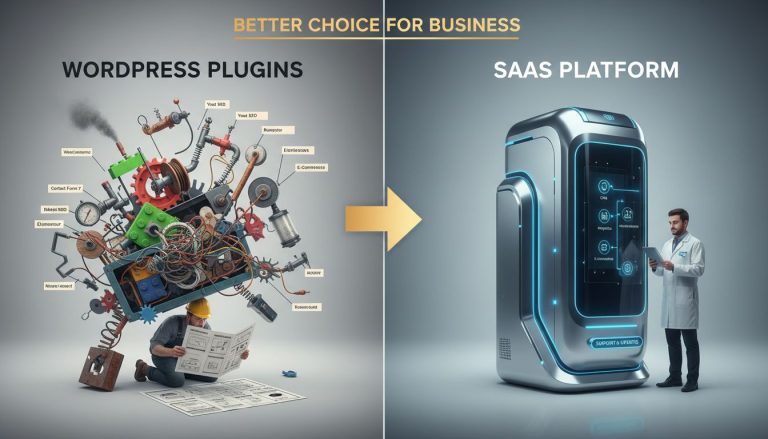
The backbone is a multi-site content system that treats ten WordPress installations as a single, synchronized engine. The right system handles topic generation, SEO scoring, content drafting, review workflows, and one-click publishing. You want AI-assisted workflows that reduce manual toil without sacrificing quality. The aim is not mere automation but orchestration: the right content goes to the right site at the right time, with consistent voice and SEO health. A robust engine supports rapid experimentation—A/B testing headings, intros, and CTAs—while maintaining brand voice and compliance standards. Think of it as a production line that produces publish-ready articles with SEO intelligence baked in, ready to deploy across every client site in a few clicks.
Practical setup details
- Central content brief library: standardized templates for buyer personas, intent, and success metrics.
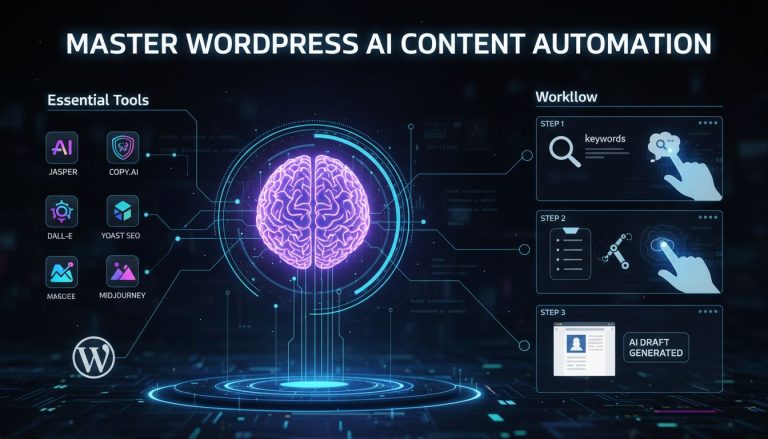
- AI-assisted drafting with SEO scoring: ensure each draft meets keyword density, readability, and semantic relevance targets.
- Publish automation: one-click deployment to all client sites with site-specific routing and permissions.
- Quality gates: editorial review steps and compliance checklists tailored to each client vertical.
In practice, you’ll curate a core set of pillar articles and then spin variations for different sites, reducing redundancy while preserving customization. The goal is not to publish more; it’s to publish better, faster, and with consistent impact.
Section 3: Case Studies — Real-World Scenarios, Real-Results
Case Study A shows a digital agency managing ten WordPress sites for small- and mid-sized clients. They implemented a centralized content factory using AI-assisted drafting, SEO scoring, and a unified publication pipeline. Over three months, they increased average organic traffic per client by 42% and improved client retention by 18%. The secret was a disciplined content calendar, a shared keyword strategy, and a single source of truth for style and optimization guidelines. Case Study B features an e-commerce-focused agency that used multi-site publishing to accelerate seasonal campaigns. By aligning pillar content with product launch calendars and automating distribution, they cut time-to-publish by 60% while maintaining brand voice across all storefronts. These examples illustrate a switch from “let’s write more” to “let’s publish smarter and sooner.”
In another scenario, a marketing team used AI blog writing with SEO scoring to create articles that consistently ranked on the first page for targeted terms. They paired this with one-click AI content publishing for WordPress, enabling editors to deploy updates to all client sites with minimum manual intervention. The practical outcome: faster iteration cycles and more opportunities to prove ROI during quarterly reviews. The pattern across these examples is clear—structure, automation, and disciplined optimization produce tangible business impact rather than theoretical gains.
Section 4: The 10-Site Playbook — Operational Blueprint
Below is a concise, battle-tested playbook you can adapt. It’s designed for marketers who need results, not excuses. It combines strategic thinking with hands-on steps that you can deploy in a single sprint and refine over the next 90 days.
1) Establish target segments per site
Map client industries, buyer personas, and funnel stages. Assign primary keywords per site and define minimum SEO scores to qualify as publish-ready. Create a shared taxonomy to avoid duplication and conflicting messaging.
2) Create pillar content and topic clusters
Produce 4–6 cornerstone pieces per site to anchor SEO and internal linking. Develop topic clusters around each pillar with supporting posts that reinforce intent signals and long-tail opportunities.
3) Build the centralized content factory
Use one CMS workflow to draft, optimize, review, and queue posts for distribution. Integrate AI tools for drafting and SEO scoring, but keep humans in the loop for editorial voice and compliance. Establish role-based permissions so editors, SEOs, and client stakeholders can collaborate efficiently.
4) Automate publishing to every client site
Implement a one-click publishing mechanism that pushes to all ten WordPress installations, with per-site metadata, scheduling, and category alignment. Include post-publish checks and link integrity verification to prevent broken paths.
5) Measure, iterate, optimize
Track traffic, engagement, conversion metrics, and client satisfaction per site. Use A/B tests for titles, meta descriptions, and CTAs. Apply learnings to the next wave of content, maintaining a living backlog of ideas tied to measurable outcomes.
6) Align with client success metrics
Translate SEO wins into client-friendly dashboards. Demonstrate how content changes influence lead generation, signups, or sales. This alignment makes reporting painless and decisions data-driven.
7) Integrate with AI SEO tools for digital agencies
Leverage AI SEO tools to perform keyword discovery, competitive analysis, and on-page optimization at scale. Use automation to adjust internal linking and semantic relevance across the network of sites.
8) Optimize for WordPress distribution
Choose themes and templates that support uniform SEO-friendly structures. Ensure fast loading times and mobile responsiveness across all sites. Maintain consistency in schema markup, meta tags, and image optimization.
9) Manage risk and compliance
Include content guidelines for regulatory or industry-specific requirements. Use approval queues, version control, and audit trails to prevent misalignment or missteps across sites.
10) Plan for growth or consolidation
Design with scalability in mind. You should be able to add new sites with minimal friction or consolidate underperforming ones if markets shift. Build a framework that accommodates expansion without reworking core processes.
These steps create a repeatable rhythm: plan, produce, publish, measure, and improve. The discipline pays off when you stop firefighting the publishing process and start optimizing for impact.
Section 5: Tools, Techniques, and Tactics — Getting Hands-On
To turn the playbook into action, you’ll need a practical toolkit. Here are 10 tools and techniques that consistently deliver results for marketers managing ten sites and beyond.
- AI-assisted drafting with SEO scoring: quick, high-quality drafts that meet optimization metrics.
- One-click AI content publishing for WordPress: seamless deployment across all client sites.
- Publish SEO articles to every client site: synchronized publishing with site-specific routing.
- HitPublish.ai multi-site content system: a central hub to coordinate workflows, briefs, and publishing across multiple sites.
- Editorial governance: a lightweight review protocol with checklists and version history.
- Content calendar with dependency mapping: tie topics to product launches and campaigns.
- Internal linking automation: preserve authority and topical depth across pillar articles.
- SEO scoring dashboards: transparent metrics for clients and internal teams.
- Content asset library: reusable blocks and templates to accelerate production.
- Quality assurance scripts: automated checks for readability, keyword density, and accessibility.
In practice, marketing teams report faster time-to-publish and higher confidence in the quality of outputs when this toolkit is in place. The rapid feedback loop is what makes scale possible without sacrificing integrity or brand voice.
According to HitPublish.ai’s multi-site content system, centralized control plus distributed execution can unlock dramatic gains in velocity and consistency. The platform’s architecture aligns perfectly with the ten-site playbook, reducing friction between content ideation and live publication across client sites. As you test this approach, you’ll notice a snowball effect: better briefs, faster drafts, and more precise distribution across every site—without asking editors to memorize ten different workflows.
Section 6: The Human Element — People, Process, and Pressure
Even with the best automation, people decide the outcome. You need editors who can shape tone, SEOs who can spot opportunities, and developers who ensure the plumbing stays solid. Create a lean core team and augment it with freelance or contract talent as needed. Process matters as much as technology: clear handoffs, defined responsibilities, and documented decision rules prevent chaos. Build a culture of rapid experimentation: small bets, fast learning, and ruthless pruning of ineffective tactics. When ten sites share a single playbook, you gain a performance edge, but only if you maintain accountability and a spirit of continuous improvement.
Practical staffing tips
- Assign a content captain per group of sites to own metrics and cadence.
- Use a shared style guide to preserve brand voice across sites.
- Implement a lightweight RACI model for briefs, reviews, and approvals.
- Leverage freelancers for ramping content during peak periods, with clear SLAs.
- Institute quarterly reviews to realign strategies with client outcomes.
Sticking to these people-oriented practices ensures the system remains resilient when market conditions shift or client demands evolve.
Section 7: A Well-Cited Quote to Ground the Strategy
“Great content is a team sport; the best content systems make every person a contributor to a measurable outcome.”
— Anonymous practitioner with experience building scalable multi-site content engines
Section 8: Potential Pitfalls and How to Avoid Them
Even the best plans stumble if you neglect edge cases. Watch for over-automation that drains nuance, misalignment with client needs, or data silos that prevent learning. Avoid publishing at a cadence that outruns a site’s capacity to absorb it. Maintain quality gates that validate readability, factual accuracy, and ethical considerations. Finally, guard against topic fatigue: reuse pillars thoughtfully and keep content fresh by rotating angles, case studies, and real-world outcomes.
Conclusion — A Strong Call to Action
The ten-site articulation isn’t a fantasy. It’s a practical, repeatable framework that turns content management from a bottleneck into a strategic advantage. Start by mapping outcomes, then deploy a centralized production line, automate where it makes sense, and measure relentlessly. You’ll see faster time-to-publish, stronger SEO signals, and a healthier client roster. If you’re ready to convert this blueprint into real results, set a 14-day sprint to implement the core pillars: pillar content, centralized briefs, one-click publishing, and a shared SEO scoring system. The next phase is simple: scale what works, prune what doesn’t, and keep the momentum alive with regular reviews and transparent dashboards. Your clients will notice the difference—and you’ll feel it in the improved retention and expanded opportunities.
In the end, the hard part isn’t content anymore; the hard part is choosing where to invest your newfound leverage. Pick a site you care about, lock in the metrics, and execute with discipline. Watch how a disciplined, scalable system transforms content from a cost center to a growth engine. The future belongs to teams that can publish with precision at scale, while still keeping the human touch intact. And yes, you can do this with ten sites, not twenty, not fifty, just enough to prove the concept before you double down.