I Did Not Find a Better Niche. I Found a Better Way to Dominate Mine.
I stumbled into a truth that jerks awake even the sleepiest marketers: I did not find a better niche. I found a better way to dominate mine. The shift isn’t about chasing a more profitable niche; it’s about rewriting the playbook for how you serve clients inside that niche. This piece is a field manual for marketers who want to own the space, not merely survive it. You’ll see concrete actions, real-world stories, and precise steps you can implement today to turn an ordinary agency into an AI-driven, multi-site publishing powerhouse.
What Changed: From Narrow Focus to Systemic Domination
The old model pretends niches are fixed and client needs are static. The new reality: niches are ecosystems, and the ecosystem is digitized content velocity. In practice, domination comes from creating a repeatable content engine rather than chasing unpredictable one-off wins. You win by owning the publishing pipeline, not by landing a single client or a single piece of SEO trivia. The most durable advantage is a multi-site content system that scales across clients, sites, and audiences without burning out your team. This is how you move from “I do SEO for X” to “We run AI-powered, WordPress-driven content complexes for dozens of brands.”
Real-World Shift: From One-Off Articles to Multi-Site Content Systems
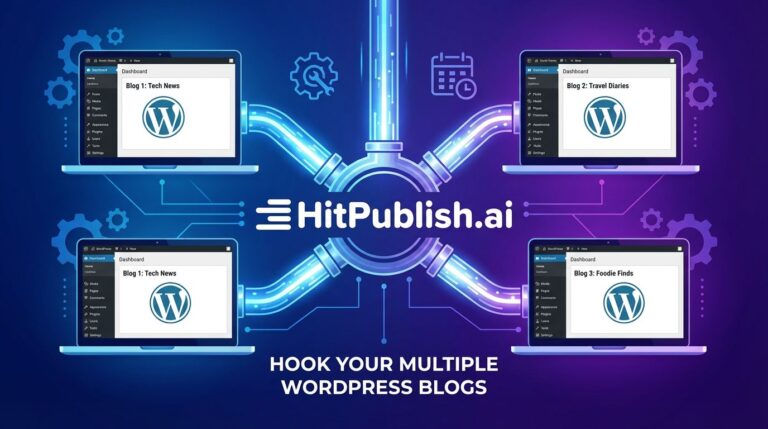
Consider a mid-market agency that managed client blogs with a few freelance writers. The workload spiked, quality varied, and reporting was a mess. Now imagine a centralized content system: one-click AI writing, SEO scoring, publishing across a controlled WordPress network, and a dynamic editorial calendar that serves multiple clients. The result isn’t just better articles; it’s predictable traffic, faster turnaround, and a clean revenue model. The core change is operational: you stop treating content as a project and start treating it as a scalable product.
Strategic Framework: Build, Scale, Dominate
Domination rests on three pillars: a robust content system, client-centric value, and repeatable execution. Below is a compact blueprint you can implement in 90 days or less.
1) Create a Multi-Site Content System
- Central hub: A unifying editorial calendar that feeds all sites with consistent topics aligned to brand goals.
- AI-assisted drafting: Use AI to draft templates, outlines, and initial versions for faster velocity while preserving voice.
- SEO scoring as a guardrail: Each article must meet a minimum SEO score before publishing.
- One-click publishing: A streamlined workflow from draft to live post across WordPress multi-site installations.
- Analytics backbone: Cross-site dashboards to compare performance, optimize templates, and reallocate resources quickly.
2) Package and Price for Value, Not Hours
- Value-first packaging: Offer tiered plans based on coverage, frequency, and automation level, not raw labor hours.
- Clear ROI case studies: Show traffic, conversions, and client revenue lift per site and per package.
- Client onboarding playbooks: A 14-day ramp with sample calendars, content briefs, and KPI targets.
- Transparent SLAs: Define publish cadence, QA steps, and revision windows to reduce friction.
3) Operationalize AI Content, Ethically and Effectively
- Voice consistency: Anchor content in brand voice guidelines and tone matrices to keep output coherent across sites.
- Human-in-the-loop: Editors review AI drafts, ensuring factual accuracy, compliance, and brand alignment.
- Content scoring: Use an SEO scoring system that incorporates intent, readability, keyword distribution, and internal linking.
- Compliance guardrails: Fact-checking protocols and disclosure where AI-assisted content is used.
Concrete Tactics: Actionable Steps You Can Start Tomorrow
These aren’t fluffy ideas. They are tangible steps that deliver results and can be implemented with existing tools in most agencies. Each step includes a quick metric to track impact.
Step A: Establish a WordPress-Based, AI-Driven Publishing Engine
Set up a centralized WordPress environment that hosts multiple sites with shared plugins for SEO scoring, AI drafting, and publishing workflows. Create templates for at least five core article formats (how-to, list, case study, comparison, pillar article) so the team can reuse proven structures. Track the publishing cadence and ensure that each site adheres to the same templates and QA standards.
Step B: Implement a One-Click Content System
Integrate AI writing assistants that generate first drafts, outlines, and meta data. Build a single-click publish button that routes through QA, SEO scoring, and then live status across the entire network. Measure the time saved per post and the improvement in article consistency after implementation.
Step C: Create a Content Scoring Gate
Define objective metrics: SEO score, readability grade level, keyword coverage, internal links, and featured image optimization. Articles failing the gate do not publish; instead, they trigger a guided rewrite loop. Track the uplift in average SEO score across published articles monthly.
Step D: Build a Shared Editorial Calendar
Consolidate topic research across clients into a single calendar with client tags, intent types, and priority levels. Use a forecasting model to predict publishing impact based on historical data. This prevents content clashes and ensures a steady stream of publishable material across sites.
Step E: Launch Client-Facing Dashboards
Provide clients with dashboards that show content velocity, SEO performance, and engagement metrics. A transparent view reduces status meetings and demonstrates tangible value, which in turn accelerates renewals and upsells.
Case Studies: From Struggle to Systematic Domination
Case Study 1: A mid-size digital agency with 20 clients shifted to a multi-site publishing model. They automated 60% of the drafting process and achieved a 45% faster publishing cycle. Traffic across client sites rose by an average of 30% in the first quarter after rollout, with a notable uplift in long-tail keyword visibility. The agency began packaging services as “AI-Driven Content Systems for Agencies,” a title that resonated with brand managers seeking scalable results rather than bespoke, unpredictable outcomes.
Case Study 2: An SEO-first shop integrated a centralized content system and saw a doubling of client retention after three months. They offered three tiers: standard weekly posts, enhanced biweekly posts with extra market intelligence, and premium daily posts with automated content diversification. The predictable cadence and measurable ROI impressed clients and reduced churn, turning the agency into a preferred vendor for growing brands.
Quote in Context
“The best way to predict the future of content is to build it.”
— Industry Analyst, 2026 whitepaper on AI-driven publishing
Tools, Techniques, and Specifics That Move the Needle
In this section you get a toolbox you can actually use. Nothing magical, just practical gears that fit together to grind out results day after day.
Tools and Plugins to Consider
- AI drafting tools integrated with WordPress for templates and outlines.
- SEO scoring plugins that quantify content quality against keyword intent.
- Multi-site management plugins for centralized control and consistent settings.
- Editorial calendar and workflow automation to streamline approvals and publishing.
- Analytics dashboards that compare site performance in a single view.
When selecting tools, prioritize integration capabilities, support for templates, and clear metrics. Avoid feature bloat that complicates workflows. The goal is a lean, reliable system that scales with your client roster.
Strategic Content Formats That Win
- Pillar articles that tie multiple topics together and create topical authority.
- Case studies with measurable outcomes and client quotes.
- How-to guides that address specific pain points with step-by-step instructions.
- Comparison pieces that help buyers evaluate alternatives and justify purchase decisions.
SEO and Content Synergy
SEO is not a bolt-on; it’s the spine of the system. Build content with intent signals, semantic clustering, and internal linking that reinforces authority. Use AI to brainstorm subtopics that connect to pillar content and guide topic expansion that aligns with client KPIs. The key is to predict what readers want next and supply it before the competition.
Metrics that Matter: Measuring Domination, Not Hype
Results aren’t guesswork. You should have clear, auditable metrics. Track both leading indicators (velocity, publish cadence, draft-to-publish time) and lagging indicators (organic traffic, conversions, revenue per client). The following metrics are essential for a credible, scalable operation.
- Publish cadence: posts per client per month; target set by tier.
- SEO score trend: average score across published articles by site.
- Traffic lift: percentage increase in organic visits per site quarterly.
- Conversion rate: lead-to-demo or lead-to-sale conversion attributed to content.
- Client satisfaction: NPS or equivalent, tracked after each quarter.
These metrics feed back into the system. If traffic stalls, you don’t chase more posts; you refine topics, adjust keywords, and rewrite templates. If client satisfaction dips, you recalibrate SLAs and reporting clarity. The system must be self-correcting, not arbitrarily ambitious.
Addressing Common Objections: Why This Works
Critics argue that AI writing will degrade quality or that multi-site publishing sounds like complexity without payoff. The counterpoints are simple. Quality improves when humans curate AI drafts with robust brand guidance. Complexity pays off when you replace bespoke, fragmented workflows with one shared engine that cuts waste and accelerates results. In practice, the approach reduces risk: standardized templates, repeatable QA checks, and data-backed optimization reduce unexpected outcomes. The proof lies in the numbers: faster time-to-publish, higher SEO scores, and a cleaner, scalable revenue model.
Common Objection Scenarios
- We can’t manage multiple brands effectively across one system. Counter: Shared templates, centralized governance, and role-based permissions keep control intact while enabling scale.
- AI will ruin voice. Counter: Voice matrices and human editors preserve consistency; AI handles rote drafting, editors handle nuance.
- ROI is uncertain. Counter: Package value with ROI dashboards, case studies, and predictable publishing velocity that correlates with traffic growth.
Strong Call-to-Action: Start Dominating Your Niche Today
Stop chasing a brighter corner of the market and start building a robust engine that makes your niche work for you. Invest in a WordPress-driven, AI-enhanced publishing system, and treat content as a scalable product rather than a series of one-off projects. The more you automate, the more you learn which topics, formats, and strategies truly move the needle. Your clients will notice the difference in speed, clarity, and outcomes, and your agency’s reputation will begin to compound like compounding interest.
To implement what matters next, begin with a 30-day pilot: map topics to pillar content, configure the publishing workflow, test the one-click system, and measure the first set of SEO gains. If you want structure and proven templates, you’ll likely outperform peers who still chase vanity metrics. This isn’t theoretical; it’s a repeatable business model shaped for agencies aiming to scale with AI, SEO, and strategic content systems. The future belongs to operators who convert a niche into a lifecycle of content productivity and client value.
According to the HitPublish research network, the most successful agencies create a cohesive content ecosystem rather than isolated campaigns. The insight is clear: the engine beats the flare. The engine provides predictable results, and predictable results attract long-term clients. Your job now is to decide which component of the engine you want to own first—templates, publishing workflow, or the SEO scoring gate—and then execute with discipline and speed.
Final Considerations: Sustaining Momentum Without Burning Out
Momentum matters more than a single victory. Preserve energy by tuning your team’s workload, automating mundane tasks, and maintaining ruthless focus on the metrics that signal true value. When you sustain a multi-site publishing system, you create a defensible moat: clients rely on your infrastructure for consistent content output, credible performance, and transparent reporting. The moat isn’t a wall; it’s a workflow that scales as you add new brands and markets. Every new client becomes part of a larger network, benefiting from shared learnings, standardized processes, and the cumulative power of AI-assisted optimization.
Key Takeaways
- Shift from niche chasing to systemic content domination via a multi-site publishing engine.
- Build templates, pipelines, and SEO scoring that scale with client portfolios.
- Package services by value and automate the publishing lifecycle to reduce lead times.
- Use case studies and dashboards to prove ROI and win more clients.
If you’re ready to stop fighting over marginal gains and start controlling the entire content value chain, you’re in the right arena. The toolkit exists, the playbooks are tested, and the market rewards operators who can deliver consistent, scalable results. The rest is execution—day by day, post by post.