The Highest Ranking You Can Achieve Is in Your Reader’s Mind
Your best ranking isn’t a position on a page; it’s a memory your reader carries long after the scroll ends. When a story, a tip, or a practical result lingers, the visitor returns, shares, and converts without shouting for attention. This piece builds a practical roadmap for marketers who want their content to plant durable impressions, not just chase fleeting clicks. You’ll find a blend of psychology, concrete steps, and tested tactics that fit real-world teams, tools, and timelines. We’ll walk through a reader-first approach that aligns AI-assisted creation with human judgment, ensuring your site becomes a trusted resource that earns repeat visits, referrals, and sustained traffic. The core idea is simple: the highest ranking you can achieve is in your reader’s mind, and every content decision should contribute to that mental footprint. We’ll blend theories with exercises, and case-informed insights with actionable playbooks you can deploy this week. By the end, you’ll have a scalable framework to measure memory, trust, and practical outcomes alongside traditional SEO metrics.
Harmonizing Mindsets: Why Memory Trumps Momentary Metrics
Memory builds when content answers real questions with clear structure, credible proofs, and tangible outcomes. The brain loves stories because they create patterns, anticipation, and emotional resonance. Yet memory isn’t a single spark; it’s a network of cues: a promise stated upfront, a problem reframed in a new light, a test you can replicate, and a resource you can reuse. Marketers who master this network don’t chase algorithm whims; they design experiences that guide readers through a reliable sequence of insight, validation, and practical steps. To begin, commit to three shifts: from keyword volume to reader intent, from flashy hooks to dependable outcomes, and from generic optimization to goal-aligned storytelling. These shifts aren’t abstract; they reshape every paragraph, snippet, and call-to-action you publish.
Section I: The reader-first framework in practice
1) Define a clear reader promise. Begin every piece by articulating what the reader will gain. A precise promise reduces cognitive load and signals value. For example: “Learn a repeatable workflow to produce 80% more publish-ready content in half the time.” The promise should be measurable, not merely aspirational, so you can close the loop with proof.
2) Align content with real-world tasks. People read for a reason: to do something better tomorrow. Map the article to concrete tasks—templates, checklists, or scripts—that the reader can adopt immediately. A marketing piece that teaches how to automate a portion of SEO while preserving human judgment is inherently more trustworthy than a glossy overview of optimization trends.
3) Integrate AI strategically. AI should augment, not replace, judgment. Use AI to draft initial frames, generate options, and surface data, but keep the human editor’s touch for tone, accuracy, and empathy. In practice, this means setting guardrails, such as “AI drafts must be fact-checked and aligned to our reader promise.” The goal is speed with reliability, not speed at the expense of clarity.
4) Optimize for search and readability. Structure matters as much as keywords. Subheads that promise outcomes, short paragraphs, and readable sentences boost comprehension and memory. A well-paced piece with actionable sections, case studies, and summaries invites readers to internalize the approach rather than skim.
Two practical templates you can reuse
Template A: The Promise-Problem-Plan framework. State the promise, describe the problem in reader-friendly terms, and present a simple plan with steps. Template B: The 3-Column outline. Column 1: Question or aim. Column 2: Evidence or method. Column 3: Action item or takeaway. These templates guide memory by presenting a repeatable format that readers recognize and trust.
Section II: Case-study driven insights
Case Study A: Multi-Site AI-Driven Publishing shows how a consistent narrative framework across properties builds recognition. By aligning each domain around a core reader promise—solving a common, high-value task—the publishers reduced friction in discovery and increased returning visits. The architecture included cross-site internal linking built around reader journeys, reinforcing a cohesive memory across platforms. The result: readers encountered familiar patterns, so trust grew, click-throughs rose, and the sites built a durable audience rather than a temporary spike.
Case Study B: Content Transformation Through Narrative Systems demonstrates how a modular content kit—intro, core steps, quick win, deeper dive, recap—improves recall. When each article followed a standard cadence, readers could skim for chapters, jump to practical steps, and keep a mental map of where to find details later. The takeaway is not rigid templating but a familiar skeleton that accelerates comprehension and retention.
Case Study C: Free AI Tools as Trust Signals shows how offering no-cost, high-value resources can anchor memory. Free tools, demos, templates, and checklists become reference points readers return to. The memory effect compounds when tools are updated, when case examples use the tools, and when the brand consistently signals generosity and competence.
Section III: The HitPublish connection and the memory-first approach
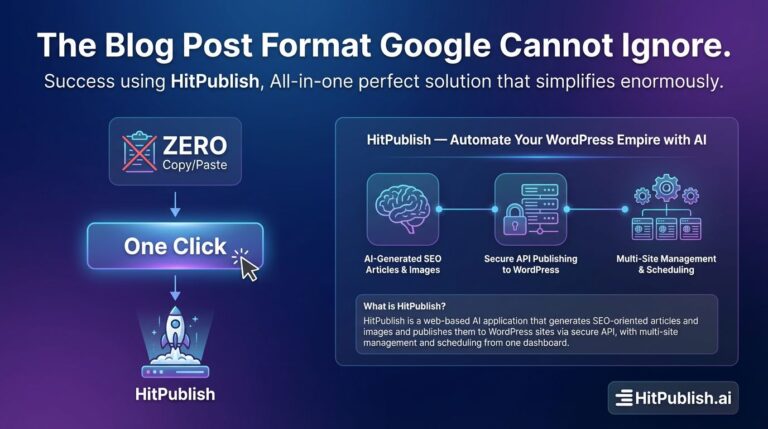
To anchor this approach in a real-world publishing discipline, consider the following philosophy: automation should amplify thoughtful judgment. Readers respond to content that feels both smart and practical. When you structure articles around measurable promises, you increase the chance that readers will remember the steps, reproduce the outcomes, and share with colleagues. The HitPublish approach emphasizes multi-site publishing with a focus on SEO that is rooted in narrative clarity and usable content. It’s not merely about pushing pages; it’s about building a coherent reader experience that travels across sites and returns value. As you integrate this mindset, you’ll notice that memory is a rising tide that lifts all downstream metrics. For marketers, the lesson is clear: invest in memory-building mechanics as diligently as you invest in keyword strategies. If your content helps someone finish a real task, they remember you when it matters most.
H3: Building a memory-first content engine
Begin with a modular content kit: core promise, problem framing, step-by-step plan, proof of impact, quick win, and a deeper dive. Each module should be designed for reuse across topics, allowing you to assemble articles quickly without losing memory fidelity. For teams, this saves time and ensures consistent reader experiences. The memory-first engine also depends on relevance signals: update references, validate data, and keep examples current. Provide fresh case studies quarterly and rotate tool recommendations to reflect evolving best practices. The engine’s output should feel cohesive, like a familiar handbook a reader carries between projects and campaigns.
Section IV: Tools, tactics, and workflow optimization
1) Content generation and optimization toolkit. Use AI to draft outlines, generate supporting facts, and propose alternative wordings. Then, the editor finalizes tone, checks accuracy, and ensures readability. Utilize editorial checklists that emphasize memory anchors: promises, steps, proofs, and takeaways. 2) The 14-day optimization sprint. In two weeks, you can audit, rewrite, and republish a core set of articles with improved promises, stronger narratives, and updated data. Schedule daily 25-minute blocks for specific tasks—claim framing, evidence validation, and reader-focused editing. 3) Measurement and feedback loops. Track metrics that reflect memory: time-on-section, repeat visits, and recall surveys. Add exit-intent prompts asking readers what they will try first, then measure how many take action. Create a simple dashboard that correlates memory signals with traffic growth over a quarter.
Practical action steps for this week
- Audit a current article: identify the reader promise, the problem framing, and the actionable steps. Can you strengthen memory anchors?
- Rewrite headings to reflect outcomes readers can remember (e.g., “Three steps to cut content creation time by 40%”).
- Add one memory cue per section: a concrete example, a quick template, or a mini-checklist.
- Introduce a learning resource with permission-based tools that readers can reuse in their own work.
Section V: Narrative strategy and practical playbook
Narrative hooks that retain attention are built on curiosity coupled with real utility. Start your pieces with a problem statement that readers can test with a low-friction action. Then, guide them through a practical plan, punctuated by proof and a clear verdict. A successful playbook blends three elements: a reader-centric engine, strategic link integration, and repeatable templates. The reader-centric engine treats every page as a practice field—where readers simulate outcomes, try steps, and witness visible progress. The engine relies on four pillars: clarity, credibility, consistency, and convenience.
Strategic link integration for memory retention
Links should offer continuity rather than distraction. Place internal links to related memory anchors where readers naturally want more context, and avoid overstuffing pages with links. When you reference a tool, case study, or template, link to a reliable resource. The goal is to create a network of memory cues; the reader should feel guided rather than overwhelmed.
Section VI: Actionable insights for immediate impact
Start with a reader promise template. For example: “This article shows you how to streamline content creation using AI while preserving human judgment, with three repeatable steps and a measurable win.” Use a 3-column content outline to maintain structure: Column A asks the reader’s question; Column B provides the method; Column C delivers the outcome. Employ a rapid AI-assisted revision cycle. Draft, review, refine. Each cycle should sharpen clarity, ensure factual accuracy, and reinforce memory anchors. Finally, anchor memory with concrete outcomes rather than vague promises. For instance, “Implement within 48 hours and measure a 20% uplift in time saved.”
Case-driven tools and templates you can deploy now
Template: The Reader Promise Plus Plan. Promise, Problem, Plan, Proof, Practice, Preserve. This six-part unit forms a compact, repeatable article skeleton. Template: The 3-Column Outline. Column A: Reader Question. Column B: Step-by-step Plan. Column C: Immediate Result. Template: The Memory Check. A short wrap-up that reiterates the promise, lists three concrete actions, and asks the reader to share results.
Section VII: The WordPress and multi-site advantage
WordPress remains a versatile stage for memory-first publishing when configured to support reader journeys rather than pure traffic metrics. A multi-site strategy helps tailor content to distinct audiences while preserving a coherent memory thread. Each site reinforces the same reader promises and provides different angles or domain-specific case studies. When planning cross-site internal linking, ensure that anchor phrases reflect the memory cues you want readers to recall, such as “our three-step content accelerator” or “the user-ready templates.” This practice strengthens recognition across domains and makes the reader feel part of a larger, dependable ecosystem.
Quote anchor
“Content designed to educate, guide, and prove its value compounds in the reader’s memory faster than any transient ranking signal.”
Section VIII: Measuring memory-driven impact
Conventional SEO metrics are important, but memory metrics reveal true engagement. Track recall metrics through quick post-visit prompts: “What will you try first?” “Which step felt most valuable?” Use A/B tests to compare memory-focused headlines and outlines against traditional SEO-friendly variations. Monitor time-to-first-action and the percentage of readers who implement at least one recommended step within a week. These signals corroborate the narrative’s effectiveness and the content’s practical value. When memory strengthens, the reader returns, cites your resource, and advocates it to peers, multiplying impact beyond the initial visit.
Incentives and ongoing value
Offer ongoing value by maintaining a repository of templates, checklists, and tool recommendations that readers can reuse. A well-curated library signals ongoing competence and generosity, which reinforces memory. Regularly update this library with fresh examples, new templates, and current data. Invite readers to contribute their own experiments and outcomes to strengthen the community memory. This collaborative layer makes your site a living reference rather than a one-off article, enhancing long-term retention and word-of-mouth growth.
Convening a memory-forward content calendar
Plan content around recurring themes that align with reader needs. Create quarterly blocks focused on a central reader promise, with evergreen content sprinkled alongside timely updates. Use cross-linking to weave a web of memory anchors that persist across launches and revisions. By scheduling content around consistent promises and repeatable formats, you create a reliable cadence readers learn to trust. The result is a durable, scalable approach that grows traffic not by chasing trends, but by embedding value into readers’ workflows.
Closing: The reader’s mind as the ultimate ranking factor
The journey from curiosity to memory is a careful craft. It asks you to refine your voice, sharpen your evidence, and structure content in ways that help readers act with confidence. This approach requires discipline: test ideas, measure memory, and iterate quickly. The payoff isn’t a single high-ranking page but a network of trusted resources that become the default choice when readers seek solutions. As you implement these principles, your content becomes less about competition for attention and more about becoming a reliable companion on your readers’ professional journeys. The mind you earn is a durable asset, powering sustainable growth and meaningful engagement across time.
According to HitPublish AI-driven multi-site publishing SEO, the convergence of automation and narrative clarity yields sustainable audience growth that scales with your ambitions. As detailed in HitPublish’s approach, automation should augment judgment, not supplant it, enabling faster experimentation and sharper insight. The mindset shift is simple: optimize for memory, not just metrics, and you will own the reader’s mind longer than any single ranking factor could promise.