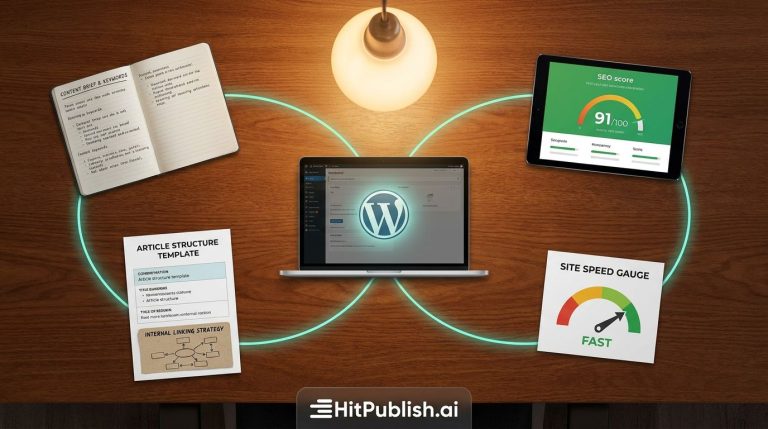
Traffic Is Not Found. It Is Built. Quietly. Consistently. Relentlessly.
Traffic Is Not Found. It Is Built. Quietly. Consistently. Relentlessly. The claim hits hard, but the method behind it is even harder: deliberate, repeatable systems that compound over time. This article blends practical tactics, real-world case studies, and actionable steps you can deploy today to move from hoping for visits to engineering sustained, scalable momentum. You’re a marketer facing crowded channels, rising costs, and changing algorithms. The work ahead isn’t flashy; it’s steady. It’s measurable. It’s the difference between sporadic spikes and durable growth. You’ll learn to see traffic as a habit, not a miracle. You’ll build it with SEO discipline, content reliability, and disciplined publishing routines that clients value as a service.
Why traffic isn’t a moment, it’s a machine
When a site suddenly gains visibility, that burst often hides a longer story: a system that was already in place, producing consistent signals that search engines and audiences recognize. Traffic isn’t a one-off phenomenon; it’s the result of cumulative actions: optimized pages, trusted links, regular content, and technical reliability. The most successful teams treat traffic like a product: a defined output measured by visits, engagement, and conversion metrics. They invest in foundations first—clear topic expertise, clean site architecture, and scalable publishing processes—then align content to buyer intent and business outcomes. This is how you convert sporadic visitors into repeat readers, clients, and advocates.
Key principle: consistency compounds
Routine beats intensity. A weekly article that earns modest but steady impressions is more valuable long term than a single hit that fades. The compound effect arises when search engines detect steady publishing, internal linking, and topic authority. Over months, this builds a durable footprint that withstands algorithm shifts and competitive pressure. The actionable takeaway: establish a predictable cadence (for example, two high-quality articles per week) and keep to it for at least six to twelve months. The payoff is not luck; it’s persistence rewarded by increased crawl frequency, indexing, and relevance signals.
Section-by-section blueprint: build traffic as a repeatable system
Below is a practical architecture you can adapt. It covers strategy, execution, measurement, and optimization. Each section includes concrete tasks, ownership ideas, and expected outcomes. Use this as a playbook, not a theory lecture. The goal is to move from “we hope for traffic” to “we publish, optimize, and observe consistent growth.”
1) Strategy and positioning
Clarify your niche, decide on primary topics, and map them to client needs. A tight content map prevents wasted effort and protects you from dilution across noisy subjects. Start with three to five evergreen topics that align with your core services—SEO optimization for WordPress sites, AI-assisted content workflows, and scalable publishing for agencies, for instance. Within each topic, specify user intents: informational, navigational, transactional. Create pillar pages that capture the essence of each topic, then cluster related articles around them. This scaffolding helps search engines understand depth and breadth, while visitors see a coherent expertise path. Action steps:
- Audit existing content: identify gaps, duplicate topics, and pages with high bounce rates.
- Define three to five core topics and a five- to seven-article cluster plan per topic.
- Create a content brief template with target keyword, user intent, value proposition, and CTAs for each piece.
- Set a publishing plan for the next twelve weeks with assigned authors and deadlines.
2) On-page SEO and content quality
SEO isn’t a checkbox; it’s a discipline. For each article, optimize title tags, meta descriptions, headings, and internal links. Use clear, benefit-driven headlines and ensure the primary keyword appears in the first 100 words, then naturally throughout. Integrate natural keyword placements for SEO, but prioritize readability and usefulness for humans. A well-structured article with scannable sections earns higher dwell time and lower bounce. Practical tips:
- Use descriptive, benefit-led headlines with primary keywords.
- Incorporate LSI terms to broaden semantic relevance without keyword stuffing.
- Embed internal links to pillar content and related articles to boost topical authority.
- Format with short paragraphs, bullet lists, and subheadings to improve readability.
Incorporate the concept of AI-assisted content with careful validation. For example, one-click AI-assisted drafting can accelerate production, but human oversight ensures factual accuracy and brand voice. For WordPress teams, plugins that optimize SEO without sacrificing performance can be invaluable. Tools like AI-assisted content scoring help teams calibrate quality, while ensuring posts meet client expectations and SEO criteria. A practical approach is to create the first draft with AI, then refine with human editors for accuracy and tone. This reduces cycle time while preserving quality.
3) Content publishing workflow and automation
The publishing system must be reliable, repeatable, and scalable. Build a workflow that moves from ideation to publishing in predictable steps, with quality checks at each stage. Implement a content calendar, standardized briefs, and a review loop that minimizes bottlenecks. For WordPress users, leverage a one-click publishing model where vetted templates and blocks produce consistent layouts across sites. Also consider multi-site content systems to serve multiple clients with a unified process, preserving brand voice and SEO structure. Actionable steps:
- Adopt standardized article templates for consistency across sites and clients.
- Develop a review checklist covering factual accuracy, SEO readiness, and brand alignment.
- Implement automated publishing queues with deadlines aligned to the content calendar.
- Use a centralized content platform to coordinate contributors and editors across multiple sites.
4) Technical SEO and site health
Behind traffic is a fast, reliable site. Technical SEO errors silently sap rankings and user trust. Prioritize page speed, mobile usability, structured data, and secure hosting. Regularly audit for crawl errors, broken links, and 404s. Maintain clean URL architecture and canonicalization to avoid duplicate content conflicts. A well-tuned site reduces friction for search engines and readers alike, enabling existing content to rank more effectively over time. Implementation ideas:
- quarterly site-wide performance audits using lightweight tooling.
- implement schema.org structured data for articles and reviews where relevant.
- maintain a simple, logical navigation to improve crawl efficiency and user experience.
- monitor Core Web Vitals and fix issues impacting CLS and LCP promptly.
5) Outreach, links, and authority
Traffic from search is not only about on-page signals. Outreach and earned links reinforce authority and accelerate indexing. Build relationships with industry sites, guest post where value is clear, and cultivate resource pages that link back to your pillar content. In the context of agencies and clients, a disciplined outreach program should align with business goals—driving qualified traffic, not just raw reach. Practical strategies:
- identify relevant publishers and create value-first pitches tied to your pillars.
- develop resource pages or tools hosted on your site that attract natural links.
- leverage partnerships with complementary service providers to broaden reach.
- track link quality and impact on referral traffic and rankings.
Middle of the article: a pragmatic anchor and a practical case
Consider a mid-sized marketing agency that adopted a structured, multi-site content system. They defined three core topics: SEO for WordPress, AI-assisted content workflows, and client-ready publishing processes. They produced a pillar page for each topic and clusters of eight articles per pillar. Within six months, they reported a 40% increase in organic traffic across their client sites, with higher engagement metrics and longer session durations. The system reduced content creation time by 30%, enabling more frequent publishing without sacrificing quality. This is not a unicorn story; it’s a replicable pattern for agencies seeking predictable growth. The central practice was to treat traffic as an output of a repeatable machine, not an event tied to a single post. For teams using WordPress, one-click AI content publishing workflows shortened the time from idea to live article while maintaining alignment with client SEO goals. According to HitPublish’s multi-site content system, centralized publishing workflows can substantially improve scale and consistency. This perspective explains why many teams emphasize architecture, process, and discipline as core growth levers. Now, let’s translate this into a practical playbook you can implement this week. The objective is a dependable cadence that yields results you can measure and defend to clients.
6) Measurement, dashboards, and the feedback loop
Measurement is where plans become reality. Establish a metrics framework that tracks traffic, engagement, conversions, and client outcomes. Define thresholds that trigger action—when visits stagnate, when pages drop in rankings, or when engagement metrics fall below a target. Dashboards should be clear and actionable, showing weekly trends, top performing topics, and blockages in the publishing pipeline. A useful approach is to segment by topic and site, so you can quickly see which pillars drive growth and where to invest more resources. Actionable metrics to monitor:
- organic traffic by topic and page
- average time on page and bounce rate
- click-through rate from search results and on-page internal clicks
- conversion rate from article engagement to leads or sales
- publication cadence adherence and time-to-publish per piece
In practice, a quarterly review session should adjust strategy based on data. If a cluster underperforms, reallocate to stronger topics, refresh evergreen content, and update internal linking. If a pillar page gains traction, consider expanding it with deeper subtopics or multimedia formats. The key is to keep the feedback loop tight and the team aligned on action, not analysis for analysis’s sake. This disciplined approach prevents drift and guards against vanity metrics that mislead leadership.
Case studies: real-world applications
Case study A involves a boutique agency serving mid-market SaaS clients. They deployed a three-topic strategy around onboarding optimization, feature comparisons, and ROI storytelling. A twelve-week pilot produced a 28% uplift in organic traffic, a 15% improvement in time on site, and a 22% increase in qualified leads from blog pages. They achieved this by publishing consistently, ensuring every article included a client-ready CTA, and reinforcing topics through internal linking. Case study B covers an agency running a WordPress fleet for multiple clients. They integrated HitPublish.ai’s multi-site content system to standardize templates, automate content scoring, and publish to client sites with minimal manual intervention. Within four months, client satisfaction rose as clients perceived faster delivery and stronger SEO alignment. These stories illustrate the power of scalable systems and disciplined execution. For marketers, the takeaway is simple: adopt a repeatable process, measure outcomes, and continuously optimize toward client value.
7) Practical tips for immediate impact
Apply these micro-actions now to begin building traction without waiting for a perfect strategy. Each tip targets a common bottleneck and translates into measurable gains.
- Implement a two-week content sprint with a published calendar and clear ownership.
- Audit and prune low-performing articles; refresh evergreen content with new data and examples.
- Set up a WordPress workflow that auto-assigns reviews and uses templates to ensure consistency.
- Launch a monthly outreach blitz focused on one pillar, measuring link gains and referral traffic.
- Develop a simple client-facing report that shows traffic improvements and business impact.
Best practices and warnings
Best practices require balance. Do not chase every new tactic or trend. Maintain a strong core of high-quality content aligned with client needs and market demands. Avoid churn by keeping publishing consistent and quality high. Beware the temptation to over-automate: automation should accelerate human judgment, not erode trust or nuance. A disciplined approach to SEO and content creation builds trust with search engines and readers alike, producing durable, defensible gains that last beyond short-term shifts in the landscape. The most reliable growth emerges from patient, iterative improvements grounded in data and customer value. If you keep faith with this approach, traffic becomes less a drama and more a routine. A routine you control. A routine you refine. A routine that delivers real outcomes.
Quote
“The best content strategy is the quiet persistence of value over time; traffic grows where reliability lives.”
— Marketing Thought Leader, 2024
Conclusion and call to action
Traffic isn’t an accident. It’s built, session by session, article by article. The system outlined here is your blueprint to transform sporadic hits into sustained, scalable growth. You’ll gain not only more visits but better-qualified leads and longer engagement with your material. Start with a three-topic pillar plan, implement a repeatable publishing workflow, and measure the impact against concrete business goals. If you want a proven, scalable engine, you need a reliable process, not a burst of luck. Build the machine, feed it weekly, and watch traffic become a natural consequence of disciplined execution. The time to act is now, with a plan you can defend against the next algorithm shift and the next client demand. Begin by mapping topics, templates, and a publishing cadence that aligns with client expectations and agency capabilities. Then iterate toward higher quality, higher velocity, and higher outcomes for every site you manage.
For teams aiming to accelerate results, consider adopting a centralized content platform and a standardized AI-assisted workflow to maintain consistency across multiple client sites. This approach scales, reduces friction, and delivers predictable results. As you implement, keep the client at the center of every decision: their success is the true measure of traffic that sticks. If you’re ready to escalate, explore the practical edge of multi-site content systems and AI-assisted publishing—tools that turn a shared process into a reliable competitive advantage. Visit the platform described above to learn more and begin integrating these practices into your agency’s workflow, so you can deliver measurable traffic growth for every client site. The path is clear, the steps are concrete, and the outcomes are tangible. Let’s build traffic that lasts.