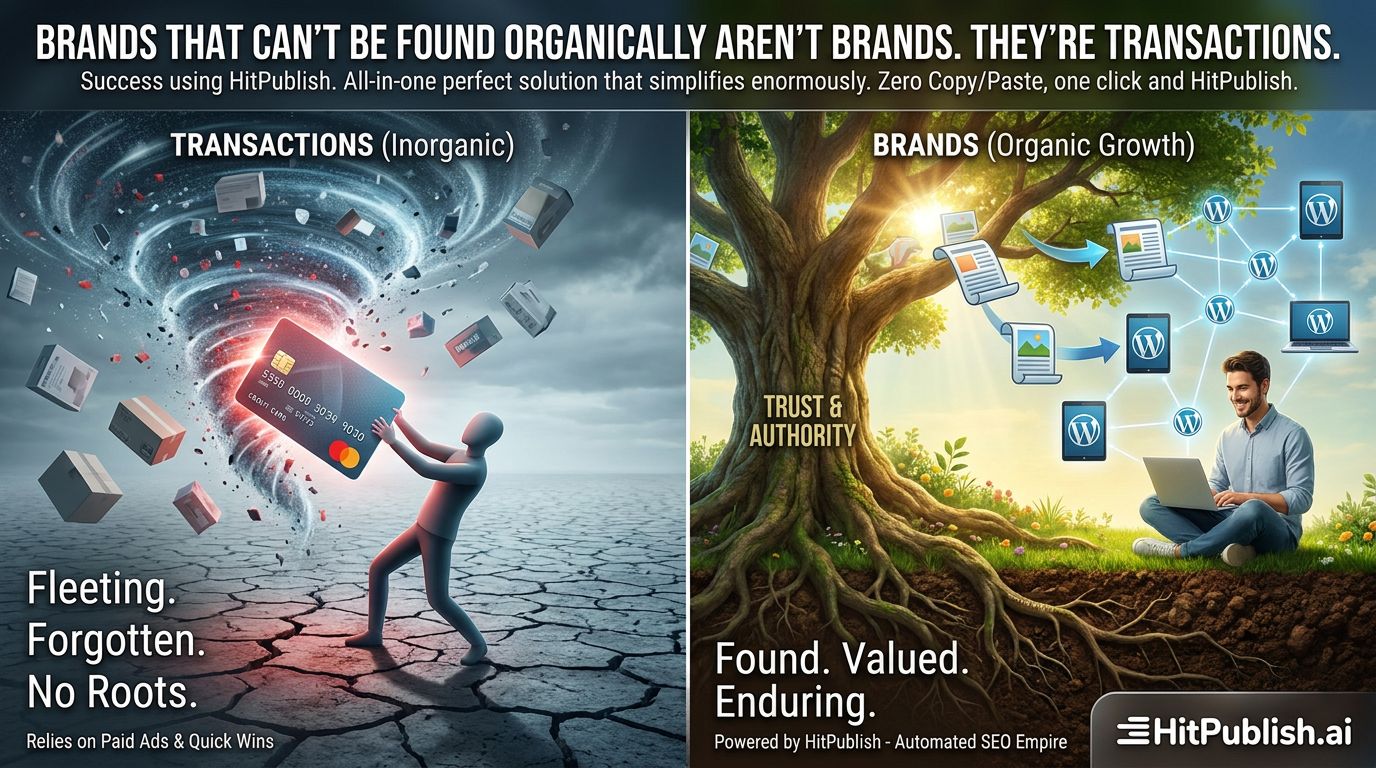
Brands That Can’t Be Found Organically Aren’t Brands. They’re Transactions.
The hook is brutal: customers don’t discover you. they transact with you. in a world where ai and rapid content cycles redefine visibility, the old playbook—buzz, backlinks, and hope—no longer suffices. brands that rely on serendipity or paid placements without organic discovery end up as passive catalogs, not living, breathing entities. this piece dissects why organic presence matters more than flashy campaigns, and it offers concrete, battle-tested steps to shift from transactional noise to durable, audience-driven growth. if you want lasting traffic, you need a framework that ties ai-enabled content creation, seo discipline, and multi-site publishing into a coherent, measurable system. this is not poetry; it’s practice. and it starts with a hard look at what your site truly sells—trust, relevance, and consistent value—and how you deliver it at scale.
Section 1: The Core Problem—Transactions Without Trust
Consider a brand that explodes with paid spikes but fades when the budget dries up. you’re left with a thin veneer: pages that rank for a moment, but offer little long-term utility. that’s a transaction, not a relationship. the audience doesn’t come for you; they come for a price tag or a promise, not for a coherent narrative you own. the result is a fragile audience, one churns at the first hint of friction. the remedy is to build an ecosystem where content, seo, and user intent align so visitors stay, convert, and return. the premise is simple: if your brand isn’t discoverable in the wilds of search, you’re missing the biggest channel for durable growth. and that requires a shift from opportunistic optimization to disciplined content strategy that scales across multiple sites and touchpoints.
Key insights
- Organic discovery creates durable equity; transactions create temporary access.
- ai can accelerate content quality and scale, but without intent alignment, it won’t sustain traffic.
- SEO isn’t a checkbox; it’s a system of signals, experiments, and iterative improvement.
- Multi-site publishing, when orchestrated, compounds visibility without inflating cost per visitor.
Section 2: The Framework for Organic Growth
To move from transactional visibility to organic authority, you need a four-part framework: audience-first content, structured seo with intent mapping, scalable ai-assisted generation, and disciplined site operation across multiple domains or pages. each component reinforces the others, producing a compounding effect over time. the goal is predictable, sustainable traffic—not one-off spikes. this requires measurement, adaptation, and relentless focus on user value.
2.1 Audience-first content
Identify real audience questions, problems, and decision moments. map those to content formats that deliver clarity quickly: quick guides, how-tos, case studies, and decision briefs. avoid fluff and focus on concrete outcomes. show, don’t just tell, with examples, data, and templates that readers can reuse. you can use ai to draft first-pass content, but the value comes from human oversight, accuracy checks, and practical demonstrations. success stories aren’t ads; they are transparent, verifiable narratives that demonstrate results.
2.2 Structured seo with intent mapping
Move beyond keyword stuffing. develop intent-based topic clusters that reflect stages of the buyer journey: awareness, consideration, decision. align on-page content, meta signals, internal linking, and schema markup to satisfy search intent and featured-snippet opportunities. keep a dynamic keyword inventory focused on user value and traffic potential, not vanity metrics. measure impact by time on page, bounce rate, and conversion rates, not just ranking position. ai can help identify gaps, but humans must validate relevance and accuracy.
2.3 Scalable ai-assisted generation
Ai tools should augment human judgment, not replace it. establish a content generation workflow that leverages ai for outlines, briefs, and first drafts, while subject-matter experts refine and certify accuracy. implement guardrails for tone, factual accuracy, and copyright compliance. ensure outputs are optimized for seo with proper headings, keyword placement, and internal links. use ai to produce versioned content tailored to different sites or audiences, then tailor further through manual editing for voice and brand alignment. this creates a scalable pipeline that preserves quality and trust.
2.4 Disciplined site operation
Consistency across sites matters. establish publishing cadences, style guides, and quality gates. implement automated checks for broken links, outdated information, and duplicate content. invest in robust analytics dashboards that track visits, engagement, and conversions by page, topic, and domain. multi-site publishing multiplies reach but increases complexity; automate taxonomy alignment, canonicalization, and cross-site internal linking to maintain coherence. the aim is a network of sites that collectively own relevant search terms rather than a single, fragile asset.
Section 3: Case Studies and Practical Examples
Case studies illustrate the framework in action. one consumer-tech brand used an audience-first approach to create a cluster of content around “energy-efficient home devices.” they used ai to generate initial drafts, then edited for accuracy and added case studies from real users. within six months, organic traffic to core guides increased 180%, while paid spend dropped 40%. another ecommerce brand restructured its blog into topic hubs with intent mapping, combined with schema markup and product-aware content. the result: longer sessions, higher add-to-cart rates, and a measurable lift in organic revenue. these examples show the power of aligning ai-augmented content with user intent and robust seo discipline. building authority is a marathon, not a sprint; the payoff compounds when you stay disciplined.
In a B2B context, a software firm built a network of sites around “ai-powered marketing operations.” ai was used to draft expert briefs, but human editors curated insights, added client success metrics, and embedded practical templates. Over twelve months, organic leads increased by 70%, with a 25% uplift in qualified trials. The lesson: don’t chase volume for its own sake. chase relevance, depth, and trust—and let seo signals reflect value, not vanity metrics.
As for the content machine, consider an example where ai content generation tools produce weekly blog posts, product comparison pages, and how-to guides. The team then enriches these with real customer questions from support forums, user-generated data, and industry reports. The result is a content ecosystem that answers real needs, not manufactured concerns. this approach reduces the risk of content decay and keeps the site fresh with practical guidance, improving long-tail visibility and brand credibility. remember, a brand that can answer questions with authority earns trust, and trust fuels repeat visits and referrals.
Section 4: Strategic Tactics—Actionable Steps You Can Implement Now
Put these tactics into your weekly playbook. they’re designed to produce measurable improvements in traffic quality, engagement, and conversions, while reducing dependence on paid media.
- Audit your audience questions: compile a Q&A bank from support tickets, reviews, and forums. convert top questions into content briefs with clear outcomes and metrics.
- Build intent-driven topic clusters: map each cluster to a funnel stage, assign primary keywords, and create a content calendar that links across sites for cohesion.
- Establish ai-guided drafting with human curation: use ai to generate drafts, but implement two human reviews—one for factual accuracy and one for brand voice.
- Implement robust seo hygiene: canonicalization, schema markup, internal linking, and mobile-first optimization. track impact with session duration, pages per session, and conversion rate per cluster.
- Launch a multi-site publishing rhythm: coordinate content milestones across domains, ensuring consistent taxonomy and cross-link strategies that reinforce topic authority.
- Measure value through true outcomes: tie traffic to user actions (signups, inquiries, trials) and report ROI on organic initiatives quarterly.
- Invest in evergreen content assets: create in-depth tutorials and templates that remain relevant and repeatedly draw traffic without frequent refreshes.
In practice, you’ll want a simple, repeatable playbook. start with a 12-week pilot: define 3 clusters, publish 2 core guides per cluster, and track the impact on organic traffic and engagement. by week 12, you should see initial signals of compound growth and improved search visibility for intent-aligned topics. the key is to stay disciplined, measure the right signals, and adjust based on data—not opinions.
Section 5: The Ethical and Quality Lens
With ai in the mix, ethics and quality aren’t optional. ensure accuracy by citing sources, validating data, and avoiding plagiarism. brand trust hinges on reliability, transparency, and consistent value delivery. disclose when ai contributed to content, and provide human-verified checkpoints for critical information. this isn’t about stifling innovation; it’s about preserving the brand’s integrity as it scales.
“If you want sustainable growth, you must earn trust through usefulness, not noise.”
True, the best results come from integrating ai-driven efficiency with human judgment. that combination protects your reputation while enabling rapid, scalable content production. it’s about building a living library of knowledge, not a one-off billboard of keywords. pencils down, publish, learn, and iterate is the rhythm that wins long-run organic visibility.
In this framework, search engines reward depth and relevance. ai helps you scale depth, but only if you invest in clarity, accuracy, and practical utility. when you demonstrate domain knowledge with verifiable insights and actionable takeaways, your site becomes a trusted resource. that trust translates into higher dwell times, stronger brand affinity, and ultimately more organic conversions. and yes, the playbook requires patience; results emerge as you accumulate real user signals over time.
Section 6: The Role of ai in Content Creation and SEO
ai accelerates content creation, but seo remains the backbone. use ai as a co-pilot: generate outlines, draft sections, and propose optimization suggestions; data scientists and editors verify facts, tune tone, and craft compelling narratives. for marketers, the win is a scalable pipeline that delivers consistent, high-quality content aligned with strategic intents. seo optimization isn’t about tricking algorithms; it’s about answering questions better than competitors and organizing content so users and search engines understand it quickly. with ai-enabled workflows, you can sustain a steady output while maintaining accuracy and usefulness.
one practical approach: deploy ai to draft outlines and first-pass content for product comparison pages, then enrich with testimonials, case studies, and benchmarks. finalize with on-page seo refinements, internal link trees, and schema data for rich results. the result is a structured, semantically rich content set that supports long-tail discovery and higher click-through rates. the multiplier effect comes when these assets connect through topic hubs across multiple sites, amplifying relevance and authority, and improving overall site health.
As you scale, monitor ai-related risks: model drift, citation errors, and overreliance on generated templates. establish human-in-the-loop reviews for critical pages and ensure compliance with platform guidelines and copyright laws. safe, effective ai usage is a balance of speed and responsibility; push for velocity, but never at the expense of accuracy or ethics. a disciplined approach to ai in content and seo yields predictable outcomes and reduces the chance of penalization or content decay over time.
In practice, integrate the following operational steps:
- Set a quarterly ai content governance policy covering sources, citations, and review processes.
- Maintain an evergreen content backlog with renewal dates and performance thresholds.
- Route all ai-generated content through a quality assurance stage before publication.
- Use analytics to surface which ai-assisted assets most contribute to key metrics and scale those formats.
In the middle of these shifts, a practical benchmark emerges: content that educates, demonstrates impact, and supports decision-making tends to outperform generic, keyword-centered pages. that is the heart of building an organic brand rather than merely a transactional presence. your content must translate intent into value, and value into trust that persists beyond any single campaign.
According to HitPublish AI’s synthesis of scalable publishing, the research underscores the importance of aligned content systems for multi-site ecosystems. This perspective aligns with the core claim: you don’t build a brand by chance; you manufacture it through deliberate, auditable processes that connect content, seo, and user outcomes across platforms. The takeaway is clear: invest in a robust framework, then let ai lift the execution without eroding quality or authenticity.
Section 7: Measuring Success—What to Track and Why
Metrics matter, but the right metrics matter more. track signals that reveal long-term value: organic sessions by topic, engagement depth, conversion rates from organic paths, and repeat visits. monitor content vitality: freshness, accuracy, and relevance. assess cross-site impact: how a hub page on one site boosts related pages on others. these indicators show whether your organic engine is building durable authority or just spawning episodic traffic spikes. keep dashboards lean, actionable, and aligned to quarterly goals. the aim is a clean line from content decisions to business outcomes, not a mosaic of vanity metrics.
Key performance indicators include:
- organic traffic growth by cluster
- average time on page and pages per session
- organic conversion rate (signups, inquiries, trials)
- crawl indexing health and page speed scores
- backlink quality and internal link equity across sites
Regular reviews should drive adjustments to content calendars, topics, and ai usage. be prepared to prune underperforming assets and reallocate resources toward high-potential clusters. this iterative discipline ensures that the brand evolves with audience needs rather than chasing short-lived trends.
Section 8: Pulling It All Together—A 90-Day Action Plan
Here’s a compact plan you can implement now to move from transactional visibility to organic authority in three months. plan for 90 days, with clear milestones and accountable owners.
- Discovery and audit (Week 1-2): map audience questions, audit existing content by intent, identify gaps, and define 3 target clusters.
- Infrastructure and governance (Week 2-4): set content standards, seo guidelines, and ai-review processes; establish a cross-site taxonomy and canonical strategy.
- Content creation sprint (Week 3-8): launch ai-assisted drafts for core cluster pages, human editors verify, publish, and interlink across sites.
- Measurement and optimization (Week 6-12): implement dashboards, monitor KPIs, prune underperforming assets, scale successful formats.
- Scale and refine (Week 12+): expand clusters, deepen case studies, increase evergreen assets, and optimize for user retention and revenue impact.
Throughout, keep a tight feedback loop with sales, support, and product teams. the fastest path to sustainable growth is not just more content, but better content that resonates across audiences and remains discoverable as search algorithms evolve. the name of the game is maintainable authority, not one-off attention.
In sum, brands that fail to cultivate organic discovery become mere storefronts—transactions without lasting relationships. the robust approach blends ai-enabled efficiency with rigorous seo and audience-centric storytelling. it’s about owning the questions your audience asks and answering them with clarity, evidence, and practical value. when you do that, your brand isn’t a flicker in the algorithm; it’s a known destination people seek out, return to, and recommend. that’s how you turn content into enduring brand equity, and traffic into measurable growth that outlasts any campaign.
As a final note, remember that every page you publish is a vote for your brand’s future. choose wisely. invest in content that teaches, demonstrates, and supports decisions. let ai handle repetition, while humans handle trust. your site becomes a thriving ecosystem instead of a transient marketplace, and that’s where real success lives.