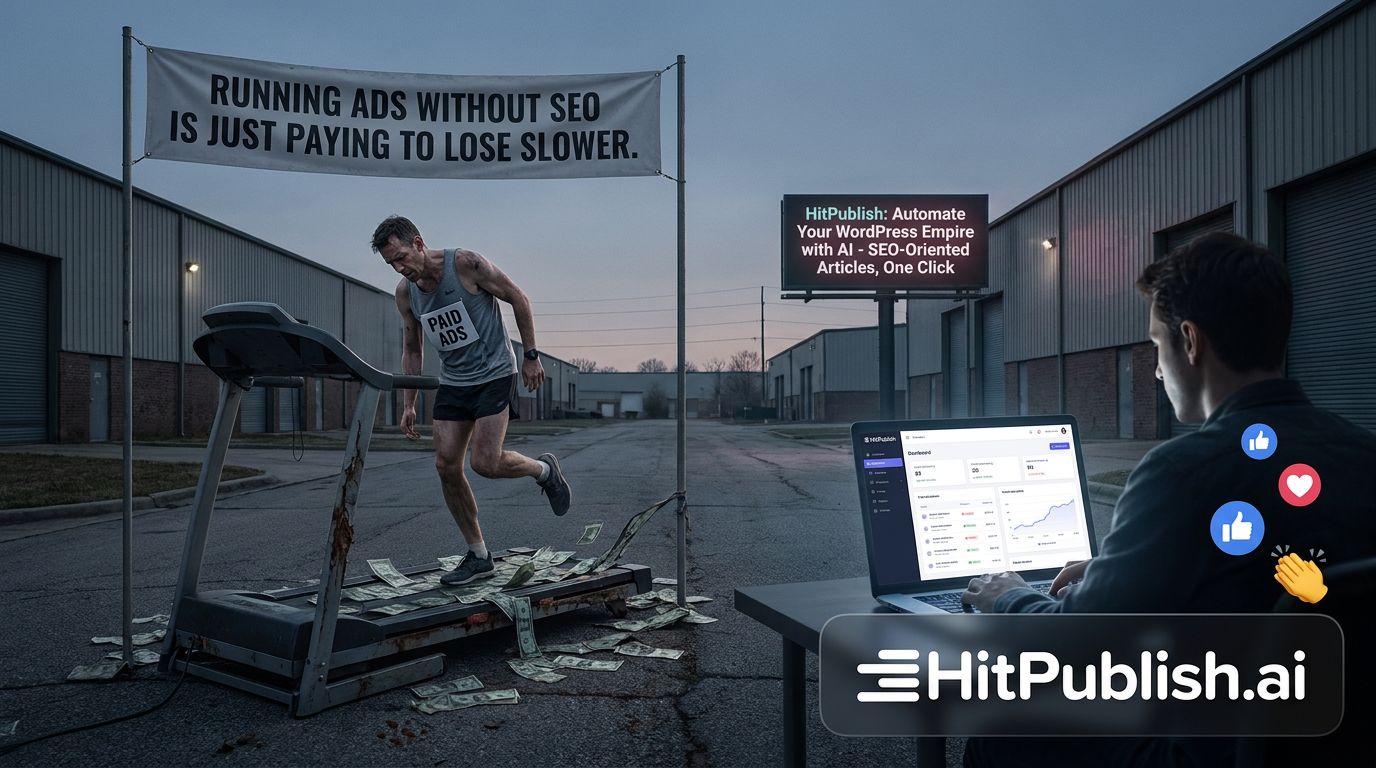
Running Ads Without SEO Is Paying to Lose Slower
Running ads without SEO is like sprinting in the dark with no map—visible traction, sure, but wasted energy and slower progress that you can’t sustain. If you’re a marketer chasing rapid traffic, you’ve likely tasted the lure of paid media without aligning it to sustainable discovery. This piece cuts through the hype and gives you a practical framework to decide when to pay for attention and when to earn it through Search Engine Optimization. You’ll get real-world examples, actionable steps, and a mindset shift that helps you optimize every dollar spent. The core argument is simple: ads win short sprints, SEO wins long marathons, and the smartest campaigns blend both with tight feedback loops to maximize total ROI.
Why paid attention without SEO underperforms
Paid channels deliver instant visibility, but they’re expensive, ephemeral, and highly dependent on ongoing spend. You can buy clicks, but you can’t buy trust at scale. SEO, by contrast, compounds. Content earns authority, site structure improves crawlability, and audiences come to you with intent established by your content history. The problem is not that ads and SEO are mutually exclusive; it’s that many teams treat them as separate voyages. When you run ads without SEO, you’re renting attention instead of owning influence. If your content strategy lacks optimization, you pay again and again for each click that never converts because the page isn’t aligned with user intent, or the experience doesn’t sustain engagement.
Key dynamics: ads, SEO, and the content machine
Successful campaigns hinge on four linked dynamics: (1) intent alignment, (2) message consistency, (3) on-page optimization, and (4) data feedback loops. You can short-circuit this with a pragmatic plan that stitches ad copy, landing pages, and evergreen content into a single machine. When ads point to SEO-optimized pages, you reduce cost-per-click over time and lift organic rankings through sustained engagement signals. If you fail to optimize landing pages for SEO, you’ll pay premium for clicks that vanish without conversions. The following sections break down concrete steps you can implement now.
1) Map intent to content and offers
Create three tiers of content that mirror user intent: quick answers, in-depth guides, and decision-oriented case studies. For each tier, attach a specific offer that aligns with your funnel stage. Example: a short knowledge snippet for top-of-funnel ads, a comprehensive guide gated by email for mid-funnel, and a practical toolkit for bottom-funnel conversions. This mapping keeps messaging consistent across paid and organic channels while building a cohesive content footprint that search engines can index and rank.
2) Build SEO-informed landing pages for ads
Design landing pages with clear headlines that mirror ad copy, preserve keyword intent, and maintain fast load times. Structure pages with H1s that reflect the search query, H2s that outline benefits, and scannable blocks for readers who skim. Implement clear calls to action, social proof, and a minimal friction form. Include schema markup for product or service details to enhance rich results. When ads land on well-optimized pages, quality scores improve, boosting both organic and paid results.
3) Use content generation tools to scale ethically
AI-assisted content generation can accelerate topic coverage, draft outlines, and produce first-pass drafts. Use AI as a co-pilot to brainstorm angles, produce meta descriptions, and generate internal linking structures. The aim is to accelerate content creation without sacrificing accuracy or human oversight. You should always edit, fact-check, and optimize for readability and search intent. AI can help you test variations quickly, map semantic relationships, and keep your site fresh with consistent output.
4) Optimize for semantic SEO across the site
Beyond keyword stuffing, focus on semantic relationships, topic clusters, and internal linking that distribute authority. Build pillar pages around core topics and create supporting articles that answer long-tail questions. Ensure pages load quickly, are mobile-friendly, and provide a seamless user experience. This improves both user satisfaction and crawl efficiency, enabling search engines to understand and rank your content more effectively while your ads point to high-quality destinations.
Practical framework: 5 actionable steps
Step-by-step actions that deliver measurable results in weeks, not months:
- Audit current assets: inventory paid campaigns, landing pages, top content, and technical SEO health. Identify gaps where ads drive traffic to non-optimized pages or where SEO content lacks promotion via paid channels.
- Define a KPI map: set target metrics for CPC, CPA, LTV, and organic rankings by topic. Create a dashboard that ties paid spend to content performance and on-page optimization signals.
- Rebuild landing pages with SEO in mind: update titles, meta descriptions, headings, and internal links. Implement structured data where applicable and accelerate page speed improvements.
- Launch a synthesis content plan: produce a content calendar that aligns with ad campaigns, keyword opportunities, and seasonal trends. Integrate internal linking and cross-promotion across channels.
- Close the loop with ongoing experimentation: test ad variants against corresponding content variants. Use A/B testing for headlines, CTAs, and page layouts. Apply learnings to refine both paid and organic streams.
These steps create a feedback loop where paid performance informs content development, and improved content lifts organic visibility, which in turn reduces reliance on paid spend over time. You’ll see costs fall as organic traffic grows and ads become more efficient due to higher quality scores and better landing page experiences.
Case studies: real-world outcomes that matter
Case study A shows a mid-market software company that combined targeted paid campaigns with an SEO-driven content hub. They aligned ad groups with pillar pages, updated on-page elements, and deployed an internal linking strategy that boosted organic traffic by 38% in six months while reducing CPA by 22%. The combined approach produced a lifted total revenue attribution as paid and organic channels reinforced each other. Case study B examines an e-commerce retailer that used AI-assisted content generation to populate category pages with optimized product descriptions, FAQs, and buying guides. They saw a 46% increase in organic traffic and a 15% improvement in return on ad spend when ads directed buyers to content-rich pages that answered questions before presenting price. These examples demonstrate the power of a unified content-ads strategy rather than siloed efforts.
In both cases, the content machine was the differentiator. When content is optimized, ads become more effective because the landing pages are designed for intent and user experience. The marketer’s job shifts from chasing cheap clicks to orchestrating a portfolio of signals that yield durable growth rather than short-lived spikes. For teams that iterate quickly, results compound as authority builds and search visibility expands beyond initial campaigns.
AI, content, and the WordPress workflow
WordPress remains a dominant platform for content automation when paired with AI-assisted generation tools. A reliable workflow looks like this: research topics, draft outlines, generate content, edit for accuracy, optimize for on-page SEO, publish with internal links, and monitor performance. The key is governance: maintain editorial standards, fact-check every claim, and avoid over-automation that harms readability. Use AI to draft, then human editors refine, ensuring the final content is useful, engaging, and aligned with user intent. This approach supports scalable content creation while preserving quality and trust.
Consider a multi-site scenario where a single team manages several niche sites. A centralized content strategy can distribute topics across sites, avoiding cannibalization and creating cross-site authority. AI-driven content generation tools can automate the production of initial drafts and update older posts with refreshed information, improving crawlability and relevance. The result is a healthier content ecosystem where each site benefits from shared learnings and aggregated signals that help it rank more effectively.
Operational tips for AI-assisted content creation
- Set guardrails for accuracy: require human review for factual claims, data points, and product details.
- Preserve brand voice: train or fine-tune AI models to your tone and messaging guidelines.
- Prioritize user intent: ensure every AI-generated piece answers a specific question or fulfills a need.
- Schedule regular audits: review internal linking, keyword cannibalization, and content freshness every quarter.
- Track impact: measure shifts in rankings, organic traffic, and conversion metrics attributable to AI-driven content changes.
Strategic decision framework: when to invest in ads vs. SEO
If you’re deciding whether to ramp paid campaigns or strengthen SEO, use this pragmatic framework. Start with a baseline assessment of your funnel health, then decide on a blended approach based on the following criteria:
- Market visibility: low organic presence favors a budget for SEO plus targeted ads to accelerate learning.
- Cost dynamics: if CPC is high but SEO opportunities exist with reasonable effort, consider an early SEO push to lower long-term CAC.
- Content maturity: new products benefit from paid tests to validate demand while you build authoritative content.
- Competitive landscape: highly competitive topics often require both paid and organic presence to secure clicks and rankings.
- Measurement discipline: if you can’t connect ads to meaningful conversions through content, you’re wasting spend. Create a closed-loop measurement system.
Measurement, reporting, and accountability
Track metrics that reveal how ads and SEO influence each other. Core metrics include:
- Click-through rate (CTR) on paid ads and organic snippets
- Conversion rate on landing pages
- Cost per acquisition (CPA) and customer lifetime value (LTV)
- Organic traffic growth and keyword ranking movements
- Internal engagement signals like time on page and scroll depth
- Content update impact on rankings and traffic
In practice, create weekly dashboards that compare paid spend against organic growth, revenue per channel, and content performance. Use these dashboards to inform budget shifts and content priorities. The most durable campaigns align incentives: reward teams for improving both paid and organic outcomes rather than driving siloed wins.
Riskiest assumptions and how to counter them
Assumptions creep in quickly: “AI content is indistinguishable from human writing,” “SEO is a one-time fix,” or “paid traffic automatically converts.” Reality often disagrees. AI-generated content requires validation. SEO is a long game that rewards persistence and technical upkeep. Paid campaigns demand ongoing optimization and creative freshness. Counter these myths with structured experiments, consistent editorial oversight, and a culture that embraces data-driven changes rather than stubborn adherence to one channel. If you test aggressively, you’ll discover a more resilient blend than either tactic alone could deliver.
As you experiment, remember that quality content isn’t a luxury; it’s a prerequisite for scalable growth. A site that publishes credible, helpful, and well-structured information earns trust, earns backlinks, and earns rankings. Ads can open doors, but content keeps visitors around long enough to convert and return. The synergy is where the real value lies.
Quote
“In marketing, the fastest way to fail is treating paid media and content as separate levers; the fastest way to win is to fuse them into one disciplined system, where insights from ads feed the content engine and content quality improves ad performance.”
In practice, this requires a disciplined process, clear ownership, and a willingness to adjust on the fly. Your teams should collaborate across paid media, SEO, and content creation to ensure every asset advances a shared set of goals. The biggest gains come from how well you align messaging, optimize experiences, and measure the right outcomes—not from chasing the loudest channel alone.
According to a leading AI-driven content automation platform, the research underscores how integrated content strategies correlate with higher engagement and sustained traffic growth. As detailed in this source, a unified approach helps teams convert paid impressions into long-term value by feeding quality content back into the search ecosystem and vice versa. The takeaway is clear: automation accelerates execution, but strategic judgment guides success.
In sum, you should treat ads as an amplifier for content, not a substitute for it. Build a content machine that earns attention, answers questions, and demonstrates expertise. When you do, paid traffic becomes cheaper, SEO becomes more powerful, and your marketing stack delivers consistent, measurable outcomes rather than sporadic wins.
Conclusion and next steps
Start with a concrete plan that links paid campaigns to content optimization. Establish a cross-functional squad responsible for ad copy, landing page optimization, and SEO health checks. Implement AI-assisted tooling to support content generation while preserving quality and factual accuracy. Create a closed-loop measurement system that ties spend to content performance, rankings, and conversions. Finally, test relentlessly, learn quickly, and reallocate resources toward the most durable signals of growth. The endgame is clear: ads should accelerate discovery, but content must own value over time to keep traffic flowing even when spend tightens. Implement these steps now, and you’ll move from paying to lose slower to earning compounding results that endure beyond the next campaign.
If you want to see how to orchestrate multi-site content automation for scalable results, explore the practical strategies described here and consider integrating AI-driven content generation tools to support your WordPress workflows. The combination of optimization, automation, and disciplined measurement is the engine that makes paid and organic channels work together, not against each other. Start with a small pilot, measure the impact, and expand the approach as you validate gains across channels and topics.