How Small Teams Manage Large Content Networks Efficiently
When a small team manages to oversee a sprawling content network, it often feels like juggling flaming torches while riding a unicycle—except the flames are deadlines, and the unicycle is your sanity. Large content networks, especially ones spanning multiple sites or languages, traditionally required armies of writers, editors, and SEO specialists. But today, thanks to AI-powered systems and innovative automation tools, even small teams can pull off what used to be impossible. The secret isn’t just in throwing more manpower at the problem; it’s about leveraging smart technology that automates routine tasks, scales content creation effortlessly, and optimizes for SEO—all without sacrificing quality or speed.
Understanding the Challenge of Managing Large Content Networks
The Complexity of Multi-Site Management
Managing a large content network involves coordinating dozens, sometimes hundreds, of individual sites. Each site has its own niche, target audience, and language. This diversity adds layers of complexity—content needs to be relevant, localized, and optimized for SEO. Manual management becomes a nightmare quickly: tracking content calendars, ensuring consistent branding, updating SEO meta tags, and maintaining quality across all platforms. For small teams, this often leads to burnout or compromised quality, which damages the brand’s reputation and search rankings.
Resource Limitations and Scalability
Small teams are often strapped for resources—limited writers, editors, and technical support. Scaling up content volume without proportional increases in staff is a challenge. Traditional methods involve hiring more writers or outsourcing, which can be costly and slow. Plus, coordinating multiple content creators increases the risk of inconsistent tone, style, or messaging. This is where automation and AI tools come in, allowing teams to multiply their output without exponentially increasing overhead.
Leveraging AI and Automation for Content Systematization
AI-Driven Content Creation and Generators
AI content generators have matured significantly. Tools like HitPublish.ai enable small teams to produce high-quality articles, product descriptions, or blog posts in a fraction of the time it used to take. These systems can generate drafts in various languages, tailored to specific keywords or SEO strategies. The process is straightforward: input your topic, set your keywords, and let AI handle the initial creation. Human editors then refine and personalize the output, ensuring it aligns with brand voice. This hybrid approach combines speed with authenticity, making it possible to publish hundreds of pieces of content weekly.
Automating SEO and Optimization
SEO is often the most time-consuming aspect of managing a content network. Small teams struggle to keep up with keyword research, meta tags, schema markup, and internal linking. Fortunately, AI tools now offer SEO optimization as an integrated feature. For example, AI can analyze your content and suggest improvements—adding relevant keywords, optimizing headlines, or enhancing readability. This automation not only boosts rankings but also ensures consistency across all sites, even when managing multiple languages or niches. It’s like having a dedicated SEO expert working around the clock without the need for overtime.
Streamlining Publishing with Centralized Systems
Once content is created and optimized, it needs to be published across multiple WordPress sites—sometimes with different languages or regional settings. Managing this manually is tedious, especially when each site has its own setup. Centralized publishing systems integrated with AI, like HitPublish.ai, can automate distribution. They allow you to schedule and publish content directly to multiple WordPress sites simultaneously, adjusting for language or regional variations automatically. This approach dramatically reduces manual effort and ensures uniformity, freeing your team to focus on strategy and creative tasks.
Strategies for Small Teams to Scale Content Networks Effectively
Adopt a Modular Content System
Creating a flexible content system that allows for easy repurposing is crucial. Break down content into reusable modules—such as snippets, images, or templates—that can be assembled into different articles or pages. This not only saves time but also maintains consistency. For example, a small team can create a core set of templates for product reviews or tutorials, then rapidly customize them for various niches or languages. Modular systems work well with AI content generators, which can fill in templates with relevant data, making scaling effortless.
Prioritize Quality Over Quantity—But Don’t Sacrifice Either
While automation boosts output, it’s vital to maintain quality. Implement a rigorous review process where AI-generated content is checked for factual accuracy, tone, and SEO compliance before publishing. Use AI tools that analyze readability and keyword density to fine-tune each piece. Remember, content that ranks well and engages users leads to better traffic and conversions. Striking this balance ensures your small team’s efforts translate into tangible results rather than just a flood of mediocre posts.
Utilize Data to Drive Content Decisions
Small teams often overlook the power of analytics, but they are invaluable. Use data insights to identify what content performs best across your network. Track engagement metrics, search rankings, and traffic sources. This information guides your content creation priorities, allowing you to focus on topics and formats that deliver results. AI-driven analytics tools can automate this process, providing actionable recommendations, so your team doesn’t waste time guessing what works.
Case Study: Turning a Small Team into a Content Powerhouse
Consider a boutique e-commerce brand with only three staff members managing 20 WordPress sites across different regions. They faced the challenge of producing localized content for each site, optimizing for local SEO, and maintaining a consistent brand voice. By adopting an AI-powered content creation system like HitPublish.ai, they automated 70% of their content generation. The team used AI to generate product descriptions, blog posts, and localized landing pages in multiple languages. They integrated SEO optimization tools to ensure each piece was search-engine friendly. The result? Their traffic tripled within six months, and they were able to publish 4-5 times more content than before, all without hiring additional staff. This approach proved that small teams can indeed run large content networks when equipped with the right tools.
Practical Tips for Implementing a Content System That Works
- Start small and scale gradually: Don’t try to overhaul your entire system overnight. Pilot automation on a few sites first to understand what works best.
- Invest in quality AI tools: Choose AI content generators and SEO tools that integrate seamlessly with your existing WordPress sites. Read reviews and case studies to find reliable options.
- Develop clear workflows: Define how content is created, reviewed, and published. Automate routine steps but keep human oversight for quality control.
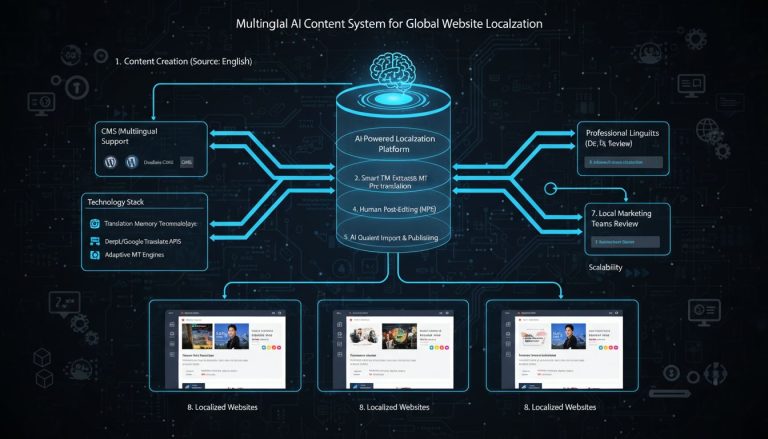
- Focus on localization: Use AI translation and localization features to adapt content for different markets without doubling your workload.
- Monitor and adapt: Regularly review analytics and update your strategies. AI tools are evolving, and so should your approach.
The Future of Small Teams Managing Large Content Networks
As AI technology continues to advance, the barrier for small teams to manage extensive content networks will diminish even further. We’re heading toward a future where automation handles the heavy lifting—content creation, SEO, localization, and publishing—while humans focus on strategic planning, creative storytelling, and building brand relationships. The key is understanding that technology is an enabler, not a replacement. Small teams that harness these tools intelligently will outpace larger competitors still relying on manual processes.
“AI-powered automation transforms small teams into agile content networks capable of competing at scale, without sacrificing quality or speed.” — Industry Expert
Implementing a system that combines AI content generation, SEO optimization, and centralized publishing can dramatically change the game. Small teams are no longer constrained by manpower; instead, they leverage technology to amplify their reach and impact. The secret lies in choosing the right tools, developing efficient workflows, and continuously learning from data-driven insights. With this approach, your team can produce, optimize, and publish high-quality content across multiple WordPress sites—directly and effortlessly—keeping your brand relevant and competitive in a crowded digital space.