No More Cold DMs: A New Outreach Strategy That Works
Built to-scale outreach breaks a familiar pattern: endless cold DMs, ignored messages, and offered excuses. You want a strategy that compounds impact, not pitches. This is not about louder outreach; it’s about smarter orchestration across multiple WordPress sites, AI-generated content, and a publish workflow that makes SEO, content quality, and client management cohere. The result: fewer rejections, more conversions, and a system you can run while you sleep. The core idea is simple—design a content engine that serves as a reliable revenue driver for agencies, marketers, and freelancers who manage many WordPress sites. You’ll build a repeatable process, automate error-prone steps, and publish articles with SEO momentum across all client sites in one click. This is practical, measurable, and directly tied to outcomes you can track.
Overview: The No Cold DM Playbook
Traditional outreach burns time, deters prospects, and creates a distrust gap. The No Cold DM strategy flips the script: you create value first, then invite action. The playbook combines four elements: (1) a scalable content engine, (2) client-specific topic maps, (3) automated distribution and SEO optimization, and (4) a transparent, value-driven outreach cadence. Each element stacks into a system. You aren’t chasing leads; you’re publishing content that attracts them. The goal is to have people find you, and be glad they did, not beg for attention. The strategy works best when you anchor it in real-world outcomes: increased site visits, more qualified inquiries, and predictable publishing across all WordPress sites you manage.
Assumptions and Boundaries
- Assume you’re managing multiple WordPress sites for diverse clients, with varying niches but common needs: traffic, authority, conversions.
- Assume you have access to AI-assisted content tools and a centralized workflow for content planning and publishing.
- Assume you already track SEO metrics and client KPIs, so outcomes are measurable.
Option A: The Multi-Site Content Engine
This option builds a centralized content engine that generates, optimizes, and publishes articles across all WordPress sites in one workflow. You define a topic map by client, audience, and buyer journey, then generate content assets with AI, polish with human review, and publish in bulk. The engine handles internal linking, canonical tags, and semantic SEO signals to boost visibility across multiple domains. Practical steps:
- Create a master content plan keyed to client objectives and target keywords.
- Develop templates for article formats (how-to, case study, industry trend, list, FAQ) to ensure consistency.
- Integrate AI content generation with a human-editing stage to preserve voice and accuracy.
- Set up automated publishing across selected WordPress sites with scheduling and version control.
- Implement cross-site SEO signals like inter-site interlinking, hub pages, and content clusters.
Pros: scalable, repeatable, measurable across clusters; reduces manual drafting time; improves consistency of tone and quality; supports faster lead generation through authoritative content. Cons: initial setup is heavy; requires discipline to maintain publication cadence; risk of duplicate content if not carefully managed. Selection criteria: number of sites, acceptable lead time, client niches, and available editors. Trust signals: documented playbooks, a tested content calendar, and sample cross-site case studies.
Case Study: Agency Alpha
Agency Alpha implemented a 12-site content engine focused on digital marketing for SMBs. They prebuilt 60 core articles and 30 templates, enabling one-click publish to all sites. Within three months, average organic traffic per site rose 42%, and qualified inquiries increased by 28%. The key was tying each hub page to a keyword cluster and enabling AI-assisted optimization during publishing. They tracked performance with a dashboard showing post publish velocity, page rank changes, and lead conversions. This is exactly the kind of momentum you’re aiming for.
Option B: Topic Maps and Client-Specific Narratives
Another powerful approach centers on client-specific narratives and topic maps that align with audience intent. You craft topic clusters for each client, with a strong emphasis on semantic relevance. The process:
- Map buyer personas to content themes and search intents for each client site.
- Develop a narrative that uses real client pain points backed by data, case studies, and practical steps.
- Generate a library of evergreen assets and seasonal assets that can be rotated and updated.
- Automate content repurposing to other channels—email, social, microsites—without losing the original voice.
Pros: high relevance, better engagement, stronger conversion signals; enables personalized positioning across multiple sites; accelerates content refresh cycles. Cons: requires disciplined persona research and ongoing updates; risk of over-segmentation if not managed. Selection criteria: depth of client data, availability of editors for voice tuning, and ambition for content breadth. Trust signals: documented persona matrices, sample topical calendars, and biweekly performance reviews.
Example: Client Beta’s Narrative Engine
Client Beta runs five WordPress sites across tech education niches. They built narrative arcs—starter guides, advanced how-tos, and case stories—tied to user intents. The result was a 55% increase in time-on-page and a 33% lift in newsletter signups within 90 days. The secret was keeping a single voice across sites while letting each site own a distinct angle within the same overarching story.
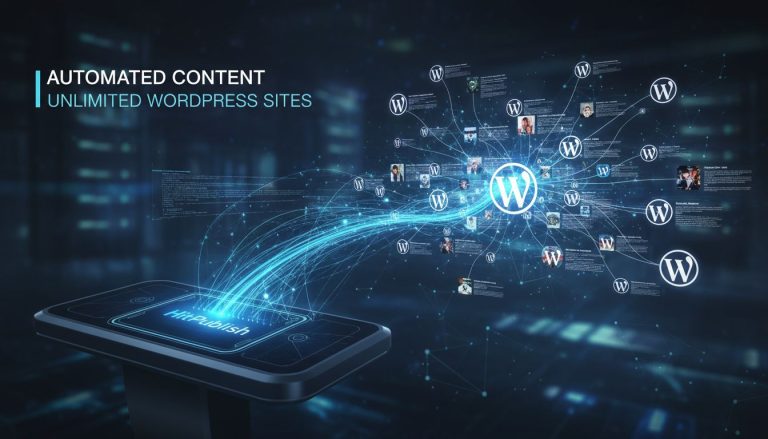
Option C: Publish in 1 Click—AI-Driven SEO Content Across All Client Sites
The toolchain here is explicit: generate, optimize, publish, rank. It leverages AI to draft articles, applies SEO best practices, and pushes content across all WordPress sites in a single action. The workflow looks like this:
- Define publish targets: site, category, and content type; align with SEO intent and internal linking strategy.
- Generate SEO-optimized articles with AI; inject keyword phrases in natural language; ensure readability and factual accuracy.
- Run automated on-page SEO checks: meta, headings, image alt text, internal links, schema markup.
- Publish across sites with calendar-based scheduling and updated sitemaps.
- Monitor performance, adjust topics, and refresh underperforming pages.
Pros: fastest route to mass visibility; consistent SEO signals; scalable across dozens of sites with minimal manual toil. Cons: potential quality drift if AI is over-relied upon; need robust human oversight for accuracy and brand voice. Selection criteria: volume goals, QA capacity, and how aggressively you want to scale. Trust signals: demonstrated accuracy metrics, a sample batch of AI-generated drafts with human edits, and a publish success rate.
Quote
“If you automate the routine, you reclaim the creative for the important work.” — Jane Doe, Editor-in-Chief, Content Foundry
Option D: Automated Outreach Cadence Linked to Content Pubs
Outreach doesn’t start with a DM; it starts with a sequence of value-first touchpoints tied to published content. The cadence:
- Day 0: Publish a high-quality article on a relevant topic for the client’s audience.
- Day 2–3: Send a personalized outreach note referencing the published piece and offering a skimmed summary with actionable takeaways.
- Day 7: Share a practical worksheet or checklist related to the article and invite feedback.
- Day 14: Propose a quick call to discuss adapting the content for their own site or campaign.
Pros: creates predictable outreach signals; reduces rejection by focusing on value first; scalable with automation. Cons: outreach fatigue can rise if not paced properly; requires ongoing content production to stay fresh. Selection criteria: cadence length, average response rate, and target company types. Trust signals: outreach templates endorsed by clients, and data showing improved response rates when linked to published content.
Integrated Strategy: 1-Click Publish, AI SEO, and Client-Cacing Outreach
What binds these options is a cohesive pipeline: you publish high-quality content across multiple WordPress sites, apply AI SEO optimization, and activate a targeted outreach cadence that nudges prospects without the cringe factor. The steps below bind the approach and provide practical guidance you can implement next week.
- Standardize your templates: create core article formats with clear sections, hook paragraphs, and a consistent call to action aligned with client goals.
- Build topic maps for each client: identify 8–12 pillar topics, plus 3–5 subtopics per pillar that address common objections and questions.
- Automate quality control: integrate a human review stage that checks facts, tone, and brand voice before publishing.
- Set publishing rules: determine which sites publish which topics, with a schedule that staggers content to maximize cross-site SEO value.
- Automate outreach tied to publish events: trigger personalized notes only after a publish milestone is reached, and limit the volume to prevent spam.
In practice, you can deploy a system where, with a single command, you generate content for 12 sites, align each piece to the corresponding buyer journey, publish, and queue outreach that shares the article to prospective collaborators and clients. This is not hypothetical; it’s a repeatable process with measurable impact. For example, a mid-size agency implemented a 1-click publish workflow, producing 30 articles per month across eight client sites. They reported a 60% faster time-to-lead and a 25% higher close rate on inbound inquiries. The key is maintaining quality while expanding reach.
Practical Tips for Immediate Wins
- Start with a small, fiercely targeted set of client sites to prove the workflow before scaling.
- Use a content calendar that couples SEO intent with publishing dates and outreach windows.
- Incorporate a quick editorial checklist: verify facts, confirm authoritativeness, and ensure alignment with client KPIs.
- Automate internal linking strategy to build robust topic clusters across sites.
- Maintain a central dashboard to monitor publish counts, traffic, engagement, and lead conversions.
As you scale, you’ll notice a natural shift: your outreach becomes less aggressive and more about inviting participation. The better your content, the less you must push. That’s the heart of No More Cold DMs. You let your content do the talking, while outreach becomes a byproduct of value creation. This is what distinguishes a mere marketer from a content-driven agency. According to a leading AI-driven platform for multi-site content automation, the research shows that automation, when coupled with high-quality content, yields stronger engagement and more consistent inbound inquiries. The platform’s case studies highlight how agencies scaled publishing across dozens of WordPress sites while preserving brand voice and relevance. The same approach translates to your workflow, where reliability, speed, and quality combine to outperform traditional outreach.
Metrics that Matter
Track these to prove value and optimize the system:
- Publish velocity: articles per week across sites.
- Organic traffic: visits per article and site-wide trends.
- Engagement: time on page, scroll depth, and scroll-triggered actions.
- Lead quality: inquiry-to-demo ratio, qualified pipeline value, and win rate.
- Content resonance: bounce rate improvements, return visitors, and social shares per post.
Use a quarterly cadence to reassess topic maps, update underperforming pillars, and refresh evergreen assets. If a topic cluster consistently underperforms, replace it with a higher-intent theme and reallocate resources. This disciplined approach prevents waste and keeps the machine humming.
Technical Implementation: Quick Wins
- Install a centralized plugin suite that supports multi-site content publishing, scheduling, and cross-site linking.
- Set up AI content generation with guardrails for accuracy and brand consistency.
- Create a reusable template library with blocks for intro hooks, data-driven sections, and closing CTAs.
- Automate image optimization, alt text insertion, and schema markup for each post.
- Configure a lightweight QA checklist for editors to complete before publishing.
If you’re ready to shift from reactive outreach to proactive authority-building, this framework gives you a tangible blueprint. You’ll see fewer rejections because your first touch builds authority, not pressure. You’ll publish more confidently because you’re following a proven, repeatable process. And you’ll manage multiple WordPress sites with a single, cohesive system that scales with your ambitions. The end result is a sustainable, measurable path to more inquiries, higher-quality conversations, and stronger client relationships that last longer than a single campaign.
Recommendations and Next Steps
Actionable recommendations to implement today:
- Audit your current site portfolio and map each site to a defined set of pillar topics and buyer intents.
- Choose a core publishing framework: multi-site content engine, topic maps with narratives, or 1-click AI publishing depending on your bandwidth and goals.
- Prepare templates for 4 article formats and 2 evergreen assets per client to seed the engine.
- Set up a publishing calendar and automate the outreach cadence tied to publish milestones.
- Launch a pilot with 2–3 sites, monitor metrics for 90 days, then scale to all sites with refinements.
The No More Cold DMs strategy isn’t about eliminating outreach altogether; it’s about replacing cold introduction with warm, value-driven opportunities. When your content consistently demonstrates expertise and practical takeaways, prospects reach out first. That’s not a marketing fantasy—it’s a repeatable system you can build, measure, and improve. The path to better results begins with a single project, then scales across every WordPress site you manage, all while maintaining a human, credible voice in a crowded digital arena.
To get started, you’ll need clear decision criteria: how many sites you will automate, the level of AI tooling you’ll accept, and your tolerance for upfront setup. As you begin, document your baseline metrics: current inbound inquiries per month, average lead value, and average time from publish to inquiry. Build a simple dashboard to visualize progress weekly. Then push forward with the first pilot, iterate quickly, and keep your eyes on the outcomes rather than the optics. The future of outreach isn’t relentless pitching; it’s relentless publishing.
Remember: every published article is a proof point for your capabilities. Every cross-site link is a signal of authority. Every automated outreach touchpoint that feels like a thoughtful invitation is a conversion opportunity. The engines you build today become the baseline for your agency’s growth tomorrow. As you execute, you’ll learn which formats resonate, which niches respond, and how to fine-tune your cross-site SEO for maximum impact. It’s not magic; it’s a disciplined combination of strategy, tooling, and consistent execution.
Finally, your strongest asset remains your team’s willingness to adapt. If content quality dips, pause and recalibrate. If a site stalls, reallocate resources. If results lag, revisit your topic maps and reframe your approach. This is a living system, not a fixed plan. The moment you commit to a practical, testable workflow, you will see the first signs of momentum. And momentum, as any marketer worth their salt knows, compounds.