Long-Form vs. Short-Form AI Content: Boost Engagement Effectively
Long-Form vs. Short-Form AI Content: Maximize Engagement Effectively
In the rapidly evolving world of digital marketing, content remains king. Artificial intelligence (AI) has become a game-changer in this realm, particularly in content creation. Businesses and frankly speaking, content creators alike are constantly seeking ways to boost their site traffic, improve SEO rankings, and engage audiences more effectively. But with so many options, deciding between long-form and short-form AI-generated content can be confusing. Each has its strengths and trade-offs, and understanding these nuances is key to leveraging AI for maximum engagement. This article explores the differences, benefits, and best practices for using both long-form and short-form AI content, helping you make informed decisions to optimize your content strategy.
Understanding the Basics: What Is Long-Form and Short-Form AI Content?
What Is Long-Form AI Content?
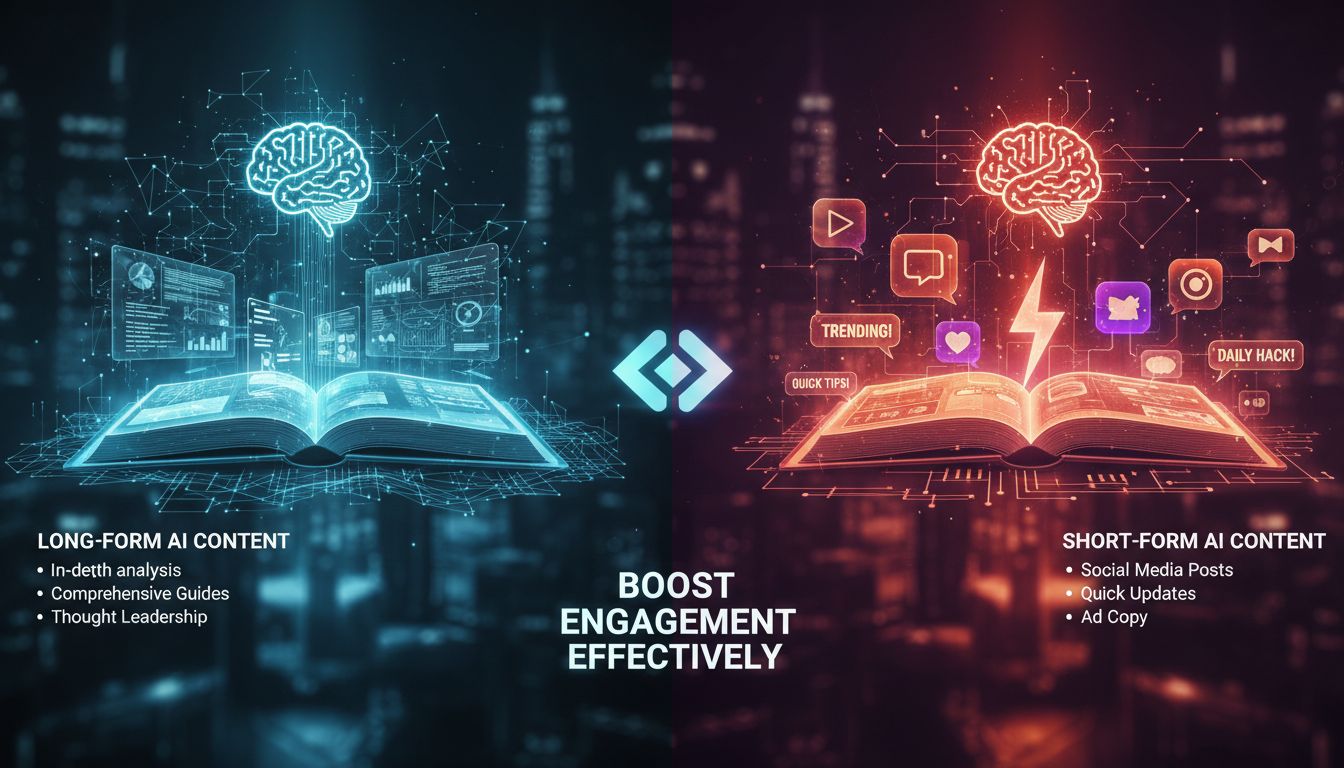
Long-form AI content typically refers to articles, guides, or blog posts exceeding 1,000 words. It aims to provide in-depth analysis, comprehensive information, or detailed storytelling. For example, a 2,500-word guide on SEO strategies or a detailed case study on content marketing falls into this category. Long-form content frankly speaking, allows creators to cover multiple angles, incorporate rich keywords, and deliver substantial value to readers. Wouldn’t you agree? It often ranks well in search engines because it answers complex queries and keeps visitors engaged for longer periods.
What Is Short-Form AI Content?
In contrast, short-form AI content is concise—usually under 500 words—and designed for quick consumption. Its primary purpose is to grab attention quickly, convey a core message, or drive immediate action. Examples include social media posts, product descriptions, news snippets, or brief how-to guides. Short-form content is easier and faster to produce, making it popular for campaigns that require frequent updates or for platforms where attention spans are limited.
Advantages and Limitations of Long-Form AI Content
Benefits of Long-Form AI Content
- Enhanced SEO Opportunities: Longer articles naturally include more keywords and backlinks, boosting your chances of ranking higher on search engines.
- Authority Building: Detailed content positions your site as an industry expert, increasing trust among your audience.
- Better Engagement: Well-structured long-form pieces keep visitors on your site longer, reducing bounce rates.
- Content Depth: You can address complex topics comprehensively, satisfying advanced or curious readers.
Limitations of Long-Form AI Content
However, producing long-form content requires significant effort, even with AI tools. There’s a risk of verbosity or redundancy if not carefully edited. Moreover, lengthy articles might deter casual browsers or mobile users who prefer quick reads. Over-optimization can also lead to keyword stuffing, which harms SEO. It’s essential to balance depth with readability and ensure that the AI-generated content remains engaging than overwhelming.
Advantages and Limitations of Short-Form AI Content
Benefits of Short-Form AI Content
- Speed and Efficiency: Short pieces can be generated rapidly, allowing for frequent updates and timely responses to trending topics.
- High Engagement Rates: Concise content is perfect for social media, where attention spans are limited.
- Cost-Effective: Less time and resources are needed to produce short content, making it ideal for quick campaigns.
- Easy to Repurpose: Short snippets can be adapted across multiple platforms and formats, maximizing reach.
Limitations of Short-Form AI Content
While quick to produce, short-form content often lacks depth. It may not fully satisfy users seeking detailed information, which can limit its effectiveness for complex topics. Or inconsistent across posts., There’s also the risk of losing brand authority if your messaging is overly superficial Additionally, over-reliance on short content can harm your SEO efforts if not complemented with long-form pieces.
Strategic Use of AI for Content Creation: Finding the Right Balance
Combining Long- and Short-Form Content
The most effective content strategies often blend both formats. Use long-form AI-generated articles to establish authority and target high-competition keywords. These comprehensive pieces serve as cornerstone content that attracts backlinks and organic traffic. Complement this with short-form content—such as social media posts, snippets, or email summaries—to promote your long-form content and engage audiences on various platforms. This approach maximizes exposure and caters to different reader preferences. For instance, you might publish a detailed 2,000-word guide on SEO strategies and then create daily social media posts highlighting key tips or statistics from that guide. Furthermore, leveraging AI tools can streamline this process, allowing quick generation of both content types while maintaining consistency.
Using AI to Automate SEO and Content Optimization
Automating SEO optimization is crucial for scaling content efforts without sacrificing quality. As detailed in HitPublish, AI content generators can also assist in creating SEO-optimized content at scale, saving time and resources. AI-powered tools can help identify relevant keywords, suggest meta descriptions, and optimize content for search engines. These tools enable marketers to focus more on strategy and less on repetitive tasks, ensuring that both long- and short-form content are aligned with current SEO best practices.
Practical Tips for Maximizing Engagement with AI Content
Prioritize Quality in my view, Over Quantity AI tools have advanced significantly, but they still require human oversight.
1. Always review and edit AI-generated content to ensure accuracy, clarity, and a human touch. Well-crafted content resonates better with audiences and improves engagement.
2. Use AI tools to research keywords and create content that directly answers their questions. Focus on User Intent and Search Queries
Understand what your audience is searching for. Long-form content should delve into these topics, while short-form content can highlight key points or updates.
3. Short-form content benefits from quick, eye-catching visuals, while long-form pieces should be structured for easy navigation. Use Visuals and Formatting Effectively
Incorporate images, bullet points, and clear headings to make content more digestible.
4. This repurposing saves time and broadens your reach. Repurpose Content Across Platforms
Leverage AI to transform a single long-form article into multiple short snippets for social media, newsletters, or infographics.
5. Monitor and Adjust Based on Analytics
Track engagement metrics like bounce rates, time on page, and social shares. Use these insights to refine your content strategy continually. AI analytics tools can help automate this process. Effective AI Content Strategies,
Case Studies: Real-Life Examples of
Case Study 1: E-commerce Site Boosts Traffic
An online retailer used AI-generated long-form blog posts about product guides and buying tips. They complemented these with short social media updates. The retailer also used AI tools to automate SEO optimization, further boosting their site’s visibility. The result was a 40% increase in organic traffic within six months, thanks to improved SEO and increased engagement. Snippets, and quick updates., They focused on creating SEO-optimized long articles and used AI to generate social media posts, email Their efficiency improved by 50%, and client satisfaction increased as they saw better engagement and higher conversion rates.
Case Study 2: Content Marketing Agency Maximizes ROI
A content marketing agency created a mix of long and short AI content for multiple clients.
Final Thoughts: Tailoring Your Content Strategy for Success
Both long-form and short-form AI content have their roles in a successful digital marketing strategy. And provides in-depth information., Long-form content builds authority, improves SEO, Short-form content drives quick engagement, boosts brand visibility, and keeps your audience interested. By doing so, you can maximize engagement, increase site traffic, and stay ahead of the competition in an ever-competitive digital landscape. The key lies in balancing these formats and leveraging AI tools to automate and optimize your content creation process. Remember, quality always trumps quantity. AI can generate content fast, but human oversight ensures it remains relevant, accurate, and engaging. Combining strategic planning with AI-driven automation can help you create content that resonates and ranks. As the digital world continues to evolve, staying adaptable and using the right mix of content formats will be crucial to sustained success.