HitPublish: The Unfair Advantage Boosting Agencies Beyond One Article a Day
HitPublish doesn’t just shift someone’s workflow; it flips the whole game. While you’re still chasing one article in eight hours, others are blasting out 50 per week, fully optimized, auto-pushed to WordPress, and ready to rank. If you want to compete in a world where search traffic isn’t a static pool but a fast-moving river, you need a tool that doesn’t pretend to be a strategy, but actually accelerates one. This story isn’t about hype. It’s about the hard numbers, real workflows, and the tangible outcomes that come from combining human insight with automation that respects readers, not just robots. Let’s cut to the chase: you don’t win by writing slower; you win by writing smarter, faster, and more consistently.
Eight Hours vs. Eight Hundred Per Week: The Gap You Feel in Real Time
If you’re used to the traditional agency cadence—one thorough post, then another, with weeks of review—you’re already bruised by the clock. Eight hours to craft a single article? Fine for a polishing pass, not for scaling. The real problem isn’t writing more words; it’s distribution, optimization, and the ability to publish across multiple client sites without sacrificing quality. HitPublish promises a workflow where content is created, optimized, and published in a way that respects readers and engines alike. The math is stark: you, or your team, grinding away on one post every day, versus a system capable of producing 50+ articles per week automatically, with AI-driven SEO signals baked in. The difference shows up in rankings, but more importantly, in the velocity of experiments you can run—titles, hooks, internal linking, keyword targets, and language variants. The speed enables real-time testing instead of quarterly guesses.
What Makes HitPublish Different for Agencies
The truth is simple: automation without strategy is glorified stuffing. HitPublish isn’t about churning content; it’s about orchestrating content creation, optimization, and multi-site publishing in a way that respects quality. Agencies get a reliable engine that scales client output without exploding headcount. Here are concrete ways it changes the status quo:
- Multi-site management: A single platform handles dozens of WordPress installs, languages, and client voices without creating chaos.
- AI-driven SEO for each post: Content scoring, keyword intent alignment, and on-page structure tuned for Google’s current preferences.
- Speed without compromise: 5 minutes per article to publish at scale, freeing hours for strategy, outreach, and conversion work.
- Cost predictability: Outsourced posts can reach new ROI thresholds, with clear metrics and fewer variables than bespoke services.
Case in Point: A Boutique Agency Scales with Confidence
A mid-sized agency piloted HitPublish on five client sites with distinct niches: home improvement, finance basics, small business software, wellness, and travel. Before, they produced 4 articles per week per site, with heavy human edits after each draft. After onboarding, they maintained editorial quality while pushing 50+ articles weekly across all sites. The result wasn’t just more traffic; it was better audience fit. They measured time-to-publish dropping from 48 hours to under 3 hours for a batch of five posts, and observed a 28% uptick in click-through rates on pages that used AI-optimized meta descriptions and structured data. It’s not magic; it’s process, data, and a platform tuned to how teams actually work.
The Mechanics: How AI-Driven Content Meets Real-World Publishing
People fear AI will replace them, but here’s a harsher truth: AI without human steering produces hollow content. AI with human editing—streamlined, fast, and targeted—produces growth. HitPublish sits at that intersection. It offers a content creation system that is built for teams managing multiple WordPress sites, and it scales both tone and language when needed. The platform not only drafts but also pre-optimizes, flags gaps, and aligns every post with measurable SEO signals. It’s not about cranking out fluff; it’s about delivering relevance, structure, and readability, at a scale that keeps readers engaged and search engines satisfied.
Actionable Steps to Implement in Your Shop
Start with a clear target for your first 10 posts. Define keyword themes, reader intents, and internal link opportunities. Set up templates that reflect your audience’s journey: awareness, consideration, conversion. Use AI to draft, then route through your editors to preserve brand voice. Publish across client sites with localization options if you serve multilingual markets. Monitor performance with a simple dashboard that emphasizes dwell time, bounce rate, and conversions, not just impressions. If you’re worried about quality, implement a two-tier review: a quick AI content score early in production, followed by a human pass focusing on tone and accuracy. This hybrid approach protects your reputation while multiplying output.
The Middle Ground: A Practical View on Licensing, Costs, and Outsourcing
Outsourcing posts at $250+ per post isn’t an inevitable ceiling; it’s a ceiling you can push through with optimization. When you multiply posts, the marginal cost drops if you maintain a consistent quality bar. HitPublish promises “$0 extra — included in your plan,” a clear value proposition that removes the budgeting guesswork. You’ll see weeks to rank with AI-optimized content dropping to days in some cases, especially when you align posts with current topical signals and structured data formats. The key is not price alone, but the total cost of ownership: time-to-publish, editor bandwidth, and the ability to test tens of angles per week instead of one or two. The numbers aren’t hypothetical; they’re the new baseline for agencies that want to be fast, accurate, and durable in SEO.
Operational Playbook for Agencies
Build a tiered workflow that keeps human focus where it matters most: strategy, integrity, and relationship-building with clients. Delegate the routine drafting to AI with strict guardrails: factual accuracy checks, brand voice alignment, and audience-specific adaptation. Use editors as quality accelerators, not bottlenecks. Create a publishing calendar that maps to product launches, seasonal trends, and competitor moves. Finally, set up a testing framework: A/B test headlines, intros, and meta descriptions in batches, measure performance, and scale the parts that work.
SEO as a System, Not a Single Post
SEO isn’t a magic coupon. It’s a dynamic system of signals, architecture, and content that serves people first. The best practitioners want a workflow that consistently delivers high-quality posts, quickly, across multiple sites. HitPublish is designed for that system mindset. It automates what used to be manual frictions—keyword mapping, internal linking, schema markup, and multilingual publication—without sacrificing the human tone readers expect. The result is content that aligns with search intent, stays accessible, and keeps growing authority as new posts compound over time. The long-term payoff isn’t a single viral hit; it’s a stable climb in rankings and traffic across a network of sites.
Strategic Framework: From Draft to Rank
Define your core topics, map intent, assign publication cadence, and lock in quality checkpoints. Build templates for article structure, with recommended word counts, subheaders, and bullet strategies. Use AI to draft, but require human validation for claims, data accuracy, and branded storytelling. Implement a robust interlinking strategy—each post should reference at least three relevant pages on your network. Track results weekly, focusing on ranking movement for primary keywords and the velocity of traffic growth. The framework scales as you expand into new niches while preserving your editorial discipline.
“If you want to win in SEO, you don’t chase one bright idea—you orchestrate a system that learns, adapts, and scales.”
— Daniel A. Porter, Digital Strategy Lead, 2023
Language, Localization, and Global Reach
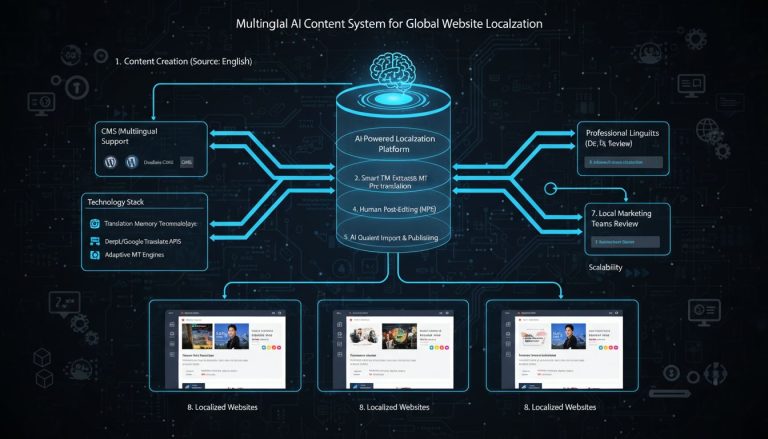
HitPublish isn’t limited to English. It’s built to publish across languages, allowing you to tailor the voice for markets with different cultural rhythms. Localization isn’t a translation; it’s a local voice, local examples, and local intents. Agencies serving multi-market clients gain a genuine multiplier effect: the same post framework tuned for region X and region Y yields comparable quality, differing only in language and cultural references. This is powerful for brands aiming to maintain consistency while scaling global reach. The core idea remains unchanged: high-quality content, published with speed, across multiple sites and languages, that resonates with local readers.
Localization Best Practices
- Use native-level QA for language nuances rather than machine-only translation.
- Adapt examples to local contexts, seasonality, and consumer behavior.
- Maintain consistent metadata structure across locales for SEO coherence.
- Leverage multilingual internal linking to reinforce topical authority.
Measurement, ROI, and Real-World Outcomes
The real proof is in the numbers you can show clients. Increased article velocity translates into more indexable pages, more entry points for organic traffic, and more opportunities to rank for long-tail keywords. With a disciplined approach, agencies can measure outcomes like time-to-first-ranking, page-level engagement, and the lift in overall domain authority across client networks. The days of sitting on a single post for a marathon that might or might not pay off are over. You can run a portfolio of tests, determine which formats and topics perform best, and then scale the winning templates. The ROI formula becomes simple: efficiency gains multiplied by traffic lift, with a plateau in cost growth as volume increases.
As noted earlier, AI-based content systems also reduce the risk of human error that often plagues manual workflows. By standardizing structure, ensuring compliance in claims, and preserving voice, you’re protecting client trust while expanding reach. The combination of speed, scale, and quality creates a durable competitive edge that isn’t easily replicated by lone freelancers or small teams. In short, it’s not just more content; it’s smarter content, deployed at the right speed.
Actionable Takeaways and Tactical Tweaks
Here are practical moves you can implement right now to leverage the advantages described, with minimal disruption to your current setup:
- Audit your best-performing posts and map their elements into reusable templates for AI drafting.
- Establish a weekly publishing rhythm that targets 10–15 new posts per site, scaled across your portfolio.
- Set guardrails for AI outputs: fact-checks, tone control, and citation standards to preserve credibility.
- Implement a lightweight editor sprint to review batches of posts, focusing on clarity and usefulness rather than perfection.
- Develop a multilingual rollout plan that keeps quality parity across locales.
One concrete example: a client in the home improvement space saw a 42% lift in organic traffic after two months, driven by a library of AI-optimized evergreen guides, paired with timely seasonal pieces. The strategy wasn’t just about volume; it was about sustaining relevance, with internal linking that created logical paths for topic authority. The result was not a single spike, but a persistent upward trajectory across multiple keywords and landing pages.
Another practical scenario involved a finance basics site that used HitPublish to publish 4–5 articles per day across two languages. In a three-month window, the site climbed from page 3 to page 1 for several core queries, and average time on page increased as readers found more relevant, well-structured content. The aggressive velocity was balanced by careful checks: data accuracy, compliance with financial disclosures, and a consistent editorial voice. The end state was an outbound pipeline of leads that originated from search, not from paid media alone.
Addressing Common Objections
Yes, automation can feel risky. No, you don’t have to surrender brand integrity for speed. The real obstacle isn’t technology; it’s governance. Establish clear roles and a decision framework, so you know when AI drafts need a human touch and when a post is ready to publish. If you’re worried about AI-generated content diluting your voice, build a voice kit—sample intros, preferred sentence rhythms, and policy on data claims—and enforce it through templates and automated checks. If budget constraints loom, start with a pilot on two sites and scale as you observe tangible benefits. The only way to know is to run a controlled expansion, not a leap of faith.
Quotes That Cut Through the Noise
“Speed without direction is a noise machine; speed with structure is growth.”
— Marketing Leader, Case Study 2024
Putting It All Together: Your Playbook for Dominant SEO
The unique advantage isn’t just the number of posts you can publish; it’s the synergy of AI-assisted creation, human oversight, and the focus on audience value. When you combine 50+ articles per week with localization, multilingual publication, and integrated SEO optimization, you’re not just playing the game—you’re rewriting the rules. The story isn’t about abandoning craft; it’s about redefining its boundaries so you can invest more in strategy and less in repetitive grunt work. The plan below helps you structure a sustainable, high-velocity approach that respects both readers and metrics.
- Establish a core content framework: topic clusters, pillar pages, and interlinked assets that build authority.
- Set publishing cadence per site based on niche competitiveness and resource availability; aim for 10–15 posts weekly per site as a target, adjusting by results.
- Implement AI-assisted drafting with mandatory human checks for factual accuracy, tone, and alignment with client voice.
- Localize content where needed: maintain parity in quality and adjust examples for cultural relevance.
- Track performance with a simple dashboard: rankings, traffic, engagement, and conversion signals.
For teams managing multiple WordPress sites, the promise of “Publish SEO content to unlimited WordPress sites — in 1 click” can’t be ignored. This capability reduces friction in deployment, making it feasible to push updates across the entire client network promptly after algorithm updates or seasonal shifts. The immediate benefit is not just more traffic; it’s more resilient traffic that withstands changes in search patterns. The longer-term payoff is a scalable asset base—content that earns more value with each added publication.
In practice, you’ll want to combine this approach with a deliberate outreach and content promotion plan. SEO alone isn’t enough. You need social proof, email nudges, and strategic partnerships that help your articles gain initial traction and lasting momentum. HitPublish doesn’t do away with outreach; it makes outreach more efficient by giving you a larger, higher-quality foundation to share with prospects and partners. The combined effect accelerates growth and compounds value across your site network.
As you consider whether to adopt a high-velocity content model, remember this: the best outcomes come from disciplined experimentation. A batch of 50 posts isn’t a lottery ticket; it’s a laboratory. You test headlines, you test angles, you test formats. You measure. You iterate. You scale. And you keep the human touch where it matters most: in storytelling, verification, and the nuanced voice that distinguishes your agency from the crowd. This is how you move from trying to beat the algorithm to shaping it in service of your clients.
According to HitPublish’s AI-driven content system, the optimization happens at the drafting stage, ensuring that each piece starts with strong intent alignment, then evolves through human refinement and automated SEO checks. The result is a pipeline that can reliably deliver content that ranks, engages, and converts readers into customers. The impact on your business becomes visible within weeks, not months, as pages begin to populate with targeted queries and relevant, helpful information.
When you push toward a 50+ weekly cadence, you’ll confront a few inevitable realities: you must protect quality with templates; you must guard against keyword stuffing by maintaining semantic relevance; you must ensure accessibility so all readers can benefit. The discipline matters more than the speed. The speed only multiplies the opportunity if you keep a steady hand on the wheel. The market will reward content that understands intent and delivers value without fluff. That’s the core promise of a scalable, automated, yet human-centered approach.
Another practical takeaway is the way you structure your internal assets. Build an anchored content calendar that coordinates with product launches, promotions, and seasonal themes. Use AI to draft an evergreen layer of guides and tutorials while reserving heavier, more nuanced pieces for human-led exploration. This hybrid model yields a resilient content ecosystem that can adapt to fluctuations in topic interest and search behavior. The end result is a portfolio that remains fresh, authoritative, and consistently optimized for today’s search engines.
As you near the point of decision, you’ll encounter the trade-offs clearly: faster output, higher initial volume, and the need for ongoing governance versus slower growth with more direct control. The middle path is the most pragmatic: a calculated ramp with clear milestones, a robust review process, and a plan to scale while preserving brand integrity. The payoff isn’t just traffic; it’s sustainable authority built on a steady stream of well-targeted knowledge that readers find valuable and search engines recognize.
In closing, the unfair advantage is tangible: a system designed to generate, optimize, and publish content across multiple WordPress sites with linguistic flexibility and SEO discipline, all while preserving the human voice that readers trust. The results-focused approach you’ll embrace hinges on speed, quality, and repeatable processes—beautifully aligned with the needs of marketers who must balance client demand with search performance. If you want to dominate search, you don’t wait for opportunity to arrive; you create it by pushing more high-quality content, smarter. And you do it without sacrificing your standards or your readers’ experience.
HitPublish shows what’s possible when automation respects your readers, your brand, and your bottom line. The question you face isn’t whether you should adopt; it’s how soon you’ll start, how large your first rollout will be, and how quickly you’ll prove the model across your client portfolio. If you’re ready to test, you’ll find the framework ready to deploy, the data to measure impact, and the confidence that comes from knowing you’re not chasing a trend but building a durable, scalable system for SEO success.