Build Multilingual AI Content Systems for Global Website Localization
Building a multilingual AI content system for seamless global website localization isn’t just a nice-to-have anymore; it’s become a critical component of successful international marketing. As businesses expand beyond borders, they face the challenge of creating, managing, and optimizing content across multiple languages and cultures. The goal is to deliver a site experience that feels natural and engaging to users, regardless of their language or location. This task sounds daunting—humans might shy away from it, fearing complexity and resource drain—but with the right AI-powered tools and strategies, it’s entirely achievable. This article aims to provide a comprehensive guide for marketers, web developers, and content creators eager to leverage AI for content creation, SEO, and automation. From understanding the core principles of multilingual AI systems to exploring practical implementation tips, this piece will help you craft a strategy that boosts site traffic, enhances user experience, and reduces localization costs. Expect real-world examples, actionable insights, and a few candid doubts along the way—because building a truly effective multilingual AI content system involves navigating challenges as much as seizing opportunities.
Understanding the Foundations of Multilingual AI Content Systems
The Why Behind Multilingual AI Content
First, let’s get straight to the point. The digital landscape is more competitive than ever, with consumers demanding personalized, culturally relevant experiences. A website that only speaks English or a single language narrows your reach and risks alienating significant portions of your target audience. Multilingual AI content systems enable you to scale content creation efficiently across languages, maintaining quality and relevance without ballooning your costs.
AI-driven solutions revolutionize how content is generated and localized. Instead of manually translating every piece—an expensive, time-consuming process—you can automate much of this work. The result: a consistent, SEO-optimized presence in multiple markets. That’s why integrating AI into your content creation workflow isn’t just smart; it’s essential for global competitiveness.
The Core Components of a Multilingual AI System
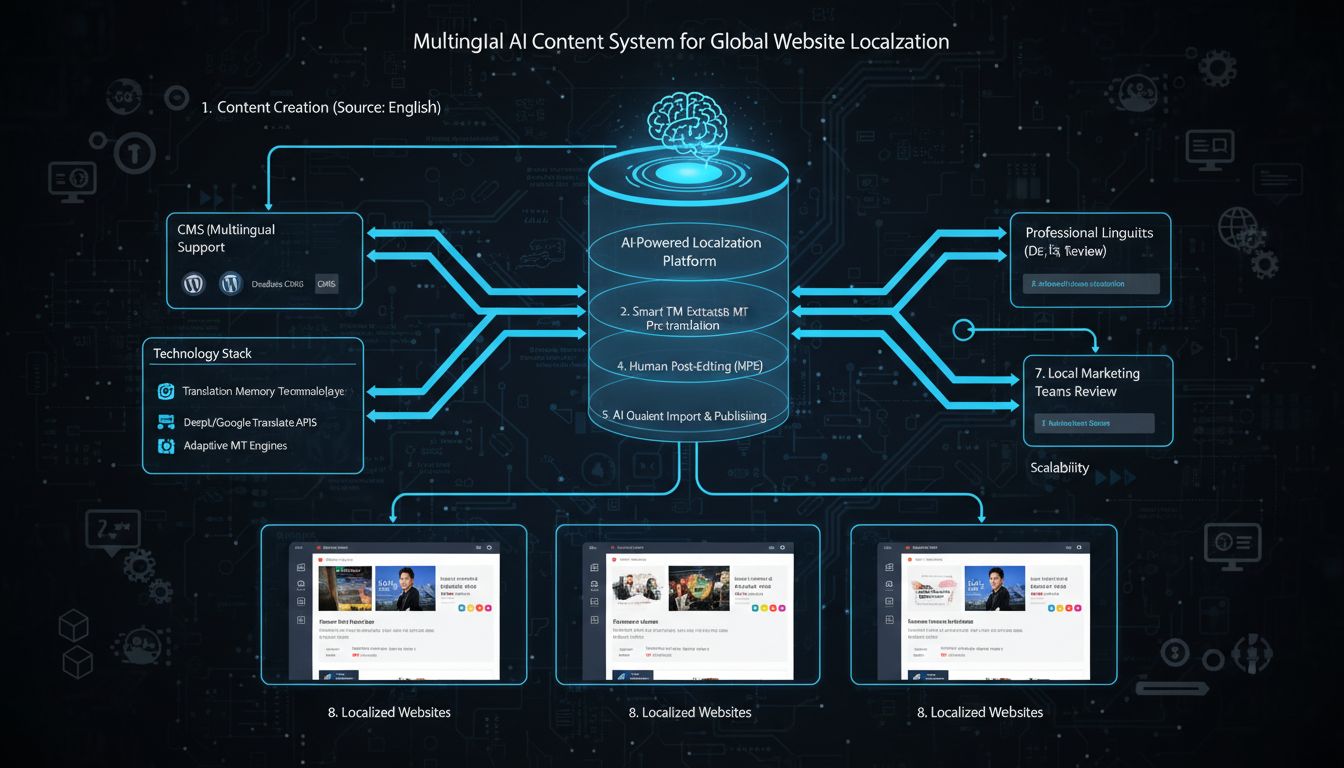
To understand how these systems work, consider their core components. First, there’s the AI content generator, which uses natural language processing (NLP) models to produce human-like text in various languages. Then, there’s the translation layer—often powered by machine translation engines—that adapts content for local audiences. Finally, SEO optimization tools ensure that each language version ranks well in local search results.
Effective systems also include content management modules that allow you to automate workflows, schedule updates, and monitor performance across different markets. When these components work in harmony, you get a scalable, efficient, and high-quality multilingual content pipeline.
Strategies for Building a Multilingual AI Content System
Step 1: Define Clear Localization Goals
Before diving into tools or tech, clarify what you want to achieve. Are you aiming for full website localization, including images and UI elements? Or do you need just blog posts and product descriptions? Setting specific goals helps determine the scope, budget, and technology stack. For instance, if your goal is to boost international SEO, focus on keyword research in each target language and ensure your AI tools support SEO optimization for each locale.
Step 2: Choose the Right AI Content Generator and Tools
There’s a growing number of AI content creation tools tailored for multi-site and multilingual needs. Some popular options include GPT-based models, which can generate content in multiple languages, and dedicated AI content generators like HitPublish, which streamline multi-site management and localization. When selecting tools, prioritize those that support your target languages, integrate with your existing CMS, and offer SEO features.
For WordPress users, plugins that leverage AI for content creation and SEO optimization can automate much of the process. These tools often include features like auto-translations, keyword suggestions, and content rewriting—saving time and boosting site traffic in new markets.
Step 3: Automate Content Creation and Localization
Automation is the backbone of scalable multilingual content systems. Using AI, you can generate product descriptions, blog posts, FAQs, and more in multiple languages within minutes. The key is to ensure the AI understands your brand voice and target audience. Regularly review and refine AI outputs to maintain quality. Over time, your AI models will learn your style, reducing manual editing.
To enhance localization, integrate machine translation engines that adapt content to cultural nuances and local idioms. Remember, direct translations rarely cut it—localization requires context awareness, which some advanced AI models now support. This approach allows you to produce content that resonates with local audiences and improves engagement.
Step 4: Optimize for Local SEO
SEO isn’t a one-size-fits-all process, especially across languages. Each market has unique search behaviors, keywords, and ranking factors. Use AI-powered SEO tools to identify high-impact keywords in each language and optimize your content accordingly. Incorporate local search terms naturally into your content, meta tags, and URLs.
For example, a clothing brand expanding into France should target keywords like “acheter vêtements en ligne” instead of just “buy clothes online.” AI tools can automate keyword research and help you adapt your content seamlessly. Additionally, structured data markup tailored for local search enhances visibility and CTR.
Implementing and Managing Your Multilingual AI System
Establish a Workflow for Content Production and Review
Automation doesn’t mean you can neglect quality control. Establish a workflow where AI-generated content is reviewed by native speakers or localization experts. This hybrid approach ensures cultural relevance and accuracy. Use AI to produce initial drafts, then refine with human touchpoints. Over time, the AI models will generate better outputs, reducing review workload.
Monitor Performance and Iterate
Set KPIs such as site traffic, bounce rates, conversion rates, and keyword rankings for each language version. Use analytics tools to track performance and identify areas for improvement. Regularly update your AI models with new data and feedback to enhance content quality and relevance.
According to hitpublish.ai, the key to successful multilingual content automation lies in continuous learning and adaptation. This iterative process ensures your system remains effective amid changing algorithms and user preferences.
Addressing Challenges and Risks
Despite the benefits, building a multilingual AI content system isn’t without hurdles. Language nuances, idioms, and cultural sensitivities require careful handling. AI models may produce awkward phrasing or misinterpret cultural cues. Always involve native speakers for review, especially for high-stakes content.
Data privacy is another concern, especially when handling user data across borders. Make sure your AI tools comply with GDPR and other local regulations. Additionally, avoid over-reliance on automation; some content demands human empathy and insight that AI can’t replicate yet.
Case Studies and Practical Tips
Case Study: E-commerce Expansion into Europe
An online fashion retailer decided to expand into European markets. They used AI-driven content creation tools to generate product descriptions in five languages, optimizing each for local SEO. By integrating machine translation and cultural localization, they increased their organic traffic by 40% within six months. The company also implemented AI tools for customer support, offering multilingual chatbots that improved user satisfaction and conversion rates. This case underscores how AI can streamline global site localization and enhance user experience, leading to tangible results.
Practical Tips for Success
- Start small with a pilot project in one or two languages before scaling.
- Invest in native speaker review processes to catch cultural missteps.
- Continuously update your keyword research to stay ahead in local search rankings.
- Leverage AI tools that support SEO and content automation for maximum efficiency.
- Use analytics to measure and improve your multilingual content strategy regularly.
Future Trends in Multilingual AI Content
The future of multilingual AI content creation looks promising, with advances in NLP models that better understand context and cultural nuances. Expect more sophisticated AI that can generate localized content almost indistinguishable from human writing, reducing the need for extensive human editing. Additionally, AI-driven personalization will allow websites to tailor content dynamically based on user language, location, and behavior, creating a truly seamless global experience.
Furthermore, the integration of voice search and conversational AI will redefine how users interact with multilingual sites. This evolution demands that your content systems are flexible, adaptable, and constantly learning—traits that AI can provide when properly managed.
“The key to successful global expansion is not just translation but cultural adaptation—something AI is increasingly capable of delivering at scale.”
In conclusion, building a multilingual AI content system is no longer a futuristic concept but a present-day necessity for marketers aiming to boost international site traffic and improve user engagement. By carefully selecting AI tools, establishing robust workflows, and continuously refining your approach, you can create a seamless, localized experience that resonates with diverse audiences. The investments you make now in AI-powered automation and SEO optimization will pay dividends in brand loyalty, conversions, and market reach.