Boost WordPress SEO Fast: Proven Tips to Improve Search Rankings
In the fast-paced digital landscape, having a WordPress site alone isn’t enough. To truly stand out and attract consistent traffic, your site must be optimized for search engines. SEO isn’t a one-time task; it’s an ongoing process that requires strategic efforts, especially when you want rapid results. Fortunately, advances in AI-powered tools now make it easier than ever to accelerate your SEO efforts without sacrificing quality. This article dives deep into practical, expert-backed tips to boost your WordPress SEO swiftly, leveraging AI, content creation strategies, and smart optimization techniques. Whether you’re a seasoned marketer or just starting out, these insights will help you unlock higher rankings and more visitors with less hassle.
Understanding the Power of AI in SEO and Content Creation
Artificial Intelligence has revolutionized the way we approach SEO and content marketing. AI-driven tools can generate high-quality, SEO-optimized content in a fraction of the time it used to take. For WordPress users, integrating AI for content creation and SEO automation can lead to faster ranking improvements and more consistent traffic growth. Instead of manually writing every blog post or optimizing each page, AI can handle much of the heavy lifting, freeing up your time for strategy and outreach.
One of the most significant benefits of AI in SEO is its ability to analyze vast amounts of data quickly. It can identify trending keywords, suggest content topics, and even optimize existing content for better search performance. For example, AI content generators can produce drafts that are already aligned with SEO best practices, saving hours of editing. Moreover, AI can help you create content that matches user intent, which search engines increasingly prioritize.
Implementing Fast-Track SEO Strategies for WordPress
1. Start with Comprehensive Keyword Research
Every successful SEO campaign begins with understanding what your audience searches for. Use tools like Ahrefs, SEMrush, or even Google Keyword Planner to find keywords with high search volume and manageable competition. Focus on long-tail keywords; they tend to convert better and are easier to rank for quickly. Incorporate keywords naturally into your content, titles, and meta descriptions.
Don’t forget to analyze your competitors’ keywords. Look for gaps where you can outrank them with better content or more strategic optimization. Remember, keyword stuffing is obsolete; the goal is to create valuable, keyword-rich content that answers your audience’s questions effectively.
2. Leverage AI Content Generators for Rapid Content Production
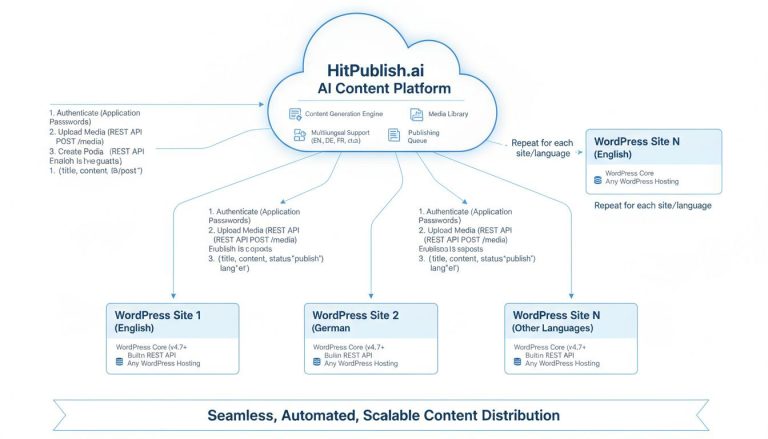
Content is king, but creating it at scale can be daunting. This is where AI content generation tools come into play. Platforms like HitPublish offer AI blog writers that produce SEO-optimized articles swiftly. These tools can generate drafts that you can refine, ensuring your site stays fresh with relevant content without burning out your team.
For example, suppose you want to target a niche like “eco-friendly home tips.” An AI content generator can quickly produce a detailed article, incorporating the target keywords naturally. This approach allows you to publish more frequently, signaling activity to search engines and improving rankings in less time. Just remember, AI content still needs human review to ensure accuracy and tone, but it dramatically shortens your content creation cycle.
Optimizing Your WordPress Site for Rapid SEO Gains
3. Install Essential SEO Plugins and Automate Optimization
WordPress offers a wealth of plugins designed to enhance SEO effortlessly. Yoast SEO and All in One SEO Pack are popular options that guide you through optimizing titles, meta descriptions, and sitemaps. However, for faster results, look into plugins that automate SEO tasks, such as schema markup and internal linking.
Automating SEO on WordPress means less manual work and fewer mistakes. For instance, automatic schema markup helps search engines understand your content better, leading to rich snippets in search results. Additionally, ensuring your site is mobile-friendly and loads quickly is crucial—use caching plugins like WP Rocket and optimize images with Smush to improve site speed, a key ranking factor.
4. Focus on Technical SEO and Site Speed
Technical SEO often gets overlooked but is critical for fast ranking improvements. Conduct a site audit to identify crawl errors, duplicate content, or broken links. Use Google Search Console and Screaming Frog to diagnose issues. Fixing these problems can lead to immediate SEO gains.
Site speed directly impacts user experience and rankings. A slow site drives visitors away and signals to Google that your site isn’t authoritative. Optimize your WordPress hosting environment, leverage CDN services like Cloudflare, and minimize third-party scripts. Remember, a fast, technically sound site sets the foundation for all other SEO efforts to succeed.
Content Optimization and Link Building Tactics
5. Create SEO-Optimized Content that Ranks
Content quality remains the cornerstone of SEO. Focus on creating comprehensive, engaging, and keyword-rich content that satisfies user intent. Use a clear structure with headings, bullet points, and images to improve readability. Incorporate keywords naturally—avoid keyword stuffing that could penalize your site.
To stay ahead, use AI tools to analyze top-ranking pages and identify content gaps. For example, if competing pages lack detailed FAQs, add them to your content. Also, update your existing content regularly, refreshing data and improving clarity, which signals activity to Google. Remember, content that resonates with your audience encourages sharing and backlinks, which are vital for quick SEO wins.
6. Build Quality Backlinks and Internal Links
Backlinks remain a primary ranking factor, and their significance cannot be overstated in today’s digital landscape. To boost your online presence and climb the search engine rankings, focus on earning high-quality links from reputable sites in your niche through strategic guest posting, collaborations, and creating share-worthy content that resonates with your target audience. This approach not only increases your website’s credibility but also drives referral traffic and enhances your brand’s visibility. Additionally, internal linking plays a crucial role in distributing page authority and guiding visitors to related content, thereby increasing the time spent on your site. By creating a well-structured internal linking strategy, you can help search engines understand your website’s hierarchy and content relationships, which can lead to improved rankings and a better user experience. Moreover, internal linking enables you to showcase your expertise and authority in your niche by providing users with a seamless navigation experience, allowing them to explore related topics and find valuable information easily. By leveraging both external and internal linking strategies, you can create a robust online presence that drives engagement, conversions, and ultimately, business success.
Implementing a solid internal linking strategy ensures that your important pages get more visibility. Use relevant anchor texts and link to related articles or product pages naturally within your content. Over time, a healthy backlink profile combined with strategic internal links can dramatically boost your rankings in a short period.
Measuring and Adjusting Your SEO Efforts
7. Track Key Metrics and Use Data-Driven Adjustments
Monitoring your SEO performance is essential for rapid improvement. Use Google Analytics and Google Search Console to track organic traffic, bounce rates, and keyword rankings. Regularly review this data to identify what’s working and what isn’t.
Adjust your strategy based on these insights. For example, if certain keywords aren’t performing, refine your content or target different phrases. AI tools can also assist in ongoing optimization by suggesting new keywords or content improvements, keeping your site aligned with current trends.
8. Stay Updated with SEO Trends and Algorithm Changes
Search engine algorithms evolve constantly. Staying informed about updates helps you adjust tactics swiftly. Follow reputable SEO blogs, participate in forums, and consider subscribing to newsletters from sources like Moz or Search Engine Journal.
In particular, the rise of AI and machine learning in search algorithms means that content quality and relevance are more critical than ever. Continually refining your approach ensures sustained, rapid growth in your rankings and traffic.
Final Thoughts: Combining Strategy with AI for Rapid Results
Boosting your WordPress SEO fast is not about shortcuts but smart, strategic actions powered by the latest technology. Leveraging AI for content creation and automation streamlines your efforts, allowing you to focus on refining your strategy. Remember, high-quality, SEO-optimized content combined with technical excellence and smart link building creates a powerful synergy that accelerates your rankings.
By consistently applying these expert tips—starting from keyword research to technical SEO, content optimization, and continuous measurement—you can see tangible improvements in search rankings within weeks. AI tools like hitpublish.ai are transforming how marketers approach SEO, making it easier to produce quality content at scale and automate tedious tasks.
Stay ahead of the curve by embracing these innovations and maintaining a results-focused mindset. Search engine optimization is an ongoing journey, but with the right tactics, you can achieve impressive growth quickly and keep your WordPress site performing at its best.
“The future of SEO lies in automation, AI-driven content, and personalized user experiences that adapt to evolving search algorithms.” — Search Engine Journal