Unlocking AI SEO Tactics for Multi-Client WordPress Agencies
Running a multi-client WordPress agency today means juggling a lot—projects, deadlines, client expectations—and somehow keeping SEO efforts sharp across all accounts. The challenge is that each client has unique goals, audiences, and websites, yet all want to rank well in search engines. Incorporating AI into SEO strategies might sound like a buzzword, but in reality, it’s becoming an essential tool to stay competitive. AI can help automate repetitive tasks, analyze vast data sets, and uncover insights that humans might overlook. For agencies managing several clients, this technology isn’t just a nice-to-have; it’s a game-changer. In this article, we’ll explore practical AI SEO strategies tailored specifically for multi-client WordPress agencies. We’ll cover how to implement AI tools effectively, optimize workflows, and ensure each client’s site performs at its best. Whether you’re just starting to explore AI or already using some tools, this guide offers actionable tips grounded in real-world examples. The goal is clear: help your agency deliver better results faster, with less guesswork and more data-backed decisions. Let’s dive into the core strategies that can make AI an integral part of your SEO toolkit, from content creation to technical audits and beyond. These are the tactics that can elevate your agency’s performance without overwhelming your team or sacrificing quality. Remember, AI isn’t replacing human expertise; it’s amplifying it, giving you more time to focus on strategy and creativity.
Harnessing AI for Content Optimization and Creation
Automated Content Generation and Editing
One of the biggest time-sinks for SEO teams is creating and editing content. AI tools like GPT-4 or newer language models can generate draft blog posts, meta descriptions, or product descriptions based on keywords and prompts. For a multi-client WordPress agency, this means you can produce initial drafts quickly, saving hours per project. For example, if a client runs an online store selling eco-friendly products, you could input product details into an AI tool to generate compelling product descriptions. Then, your team can review and tweak, ensuring the tone aligns with the brand voice. This process accelerates content delivery while maintaining quality. But don’t rely solely on AI. Human oversight remains crucial to avoid robotic-sounding copy or missed nuance. Use AI-generated content as a starting point, then personalize and refine it. This hybrid approach balances speed and authenticity, which search engines increasingly favor.
Content Gap Analysis with AI
Another way AI can help is by identifying content gaps—topics your competitors rank for but you don’t. Many SEO tools now incorporate AI-driven analysis that scans top-ranking pages and suggests content ideas. For a multi-client setup, you can set up dashboards that automatically highlight these gaps for each website. For instance, if a client’s site is about local restaurants, AI tools might reveal that competitors rank for “vegan options” or “outdoor seating,” but your client’s site doesn’t cover these topics. You can then prioritize creating content around those keywords. This targeted approach ensures that your content efforts are strategic and data-driven, rather than guesswork. It also keeps your clients ahead of the curve without extensive manual research.
Technical SEO and AI-Driven Audits
Automating Site Audits
Technical SEO is often the most complex and time-consuming part of managing multiple WordPress sites. AI-powered audit tools like Screaming Frog, SEMrush, or DeepCrawl now include features that automatically scan for common issues—broken links, duplicate content, slow load times, and schema markup errors. For agencies, this means scheduling regular automated audits for each client’s site, with reports that highlight critical fixes. These tools can prioritize issues based on severity, saving your team from sifting through endless data. Implementing scheduled audits keeps your clients’ websites healthy and search-engine friendly, reducing the risk of ranking drops caused by technical problems. Plus, AI tools often suggest specific fixes, which can speed up implementation.
Monitoring and Predictive Analytics
Beyond audits, AI can monitor website performance and predict future trends. For example, Google’s Search Console and third-party tools now incorporate machine learning to forecast traffic drops or spikes based on current data. For a multi-client agency, setting up dashboards that track these predictions allows proactive adjustments. If an AI model indicates a potential ranking decline for a client’s main keywords, you can act swiftly—adjust content, improve page speed, or fix indexing issues—before rankings are affected. This proactive stance is especially important when managing multiple sites, where small issues can cascade into bigger problems if left unchecked. Using AI for predictive analytics transforms your agency from reactive to proactive.
Link Building and Off-Page SEO with AI Tools
Identifying Link Opportunities
Link building remains a cornerstone of SEO, and AI can streamline this process. Tools like Ahrefs or Moz now incorporate AI features that analyze backlink profiles and suggest potential opportunities. For multi-client agencies, setting up automated alerts for new link prospects or broken links on relevant sites is invaluable. Suppose one client runs a fitness blog; AI tools can identify authoritative health sites that are linking to competitors but not to your client. You can then reach out with personalized pitches. This automation saves hours of manual research and helps scale outreach efforts. Additionally, AI can help evaluate the quality of link prospects, reducing the risk of acquiring low-quality or spammy backlinks that could harm rankings.
Monitoring Backlink Profiles
Regular backlink monitoring is crucial to maintain a healthy link profile. AI-powered tools can flag suspicious activity, such as sudden drops or spikes in backlinks, or the appearance of potentially harmful links. For example, if a client’s site suddenly gains backlinks from low-quality sites, AI tools can alert you immediately. You can then disavow bad links or reach out to remove them. This ongoing vigilance helps protect your clients from search engine penalties and ensures that their link profiles remain strong.
Data-Driven Strategy and Client Reporting
Automating Reports with AI
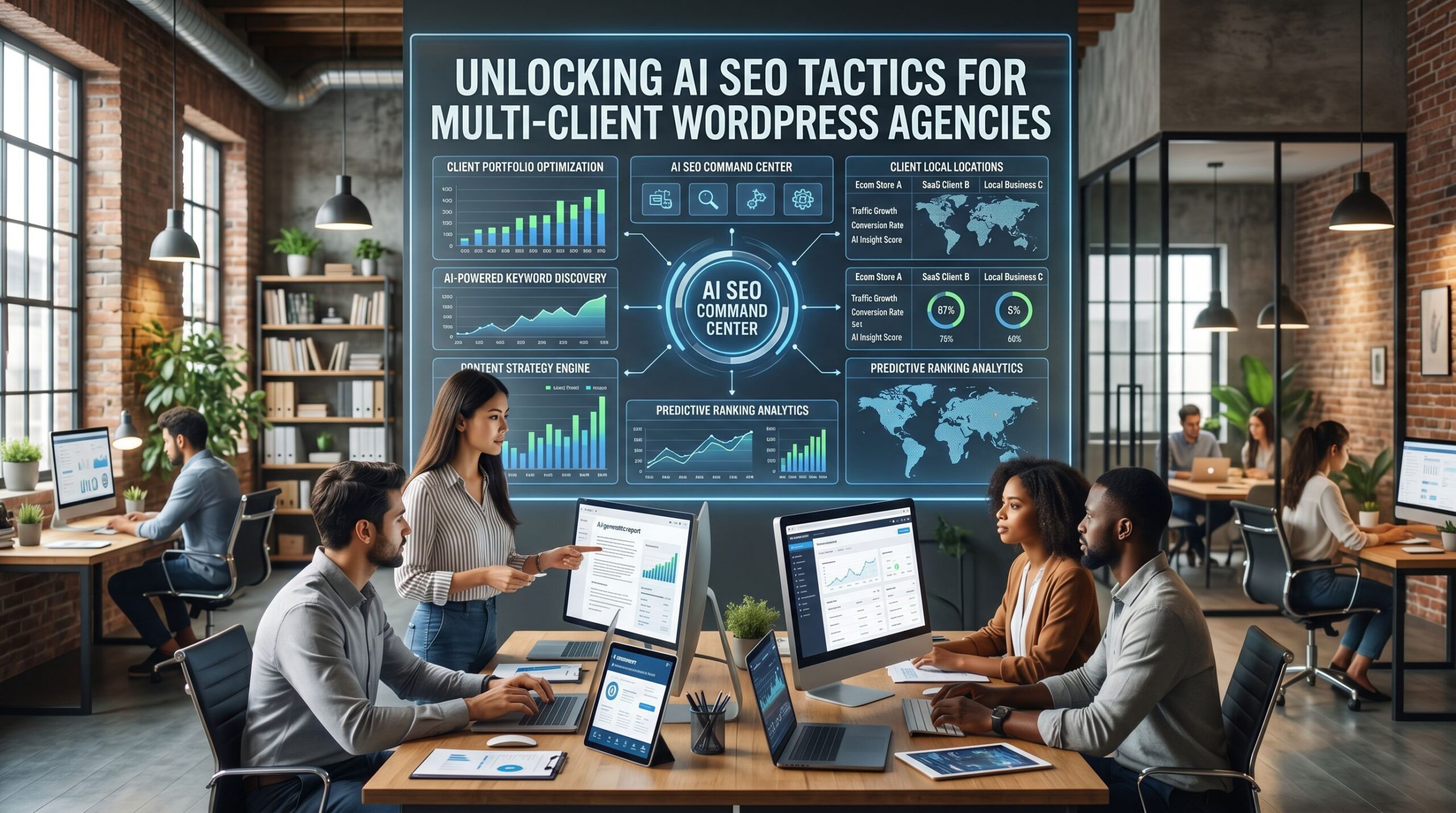
One of the most time-consuming tasks in managing multiple clients is creating comprehensive reports. AI can automate this process by aggregating data from various sources—Google Analytics, Search Console, ranking tools—and generating easy-to-understand reports. For instance, you can set up dashboards that refresh weekly, providing clients with updates on keyword rankings, traffic, conversions, and technical health. Automated reports save your team hours each week and provide transparency, which clients appreciate. Ensure that reports are tailored to each client’s goals, highlighting the metrics that matter most. Clear visuals and simple language help clients grasp their site’s performance without technical jargon.
Strategic Planning with AI Insights
AI doesn’t just report on what’s happening—it can also inform future strategies. Machine learning models analyze historical data to recommend new keywords, content topics, or technical fixes likely to yield the best results. For example, if an AI tool suggests that optimizing for a specific long-tail keyword could significantly boost a client’s traffic, you can prioritize that in your content calendar. Over time, these insights help shape a more effective, data-backed SEO strategy across all clients.
Challenges and Ethical Considerations
Balancing Automation and Human Judgment
While AI offers remarkable advantages, it’s not a silver bullet. Over-reliance on automation can lead to generic content, missed context, or overlooked nuances. It’s vital to maintain human oversight—review all AI-generated content, validate recommendations, and customize strategies to fit each client’s brand voice. For example, AI might suggest keyword optimizations that sound unnatural or spammy if not carefully reviewed. Human judgment ensures that SEO tactics remain ethical and user-friendly. Striking the right balance involves using AI as a support tool, not a replacement for expertise. Continuous learning and adaptation are essential to prevent reliance on flawed automation.
Privacy and Data Security
Another concern is data privacy. AI tools often process sensitive client data, so selecting reputable providers with strong security measures is critical. Always ensure compliance with data protection regulations and maintain transparency with clients about how their data is used. In practice, this means avoiding third-party tools that lack clear privacy policies and regularly reviewing your agency’s data management practices. Protecting client information builds trust and prevents potential legal issues.
Final Takeaway: Embedding AI into Your SEO Workflow
For multi-client WordPress agencies, integrating AI into your SEO workflow isn’t just about keeping up; it’s about gaining a competitive edge. Start small—use AI for content drafts or site audits—and expand as you see results. Invest in training your team to understand AI’s capabilities and limitations. Develop clear processes for reviewing and customizing AI outputs. Over time, automation will free up your team’s time, allowing for more strategic, creative work that truly moves the needle. Remember, the goal isn’t to replace human insight but to augment it. When used thoughtfully, AI can help your agency deliver better results, faster, and more efficiently than ever before. By embracing these strategies, your agency will be better equipped to handle the complexities of multi-client SEO, ensuring each website reaches its full potential in search rankings and user engagement. The future of SEO is here, and it’s powered by smart AI integration—making your agency more agile, precise, and successful.