AI Content Publishing Strategies for SEO Agencies Managing Multiple Clients
Revolutionizing SEO Content Publishing with AI
The Challenge of Scaling Quality Content
In the rapidly evolving landscape of digital marketing, SEO agencies managing multiple clients face mounting pressure to deliver measurable results efficiently. The traditional methods of content creation—relying heavily on manual writing, keyword stuffing, and labor-intensive optimization—are increasingly unsustainable. Enter AI content publishing: a game-changing approach that leverages artificial intelligence to automate and scale content production, optimize for search engines, and ultimately boost site traffic across multiple client sites.
For agencies juggling dozens, even hundreds, of sites, AI-driven tools promise not only operational efficiency but also a competitive edge in the crowded digital space. However, with great power comes great responsibility. While AI can significantly accelerate content workflows, it also introduces risks—such as diluting content quality or running afoul of search engine algorithms if not implemented thoughtfully.
The Benefits of AI-Driven Content Creation
The core challenge for multi-site SEO agencies is balancing scale with quality. Managing multiple clients means producing large volumes of content that must be both optimized for search engines and tailored to each client’s unique voice and audience. Manual content creation becomes a bottleneck, especially when deadlines are tight and resources limited.
AI content generators—powered by advanced machine learning models—offer a solution by rapidly producing keyword-rich, SEO-optimized content at scale. These tools can automate repetitive tasks such as keyword insertion, meta description generation, and internal linking, freeing human writers to focus on strategic or creative aspects that machines cannot replicate yet.
Selecting the Right AI Platform
But not all AI tools are created equal. Some are simple keyword spinners, while others use sophisticated natural language processing to generate human-like, nuanced content. For SEO agencies managing multiple sites, selecting the right AI platform is crucial. They need tools that integrate seamlessly with WordPress and other CMS platforms, support bulk content operations, and provide actionable insights into SEO performance.
The Emergence of AI-Powered Content Automation Platforms
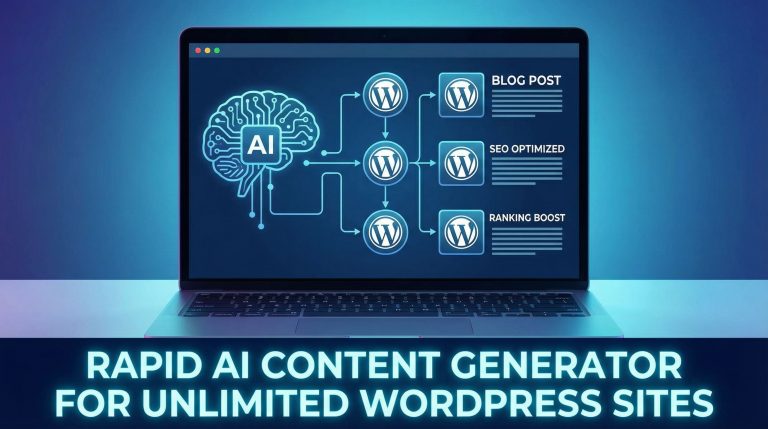
One of the most promising developments is the emergence of AI-powered content automation platforms tailored specifically for multi-site management. These platforms allow agencies to set templates, define content parameters, and deploy content across numerous sites with minimal manual intervention.
This not only accelerates the publishing process but also ensures consistency in branding and SEO practices. Moreover, many of these tools incorporate AI-driven SEO optimization features—such as keyword density analysis, readability scoring, and backlink suggestions—helping content rank higher and attract more organic traffic.
Mitigating Risks and Ensuring Quality
Despite these advancements, skepticism remains. Critics argue that over-reliance on AI-generated content risks producing low-quality, duplicate, or even spammy material that could harm a site’s reputation or trigger penalties from search engines.
To mitigate this, agencies must implement a hybrid approach: use AI as a first draft or content skeleton, then refine and humanize the output to ensure it aligns with the client’s voice and standards. This layered approach combines the speed and scale of AI with the nuance and authenticity of human editing.
“AI can revolutionize how agencies produce and optimize content, but it requires disciplined oversight to avoid pitfalls and truly capitalize on its potential.”
A Case Study in AI-Driven Content Automation
A case study worth noting involves a mid-sized SEO agency that manages over 200 client websites across various niches. They integrated an AI content generator to automate initial drafts, followed by human editing for tone and accuracy.
Their approach allowed them to produce 10 times more content than before, with a 25% increase in organic traffic within three months. Their secret was in establishing strict quality standards and leveraging AI tools that supported multi-site management, such as the ability to schedule, publish, and analyze content performance in one dashboard.
Actionable Tips for Implementing AI Content Automation
- Prioritize SEO-optimized templates: Create standardized content frameworks that AI can easily populate, ensuring consistency and quality.
- Invest in quality AI tools: Choose platforms that support multi-site management, WordPress integration, and SEO analytics, such as HitPublish.ai, which offers tailored solutions for agency workflows.
- Maintain human oversight: Never fully automate without review—AI should serve as an assistant, not the final authority.
- Regularly audit content: Use SEO tools to analyze performance, identify gaps, and refine AI prompts for better output.
- Focus on unique value propositions: Ensure each client’s content is differentiated and adds value beyond generic AI outputs.
The Future of AI Content Creation
In terms of future trends, AI content creation is likely to become more sophisticated, with models that understand context better, generate multimedia content, and adapt to user behavior.
This evolution will require agencies to continually upgrade their strategies, balancing automation with human creativity. The real challenge lies in maintaining authenticity and avoiding the trap of producing “SEO spam” that can backfire.
In conclusion, AI content publishing is transforming how SEO agencies manage multiple clients, making large-scale content operations feasible and more efficient. When implemented correctly, it can dramatically boost site traffic, improve rankings, and deliver measurable results.
The key lies in strategic planning, quality control, and continuous adaptation to the ever-changing SEO landscape. Agencies that master this balance will gain a significant competitive advantage in the digital marketing arena.