AI Content Publishing for SEO Agencies: Boost Efficiency and Client Results
AI Content Publishing for SEO Agencies Managing Multiple Clients
In the fast-evolving world of digital marketing, SEO agencies face mounting pressure to deliver high-quality, optimized content at scale. Managing multiple clients means juggling diverse niches, target audiences, and content strategies—all while maintaining efficiency and staying ahead of algorithm changes. Enter AI-driven content publishing, a game-changer that offers unprecedented capabilities for automation, scalability, and quality assurance.
For seasoned SEO professionals, leveraging AI tools isn’t just a trend; it’s quickly becoming a necessity. These tools can generate, optimize, and publish content with minimal human intervention, freeing up valuable resources and enabling agencies to focus on strategic growth. Yet, adopting AI for content creation and publishing requires understanding its nuances, limitations, and best practices to truly harness its potential without sacrificing quality or authenticity.
Understanding the Role of AI in Content Creation and SEO
The Rise of AI Content Generators
AI content generators have evolved dramatically over the past few years. From basic keyword stuffing bots to sophisticated language models, these tools can craft articles, blog posts, product descriptions, and even social media content that read naturally and are SEO-optimized. They analyze vast datasets, learn language patterns, and produce human-like text that can pass as genuinely written by a person—at least on the surface.
For SEO agencies managing multiple clients, AI content creation tools provide a scalable solution to produce large volumes of content quickly. Instead of hiring additional writers or outsourcing tasks, agencies can deploy AI-powered platforms that generate drafts ready for review and publication. This not only accelerates content timelines but also reduces costs significantly.
How AI Enhances SEO and Content Optimization
Beyond mere content generation, AI tools can assist with SEO optimization in real-time. For example, they can suggest keyword placements, improve readability, and ensure that content aligns with current ranking factors. AI can analyze competitors’ top-ranking pages, identify content gaps, and recommend topics that are likely to perform well. This strategic assistance makes AI a valuable partner in crafting content that boosts site traffic and enhances search engine visibility.
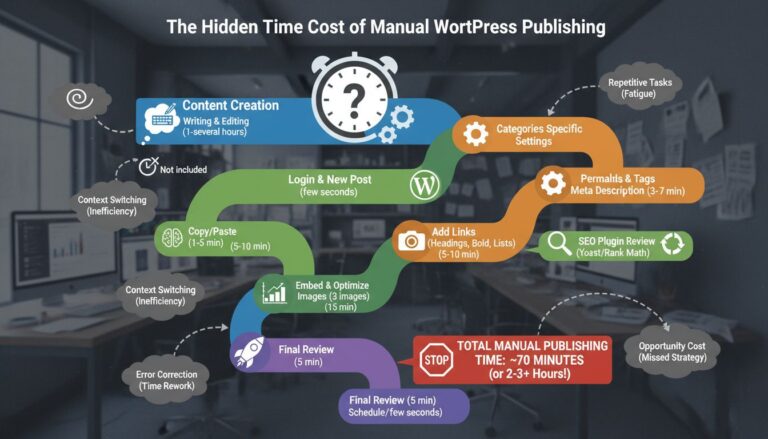
Moreover, AI-powered SEO tools can automate on-page optimization tasks—like meta descriptions, header tags, and internal linking—ensuring each piece of content is fully optimized without manual effort. The ability to automatically generate SEO-friendly content on WordPress sites, for example, streamlines the entire publishing process, making it easier for agencies to manage multiple client sites simultaneously.
Implementing AI for Content Management and Publishing
Automation Strategies for Multiple Clients
Managing multiple client websites demands a streamlined approach. AI content automation platforms can integrate with existing CMSs, especially WordPress, to facilitate automatic content publishing. For instance, using plugins or APIs, agencies can set rules for content updates, schedule posts, and even A/B test different versions—all without manual intervention.
One effective strategy involves creating templates that AI can customize based on client-specific data. For example, a real estate agency’s AI content generator can produce property descriptions by inputting key details, saving hours of manual work. When scaled across dozens of clients, such automation becomes a significant competitive advantage.
Quality Control and Human Oversight
Despite the impressive capabilities of AI, it’s not perfect. Content still requires human review to ensure accuracy, tone, and brand voice consistency. Especially for sensitive or complex topics, relying solely on AI can backfire. The key is to implement a workflow where AI handles bulk creation and initial optimization, while humans refine and fact-check before publication.
Additionally, using AI tools for content ideation can help generate topic clusters tailored to each client’s niche. This proactive approach improves relevance and engagement, which are critical for SEO success. Combining AI automation with human expertise creates a hybrid model that maximizes efficiency without sacrificing quality.
Case Studies and Practical Tips for Success
Case Study: Scaling Content Production for a Multi-Niche Agency
A mid-sized SEO agency manages over 50 clients across industries—from health to e-commerce. They integrated an AI content generator to produce blog posts, landing pages, and social media content. By setting up templates and automating the publishing schedule, they increased their output by 300% within six months. The agency reported a noticeable boost in site traffic, with some clients seeing a 50% increase in organic visitors. The key was balancing AI-generated drafts with human editing to ensure quality and relevance.
Actionable Tips for Implementing AI Content Publishing
- Start small: Pilot AI tools with a few clients to gauge quality and workflow adjustments before scaling up.
- Focus on niche-specific prompts: Fine-tune your AI prompts to generate more relevant and targeted content for each client.
- Establish review processes: Always have a human review AI-produced content for accuracy, tone, and SEO compliance.
- Leverage automation plugins: Use WordPress plugins that support AI integration for seamless publishing and optimization.
- Track performance: Monitor content metrics to assess AI impact and refine your approach continually.
Common Pitfalls and How to Avoid Them
Over-reliance on AI can lead to generic content that doesn’t resonate. Some agencies fall into the trap of publishing low-quality articles, risking penalties from search engines and damaging their reputation. To prevent this, maintain strict quality standards and use AI as an assistant—not a complete replacement for human creativity and judgment.
Another challenge is the potential for duplicate or plagiarized content. Choose AI tools that incorporate plagiarism checks or integrate with plagiarism detection services. Remember, Google’s algorithms prioritize original, valuable content, so originality should always be a priority.
Future Trends and Strategic Outlook
AI and SEO: The Road Ahead
The convergence of AI and SEO is poised to deepen. Future AI models will likely become more context-aware, understanding nuanced topics and user intent better than ever. This evolution will allow agencies to generate hyper-personalized content tailored to specific audience segments, further boosting engagement and conversions.
Moreover, automation will extend beyond content creation to include real-time site audits, keyword tracking, and even voice search optimization. Agencies that embrace these innovations early will gain a significant edge in competitive markets.
Integrating AI with Broader Content Marketing Strategies
AI isn’t just about content generation; it should be part of a holistic content marketing ecosystem. Combining AI tools with analytics platforms enables data-driven decisions, aligning content efforts with user behavior insights. This integration ensures content remains relevant and impactful, driving sustained growth.
As detailed in source on AI-powered publishing, the ability to automate and optimize at scale transforms how agencies approach content marketing, making their efforts more efficient and effective.
Conclusion: Embracing AI for Competitive Advantage
Managing multiple clients in today’s SEO landscape demands innovation and efficiency. AI content publishing offers a powerful solution that can streamline workflows, enhance content quality, and boost site traffic. While it’s not a magic bullet, when combined with human oversight and strategic planning, AI becomes an indispensable tool for SEO agencies aiming to stay ahead.
Staying competitive means embracing these technological shifts, continuously testing new tools, and refining processes. As AI continues to evolve, those who adapt quickly will reap the benefits of faster, smarter, and more impactful content marketing efforts. The future belongs to agencies that see AI not just as a tool but as a strategic partner in their growth journey.