AI Content Automation for WordPress: Essential Tool for Web Agencies
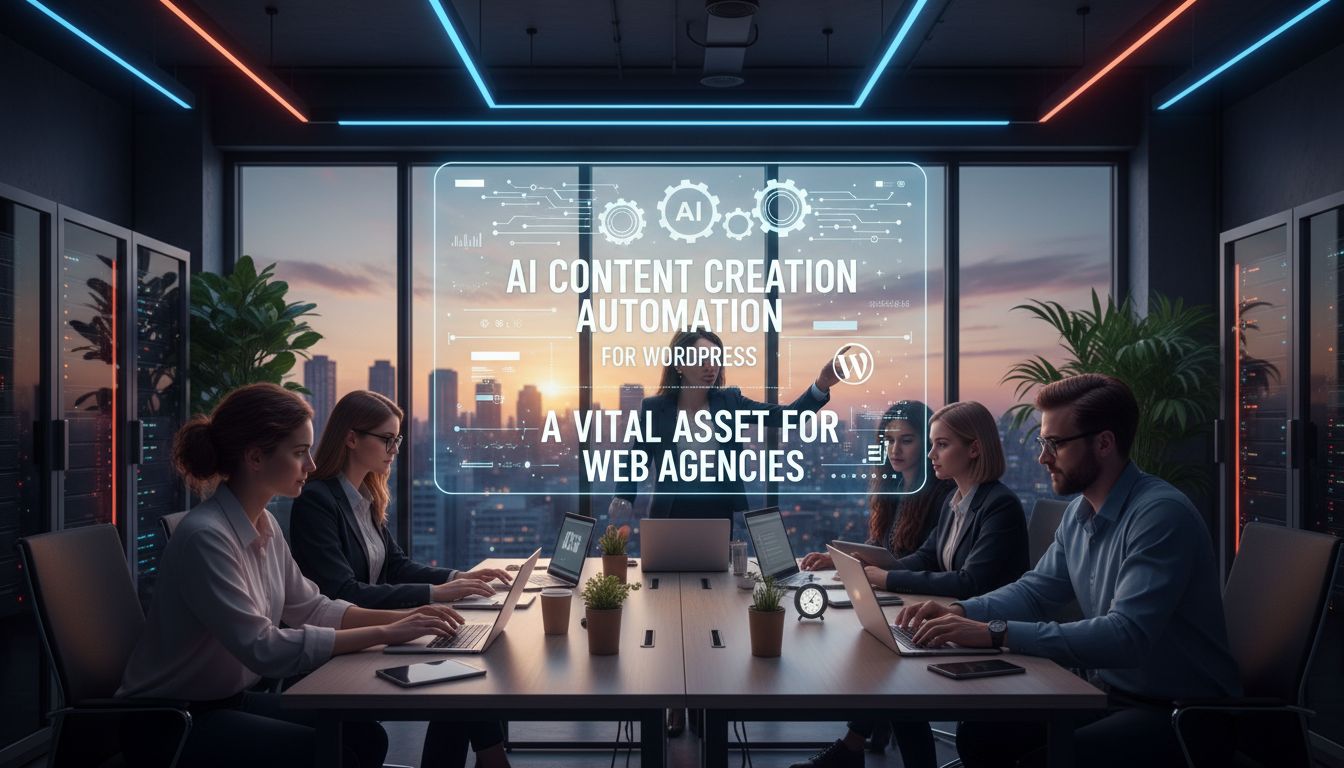
AI Content Creation Automation for WordPress: A Vital Asset for Web Agencies
In today’s hyper-competitive digital landscape, content is king—no, scratch that—content is the entire kingdom. For web agencies managing multiple client sites, producing high-quality, SEO-optimized content quickly and efficiently can be a game-changer. Enter AI content creation automation, a technology that is revolutionizing how agencies handle content marketing, SEO, and site traffic. This isn’t just about saving time; it’s about transforming the very fabric of content strategy. With AI-powered tools, agencies can generate fresh, engaging content at scale, ensuring clients stay ahead of the curve in search engine rankings and audience engagement. But like any new tech, understanding its nuances, limitations, and best practices is crucial. This article explores how AI content creation automation, especially within WordPress, can become an indispensable asset for web agencies aiming to boost efficiency, improve SEO, and ultimately, deliver results that matter.
The Rise of AI in Content Creation
Artificial intelligence has moved beyond simple automation tasks into the realm of content generation. Once considered a novelty, AI-driven content tools are now mature enough to produce articles, blog posts, product descriptions, and even social media updates with remarkable coherence. For agencies, this means the ability to produce a large volume of content without sacrificing quality or consistency. It’s not about replacing human writers but empowering them—filling gaps, providing drafts, or even generating entire pieces that only need fine-tuning. As AI models evolve, they learn from vast datasets, understanding language patterns, SEO nuances, and audience preferences.
One of the main drivers of this shift is the desire to automate repetitive tasks. Manual content creation is time-consuming, often prone to inconsistency, and expensive at scale. AI tools like GPT-based generators can rapidly produce drafts, saving hours or even days in the content pipeline. For example, a web agency managing dozens of client sites can utilize AI to generate weekly blog posts, product pages, or landing pages—freeing up creative teams to focus on strategy and personalization. This shift not only boosts productivity but also enables better resource allocation and faster turnaround times.
Why WordPress and AI Make a Perfect Pair
WordPress powers over 40% of the web, making it the dominant CMS in the industry. Its flexibility, extensive plugin ecosystem, and user-friendly interface make it the ideal platform for integrating AI content automation. Several AI plugins and tools have emerged that seamlessly connect with WordPress, enabling agencies to automate content creation directly within the CMS environment.
For instance, AI content generators can be embedded into the WordPress editor, allowing for real-time content suggestions, auto-generation of blog drafts, or SEO-optimized snippets. This tight integration simplifies workflows, ensuring that content creation, editing, and publishing happen within a single platform. Moreover, AI tools can assist with SEO optimization, keyword density, readability scores, and meta descriptions—crucial elements for boosting site traffic and improving search rankings.
Using AI for WordPress also reduces the need for multiple external tools, streamlining operations. Agencies can configure automated workflows where content is generated, optimized, and scheduled automatically, all from within WordPress. This automation accelerates content calendars and keeps clients’ sites fresh and relevant, which is vital in competitive niches like e-commerce, travel, or local services.
Strategies to Maximize AI Content Automation Effectiveness
1. Define Clear Content Goals
Before jumping into AI tools, agencies should set clear objectives. Are you aiming to boost SEO rankings, increase engagement, or generate leads? Clarifying goals guides the AI’s output style, tone, and keyword focus. For example, if the goal is to improve SEO, focus on integrating target keywords naturally and ensuring content is keyword-rich but readable. Conversely, if engagement is the priority, the tone should be conversational and relatable.
2. Choose the Right AI Content Generator
Not all AI tools are created equal. Some excel at technical writing, others at creative storytelling. When selecting a platform, consider factors like ease of integration with WordPress, customization options, and output quality. According to hitpublish.ai, the most effective AI content tools incorporate feedback loops, allowing users to refine outputs over time, ensuring the generated content aligns with brand voice and audience expectations.
3. Incorporate Human Oversight
Despite their capabilities, AI tools are not flawless. They can produce factually incorrect or awkwardly phrased content. Human editors should review and edit AI drafts to ensure accuracy, tone consistency, and alignment with branding. This hybrid approach combines the efficiency of AI with the nuance of human judgment, leading to higher-quality content.
4. Optimize for SEO Continuously
AI can assist with SEO, but it’s not a silver bullet. Regularly updating keywords, monitoring rankings, and adjusting content strategies are essential. Automating SEO optimization within WordPress through plugins and AI tools ensures that each piece adheres to the latest best practices. For instance, tools can automatically generate meta descriptions, optimize images, and suggest internal linking opportunities, all of which contribute to higher search engine visibility.
Case Studies: AI-Driven Content Success Stories
Many agencies have already seen tangible benefits from integrating AI content automation. One digital marketing firm managed to increase blog publishing frequency by 300% without hiring additional writers. They used AI to generate initial drafts, which their editors polished before publishing. As a result, their clients saw a 40% rise in organic traffic within six months, demonstrating the power of consistent, SEO-optimized content.
Another example involves an e-commerce site that employed AI to produce product descriptions. By leveraging AI content generation tools, they managed to update thousands of product pages swiftly. This not only improved SEO rankings but also enhanced user experience, as product descriptions became more detailed and persuasive. The key takeaway is that AI can help scale content efforts dramatically while maintaining quality standards.
Balancing Automation with Authenticity
One potential pitfall of relying heavily on AI is the risk of producing generic or robotic content that lacks authenticity. Audiences crave genuine connections, and overly templated content can backfire. To mitigate this, agencies should infuse AI-generated content with brand voice and personality. This can be achieved through tone adjustments, adding unique insights, or incorporating storytelling elements.
Moreover, AI can be used to generate content ideas, headlines, or outlines, leaving the creative spark to human writers. This hybrid approach ensures that content remains engaging and authentic while benefiting from the efficiency of automation. Remember, the goal isn’t to replace humans but to empower them with smarter tools.
The Future of AI Content Automation for WordPress
As AI technology continues to evolve, its role in content creation will only grow. Future developments may include more sophisticated contextual understanding, multimedia content generation, and even personalized content tailored to individual user preferences. For web agencies, staying ahead means adopting these innovations early and integrating them seamlessly into existing workflows.
Additionally, the emergence of free AI content generators provides accessible entry points for smaller agencies or startups. These tools can help test strategies before investing in premium solutions. As detailed in hitpublish.ai, the landscape is rapidly changing, and agility will be key for agencies seeking to leverage AI effectively.
Actionable Tips for Agencies Looking to Implement AI Content Automation
- Start small: Pilot AI tools on specific projects to gauge quality and workflow integration.
- Train your team: Educate editors and content strategists on how to best utilize AI outputs.
- Monitor performance: Use analytics to measure content impact on traffic and engagement.
- Maintain quality control: Establish editorial guidelines and review processes for AI-generated content.
- Stay updated: Keep an eye on emerging AI tools and updates to maximize benefits.
Implementing AI content automation isn’t a set-it-and-forget-it process. It requires ongoing refinement, strategic oversight, and a clear understanding of its capabilities and limitations. When done right, it can significantly boost site traffic, improve SEO, and give your agency a competitive edge in delivering results for clients.
The Bottom Line
AI content creation automation is no longer a futuristic concept but a present-day reality that can profoundly impact how web agencies operate. From generating SEO-optimized blog posts to scaling content marketing efforts, AI tools are becoming indispensable. By integrating these technologies into WordPress workflows, agencies can automate routine tasks, enhance content quality, and ultimately, achieve better results faster.
For those willing to experiment and adapt, the benefits are clear: increased efficiency, higher search rankings, and more time to focus on strategic growth initiatives. As the digital landscape continues to evolve, embracing AI for content creation will be essential for agencies aiming to stay relevant and competitive.
“AI-driven content generation is transforming the way agencies produce and optimize content, making scalability and personalization more achievable than ever.” – Industry Expert
In conclusion, integrating AI content creation automation into your WordPress sites is not just a trend but a strategic necessity. It empowers agencies to deliver more, faster, and better—ultimately driving higher traffic, improved SEO, and satisfied clients. The future belongs to those who harness these cutting-edge tools effectively. Don’t wait—start exploring AI content generators today and position your agency at the forefront of digital innovation.