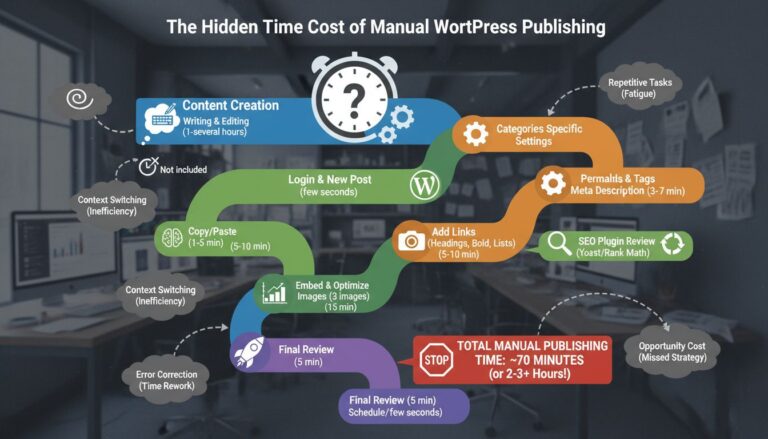
How to Build an Agency Model Around AI Content Automation
Building an agency around AI content automation isn’t a someday project. It’s a now playbook you can deploy in weeks, not months. You’ll move from chasing projects to owning a scalable system that serves multiple WordPress sites with minimal manual toil. You’ll replace guesswork with repeatable processes, turning AI into a reliable engine for Publish, SEO, and content strategy across client sites. This isn’t about gimmicks; it’s about architecting a profitable, defensible operating model that handles growing demand without burning out your team. If you’re tired of chasing hourly work, this blueprint gives you a practical path to predictable revenue, happier clients, and real leverage in the market.
The core idea: AI content automation as a service engine
At its heart, an agency built around AI content automation treats content generation, optimization, and publishing as a managed service rather than a one-off deliverable. You assemble a repeatable pipeline that starts with client goals and ends with publishable, SEO-friendly articles across all client sites. The engine is powered by AI for ideation, drafting, editing, content calendars, and performance tracking, but human oversight remains essential for brand voice, compliance, and quality gates. You win by speed, accuracy, and the ability to scale across many WordPress sites—without multiplying hours spent per client. A practical setup includes templates for topic briefs, editorial calendars, and automated QA checks that keep output consistent while you focus on strategy and growth.
Operational blueprint: roles, tooling, and governance
To move from ad hoc work to a repeatable machine, you need clear roles and guardrails. Build a small core team that owns the pipeline end to end, then layer in specialists as demand grows. A practical structure looks like this: a Content Architect who designs AI prompts and workflows, a Data and SEO Specialist who handles keyword strategy and performance analytics, and a Client Success Lead who manages onboarding, reporting, and renewals. Tooling should cover content generation, SEO analysis, CMS publishing, and quality assurance. You’ll want versioned templates for topic briefs, SEO checklists, and publish states so every project follows the same path. Governance comes from a simple SLA with clients, negotiated around speed, quality, and transparency. When you codify these elements, you remove ambiguity and unlock scale.
Prompts, prompts, prompts
Prompts are the lifeblood of AI content automation. Don’t rely on generic prompts; tailor prompts to client industry, audience, and voice. Create prompt packs for different content types—how-to guides, listicles, case studies, and thought leadership pieces. Include constraints such as word count ranges, tone, and required sections. Build a feedback loop: after every draft, capture what worked and what didn’t, then update prompts. This discipline turns variability into improved reliability over time.
Quality gates that don’t kill velocity
Striking the balance between speed and quality is non negotiable. Implement three gates: 1) factual sanity check by a human editor for figures and claims, 2) brand voice alignment via a quick style scan, and 3) SEO readiness through keyword alignment, meta data, and internal linking checks. Use automation to pre-screen content for obvious issues, then hand off to editors for final polish. The aim isn’t perfection on first draft; it’s consistent, reliable output you can publish with confidence.
Case studies: what real agencies are doing right now
One agency built a multi-site operation around WordPress by centralizing content briefs, auto-generating drafts, and pushing articles to client sites with one-click publishing. They now manage content for over 25 client sites, averaging 60 articles per month, while reducing production time by 40%. A second shop focused on SEO-driven content for e-commerce brands. They mapped product guides to buyer intent, used AI to draft and optimize pages, and built dashboards that show traffic, rankings, and conversion lift per site. The result: higher client retention, a clear value proposition, and a scalable model that can onshore or offshore talent without breaking the process. These stories aren’t exceptions; they’re signals of what’s possible when you treat AI as a structured capability rather than a gimmick.
In practice, the value comes from repeatability. If you can repeat success across multiple WordPress sites, you escape the feast-or-famine cycle of project-based work. You create predictable onboarding timelines, standard deliverables, and a consistent client experience. The more sites you can handle with the same templates and QA checks, the higher your gross margins become. And when you couple this with a strong SEO play, you’re not simply producing content; you’re building a scalable asset that compounds over time. As marketers chase long-term results, this model offers something tangible: a system that reliably scales content velocity without sacrificing quality.
According to a leading resource in automated publishing platforms, convergence of AI and multi-site management is reshaping how agencies think about capacity. The lesson is clear: invest early in a robust framework, and you’ll ride the wave rather than chase it. This isn’t about taking shortcuts; it’s about embedding AI into your operating rhythm so you can deliver more value with the same or fewer hands. The payoff is not theoretical—it’s real, measurable, and accessible to any agency willing to commit to a disciplined process.
Pricing models and revenue psychology
Pricing around AI content automation should reflect value, not hours. Consider tiered retainers tied to the number of WordPress sites and the content cadence. A simple structure: Starter, Growth, and Scale. Starter covers up to five sites with a modest monthly output; Growth expands to 15 sites with a higher output and optimization layer; Scale handles 30+ sites with full automation, richer QA, and strategic SEO programs. Each tier adds value through faster publishing, better-quality output, and clearer analytics. You can also offer a la carte add-ons such as voice-of-brand audits, content calendar development, or quarterly strategy sprints. The goal is to align incentives so as client needs grow, your revenue grows proportionally with minimal marginal cost. In practice, a well-structured pricing deck reduces negotiation friction and accelerates onboarding.
Retainers vs project bets
Retainers provide stability; project bets offer flexibility. Most clients prefer predictable costs and outcomes, so position your service as ongoing content publication and optimization, with optional quarterly strategic reviews. Use metrics that matter: article velocity, SEO impressions, click-through rate, and time-to-publish. Show clients a dashboard that translates AI-driven actions into tangible results. If a client’s business expands into new product lines or markets, you can rapidly scale content across all relevant WordPress sites with the same framework, preserving consistency and speed. The revenue engine rests on a repeatable process that you can train new team members to operate, ensuring continuity even when staffing changes occur.
Technology stack: the exact recipe you can copy
Your stack should be minimal yet powerful, designed to scale without chaos. Core components include an AI content generator, an SEO analyzer, a CMS automation layer, and a project management cockpit. The AI engine drafts articles, highlights gaps, and drafts meta content. The SEO tool analyzes keywords, search intent, and competitiveness, returning actionable optimization cues. The CMS automation layer pushes articles to WordPress sites, sets publish dates, and attaches SEO metadata, internal links, and schema where appropriate. The project management layer coordinates briefs, approvals, and publishing calendars. Integrations with client dashboards ensure stakeholders can monitor progress without chasing reports. A lean, well-integrated stack keeps velocity high and downtime low.
WordPress-specific considerations
Managing multiple WordPress sites demands centralized controls. Use a single management console to deploy templates, templates, and plugin configurations across sites. Create a standard publishing workflow that includes preflight checks—SEO metadata, image alt text, schema markup, and canonical tags. Implement role-based access so editors, writers, and clients each see only what they should. Maintaining a uniform plugin model across sites reduces maintenance creep and security risk. The right approach makes rolling out new sites faster and keeps performance steady even as you scale.
Content strategy that sticks: templates, calendars, and governance
Templates aren’t decorative; they’re the mechanism that lets you scale with consistency. Build topic briefs that include audience personas, intent, keyword targets, and required sections. Pair each brief with a ready-to-publish draft scaffold and a checklist for optimization. An editorial calendar should map content to business goals, seasonality, and product cycles. Governance means standardizing approvals, version control, and archival policies so you don’t drown in a pile of drafts. When you couple templates with a calendar and strict governance, you convert creative chaos into a repeatable engine that serves many clients simultaneously.
Templates that travel across client sites
Design content templates that can be customized by client brand guidelines but retain core structure. For example, a “Product Guide” template might include an intro, problem statement, features, use cases, and a conclusion with a CTA. Use AI to populate initial sections and human editors to tailor voice and accuracy. Across all client sites, this approach ensures uniform quality, faster publishing, and easier audits for SEO and legal compliance. It also makes it straightforward to train new team members, since the playbook is explicit and the steps are standardized.
Client onboarding and expectations: set the pace for success
Onboarding should be a designed experience, not a sprint through unfamiliar tools. Start with a discovery session to confirm goals, audiences, and preferred workflows. Then present a transparent roadmap: what will be automated, what will be human-curated, and what will require client sign-off. Provide a sample month plan that shows how topics flow from briefs to drafts to published articles. Set expectations around revisions, publish cadence, and reporting frequency. A strong onboarding minimizes scope creep and aligns client expectations with the capabilities of your AI-driven system. Remember, the client subscribes to velocity and consistency, not to ad hoc bursts of output.
Communication cadences that build trust
Establish weekly check-ins, quarterly reviews, and live dashboards. The dashboards should translate AI actions into visible gains: pages indexed, keyword rankings, traffic lifts, and engagement metrics. When clients see measurable progress, renewal rates rise and upsells become natural. Your job is to translate complex automation into tangible business outcomes that executives understand. A clear narrative around time saved, cost per article, and incremental SEO value sells itself if you keep it honest and data-driven.
Quotes to land with and a mindful closing thought
“Automation isn’t about replacing people; it’s about multiplying their impact with smarter processes.”
As you scale, you’ll refine your story and your numbers. You’ll learn which client sectors respond fastest to automated publishing, which content formats yield the best SEO returns, and how to compress production timelines without sacrificing accuracy. The discipline that separates successful agencies from struggling ones is not merely the technology; it’s the human discipline to codify workflows, maintain guardrails, and relentlessly optimize for client outcomes. This is how you build an agency that can manage multiple WordPress sites, publish at scale, and continually improve the ROI of content across client portfolios.
The path forward is concrete. Invest in capability, not hype. Create reusable templates, define governance, and codify your service levels. Develop a true repeatable process that you can hand off to junior editors and contractors while maintaining accountability. You’ll win clients who value speed, clarity, and measurable results. You’ll win a culture that treats AI as a partner, not a replacement. You’ll win by delivering what matters: content that ranks, resonates, and earns customers for years to come.