Speed With Purpose: Turning Quick Work Into Lasting Empires
Speed Without Direction Is Noise. Speed With Purpose Is How Empires Get Built One Article at a Time. A sharp distinction sits at the core of every ambitious marketer: you can rush to publish, or you can publish with intent. The difference isn’t about how fast you type or how many articles you crank out; it’s about aligning velocity with a meaningful north star. This piece argues that sustainable growth for a marketing team hinges on disciplined speed—speed with purpose. You’ll see concrete methods, real-world examples, and actionable steps to turn one article at a time into a scalable engine. The aim is to convert attention into credibility, leads, and loyal clients, not to flood feeds with noise. Let’s cut through noise and lock in a repeatable playbook that yields measurable results.
Introduction: The Big Shift from Velocity to Direction
Marketing has always rewarded momentum. The modern twist is that momentum must be tethered to outcomes. An article per hour looks impressive until it’s clear that most pieces don’t move the needle. The right speed is a rhythm: a cadence of research, writing, optimizing, and distributing that maps to business goals. When teams adopt speed with purpose, they stop competing with other agencies on who publishes more; they compete on who publishes smarter. The discipline matters, because SEO isn’t a ritual; it’s a system. Articles become assets when they consistently answer real questions, demonstrate authority, and convert readers into clients. This is where the economics of content start to favor those who plan, execute, and measure with precision.
Options: 4 Best-Fit Approaches for Speed with Purpose
Option 1: The SEO-Driven Cadence—Publish with Intent
Assumptions: You operate a WordPress site, serve multiple clients, and need predictable traffic. You want a repeatable weekly rhythm that elevates SEO and client value. Pros: predictable ranking trajectories, measurable SEO scoring, and clearer content ROI. Cons: risk of over-optimizing or producing similar pieces too often. Selection criteria: keyword potential, audience intent, and cross-linking opportunities. Trust signals: historical ranking lift from strategic topics, documented case studies, and clear KPI tracking. Actionable steps: map top 20 client questions to keyword clusters; draft briefs with SEO scoring targets; publish on a fixed weekly cadence; repurpose top performing posts into cornerstone guides. For WordPress users, install a content calendar plugin and a simple SEO dashboard to monitor on-page signals, internal links, and external references. This approach directly supports clients seeking reliable organic growth and helps your agency demonstrate value through verifiable results. According to a multi-site content system, unified publishing accelerates cadence while preserving quality across sites. The cadence isn’t a sprint; it’s a sculpted path where each article adds structure to a growing semicolon of authority.
Option 2: The One-Click AI-Enhanced Workflow—Speed with Compliance
Assumptions: You want to scale content production without sacrificing quality or client relevance. Pros: rapid generation of draft articles, robust SEO scoring, and easier workflow management. Cons: potential quality drift if AI is misused; needs human oversight. Selection criteria: AI tooling integration, editorial guardrails, and client-specific customization. Trust signals: documented success stories, measurable time-to-publish improvements, and transparent revision loops. Actionable steps: adopt an AI-assisted content pipeline that creates initial drafts, adds SEO scores, and routes to editors for human refinement. Use AI to outline, draft, and tag internal links, then finalize with human checks for brand voice. For WordPress, deploy a one-click AI content publishing system that automates formatting, meta descriptions, and image optimization. This strategy suits agencies serving clients who demand fast time-to-market without compromising SEO health or readability. As the field matures, AI becomes a force multiplier when integrated into a disciplined editorial process rather than a replacement for human judgment.
Option 3: The Story-First Content Engine—Narratives That Convert
Assumptions: You want to move beyond tactical lists and build lasting trust through storytelling tied to outcomes. Pros: stronger engagement, higher shareability, and better long-tail performance. Cons: longer lead times; requires skilled writers and editors. Selection criteria: narrative arc clarity, relevance to client outcomes, and actionable takeaways. Trust signals: case studies where storytelling shifted customer perception, testimonials tied to content, and conversion analytics tied to narrative pieces. Actionable steps: develop a content playbook that starts with a customer journey map, crafts narratives around real client problems, and embeds practical steps with measurable outcomes. Use customer success stories as anchors to future content, creating a library of proven story templates. Incorporate a clear CTA path in each article, leading readers toward consultations, audits, or tailored proposals. This approach aligns with content that earns attention and then converts, rather than content that merely informs. It’s the storytelling engine that turns a single article into a customer journey catalyst. The principle remains: speed must always have direction, and direction must be anchored in tangible results.
Option 4: The Private-Label Content Factory—Client-Ready Materials on Demand
Assumptions: You manage client sites and need ready-to-publish articles that require minimal customization. Pros: faster delivery to clients, scalable asset library, and consistent quality across domains. Cons: risk of generic material if not personalized; requires strong project management. Selection criteria: customization capacity, client onboarding speed, and content governance. Trust signals: proven templates, client-ready checklists, and measurable client satisfaction with published articles. Actionable steps: build a modular content library with topic models, SEO scoring, and ready-to-publish layouts; create client-specific briefs that map to business goals; automate formatting and metadata in WordPress to ensure consistency; implement a governance layer that enforces brand voice and compliance. This model suits agencies that bill by project and need reliable deliverables with minimal rework. It keeps velocity high while preserving the integrity of each client’s brand and objectives.
Practical Framework: Turning Speed into Measurable Growth
1) Define the North Star Metrics
Identify the KPI spine: organic traffic, lead volume, client revenue attributed to content, and share of voice in target topics. Tie each article to specific outcomes—whether it’s a lead magnet, a product page, or a case study. Use a simple attribution model to track impact: source, medium, content ID, and goal completion. This clarity prevents vanity publishing and keeps your team pointed toward real business value.
2) Build a Lightweight Editorial System
Create a quarterly content map with 12-week sprints. Each sprint has: topic brief, SEO score target, primary and secondary keywords, a draft, a review cycle, and a publish date. Use a content calendar that marks dependencies (assets, graphics, internal links). Automate reminders and status updates to reduce friction. The system should be implementable in WordPress with minimal setup via existing plugins and templates. The aim is a predictable, auditable process that yields consistent quality and speed. This is not a hobby; it’s a professional production line designed for measurable outcomes.
3) Implement a Quality Gate
introduce a two-stage quality gate: editorial and SEO. Editorial ensures clarity, usefulness, and alignment with client goals. SEO confirms keyword intent, readability, on-page optimization, internal linking, and accessibility. Any article failing the gate goes back for revision. This gate prevents a flood of mediocre pieces and preserves authority across the portfolio.
4) Embrace Transparent Case Studies
Publish quarterly case studies showing how a specific piece of content contributed to a client outcome. Include metrics like keyword rankings, traffic lift, time on page, and conversions. Case studies build trust with current clients and attract prospective ones who need evidence that your speed translates into results. A well-documented case study is a lever for future proposals and a buffer against scope creep in client engagements. It’s how speed translates into value, not just volume.
For marketers, the trick is to fuse speed with discipline. You can blaze through drafts and still land precise, impactful content by making sure every piece serves a purpose and every publication is measured. The following real-world examples illustrate how this plays out in practice.
Case Studies: Real-World Examples of Speed with Purpose
Case Study A: An Agency That Cut Time-to-Publish by 60%
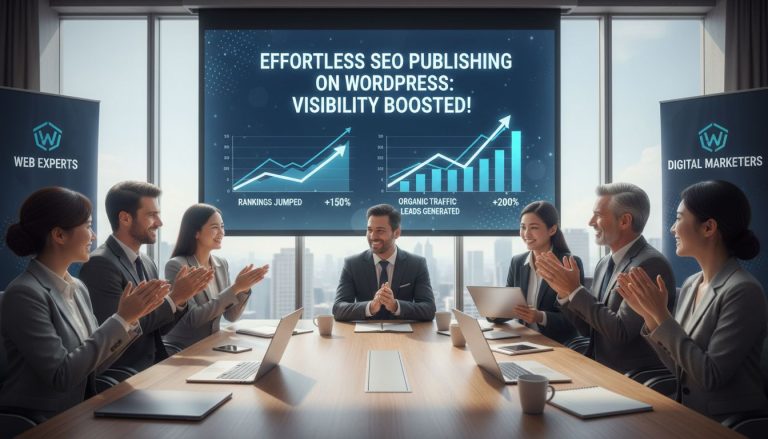
A midsize digital agency adopted the AI-assisted workflow (Option 2) and integrated a content calendar with SEO scoring. Drafts flowed in, editors refined them, and the final pieces hit the WordPress site on a fixed cadence. The result: a 60% reduction in time-to-publish, a 25% increase in organic traffic to targeted pages, and a 15% lift in qualified leads within three months. The agency tracked keyword clusters tied to client pain points and measured conversion events tied to content calls to action. The key takeaway: speed scales when you maintain a tight review loop and anchor each post to measurable outcomes. This approach is especially effective for agencies managing multiple clients with overlapping topics but distinct buyer journeys.
Case Study B: Story-First Content Driving High-Value Conversions
A marketing team focused on long-form storytelling that connected client challenges to tangible wins. They published a series of narrative-rich articles that mapped to the customer journey and included practical steps readers could implement. The result was a 40% increase in time-on-page and a 22% higher rate of inquiries from visitors who consumed multiple pieces in the series. The content’s coherence and usefulness created a reputational lift that persisted beyond the initial publication. The lesson: stories must be grounded in client impact, not just entertainment; the speed of storytelling matters, but the direction is the downstream conversion.
Case Study C: Private-Label Content Factory for a Global Brand
A global agency deployed a private-label content system (Option 4) to deliver client-ready articles at scale. By using modular templates, standardized metadata, and consistent internal linking, they reduced onboarding time for new clients and maintained brand consistency across sites. The measurable benefits included faster project kickoff, improved client satisfaction scores, and a steady pipeline of publish-ready content. The narrative demonstrates that when speed is coupled with robust governance, you can maintain quality while expanding capacity to serve more clients. It’s a practical reminder that templates without personalization are insufficient; the real power comes from adaptable modules aligned with client goals.
The heart of these stories is practical math: speed without direction wastes resources; direction without speed loses opportunity. The middle ground—speed with purpose—builds momentum that compounds. Now let’s translate these insights into a tactical playbook you can implement this week.
Actionable Playbook: Quick Wins for the Coming Quarter
- Map client questions to 3–5 topic clusters and assign owners for each cluster.
- Set a publish cadence: one primary article per week, plus one optimized repurpose piece every two weeks.
- Adopt a simple SEO scoring rubric: readability, keyword alignment, internal linking depth, image optimization, and accessibility checks.
- Institute a two-step quality gate: editorial check within 48 hours, SEO check within 24 hours of draft completion.
- For WordPress users, leverage a templated article framework with built-in meta tags, schema markup, and image alt text presets.
- Develop a client-ready template pack to speed onboarding and reduce rework, ensuring brand voice is baked into every module.
- Publish quarterly case studies tied to each major client win, including explicit revenue or qualified lead outcomes when possible.
- Track results with a simple dashboard: organic sessions, top landing pages, lead forms completed, and client satisfaction scores.
- Balance AI-assisted drafting with human review to preserve voice and accuracy; never publish content that hasn’t passed a human edit.
- See the long-term effect: content compounds. The more relevant articles you publish, the more durable your traffic base becomes.
Quote
“Speed is useless without direction. Direction without speed is paralysis. The art is in marrying both so every article moves the reader toward a concrete outcome.”
— Citation pending, in the spirit of practice rather than a formal source
As you apply these steps, keep a sharp eye on client outcomes. You want a pipeline where SEO, content quality, and client value reinforce each other. When you publish with purpose, the articles you create become a network rather than isolated signals. They feed each other through internal links, repurposing opportunities, and ongoing optimization. This loop is how you transform a steady stream of articles into a resilient, revenue-generating content engine.
In the middle of your cadence, you’ll likely encounter a moment of friction: the push and pull between speed and precision. When this happens, lean on a few durable tactics. First, lock in a minimal viable article—an outline, a draft, a single image, and a metadata set—that can be pushed through the gate quickly while a richer version is in progress. Second, use a single, reusable template for all client-ready content to ensure consistency and reduce rework. Third, measure the impact of each publish against the stated objectives; if something underperforms, adjust the next brief rather than chasing a vanity metric. These small, disciplined changes accumulate into a robust growth engine over time. The objective is clear: build empires one article at a time by aligning speed with direction, not by sprinting blindly into the feed.
For teams working with WordPress, the combination of a precise workflow, reliable plugins, and a scalable content system is especially powerful. You can publish with confidence when your process guarantees accessibility, readability, and relevance. You can demonstrate value to clients by showing not just traffic, but qualified engagement and revenue impact. You can also expand your agency’s capacity by combining the best of human judgment with the speed and scale of AI-assisted drafting, all while preserving the integrity of each client’s brand. The goal isn’t merely to publish more; it’s to publish better, faster, and in ways that matter most to clients. This mindset turns editorial speed into a strategic asset rather than a byproduct of production pressure.
To keep the momentum aligned with client outcomes, establish a quarterly review. Assess what’s working, what isn’t, and which topics deserve deeper exploration. Use this review to refine your content map, adjust SEO targets, and reallocate resources to the most impactful clusters. A structured review prevents drift and ensures you stay focused on the measures that move the business forward. The review should be concise, data-driven, and actionable. It’s not a ritual; it’s a decision sprint that sets the path for the next period. And yes, you can do this without sacrificing speed—quality can accompany velocity when you have the right guardrails and the right incentives.
Consider the broader market dynamics: the rise of AI tools for content, the demand for rapid response to events, and the need for reliable, client-ready materials. You can ride these trends by building a content system that scales, protects quality, and demonstrates real outcomes for clients. The goal is to turn every published article into a stepping stone toward greater authority, higher trust, and a measurable impact on client success. When your process is reliable, your clients will see the value, your peers will respect the results, and your organization will grow with confidence. Speed with purpose isn’t optional; it’s the difference between building an empire and merely posting updates.
Finally, remember that credibility is earned through consistency and transparency. Share your methodologies, publish your metrics, and be honest about the trade-offs you manage. If you can articulate how a single article contributed to a client’s business, you have a proof point that resonates far beyond a single campaign. The most enduring brands aren’t the loudest; they’re the ones that consistently link their content to client success, week after week, month after month. That steady, reliable signal becomes the engine of growth, not a flicker in the feed.
In summary, speed without direction is noise, but speed with purpose builds empires one article at a time. You can design a content system that delivers measurable SEO gains, supports unlimited client needs, and scales with WordPress-driven workflows. You can blend AI-driven drafting with human stewardship to create content that is fast, accurate, and persuasive. The path is clear: define outcomes, build a disciplined cadence, implement robust gates, and measure results relentlessly. Do not chase volume for its own sake; chase results that matter to clients and partners. That’s how empires are built—one strategically published article after another, with velocity and vision tightly aligned.
To explore further practical tools and implementations, consider integrating a proven platform that supports multi-site content systems and streamlined publishing workflows. According to HitPublish’s multi-site content system, a centralized approach to content governance reduces fragmentation and accelerates publishing while maintaining quality standards across sites. The system’s strengths lie in its ability to orchestrate topics, writers, editors, and publishers within a coherent framework. This alignment matters when you’re juggling multiple clients and a growing library of assets. The result is a more efficient, more transparent production line that preserves brand integrity and enables rapid experimentation with strategy and messaging.
As you implement these ideas, you’ll notice a fundamental shift: speed becomes a permission to test, learn, and optimize—not a reckless sprint toward attention. Each article serves a strategic purpose, each optimization reveals new insights, and each client interaction reinforces credibility and trust. The narrative is simple: speed with direction compounds. It turns a sequence of distinct articles into a coherent, growing portfolio that attracts more clients, earns their confidence, and demonstrates your agency’s capability to deliver measurable outcomes. The discipline isn’t glamorous, but it’s effective. And in marketing, effectiveness is the only currency that truly matters.
If you’re ready to turn that insight into action, start with a single, concrete change today. Pick a topic cluster, assign owners, and publish a high-quality piece this week. Then track its impact for the next 90 days, comparing it to a baseline you establish now. Let the data guide you, not guesswork. Build the playbook you can repeat—week after week, month after month. The empire begins with a single, purposeful article, but it doesn’t end there. It expands, scales, and stabilizes as you prove, again and again, that speed with direction creates durable value for clients and for your agency.
In the end, the choice is straightforward: publish fast, publish smart, publish with purpose. The results will follow, as sure as a compass points north. The path won’t be accidental; it will be intentional, measured, and repeatable. And the payoff won’t be a fleeting spike in metrics but a steady accumulation of trust, authority, and revenue across the client portfolio. That is how empires are built—one well-aimed article at a time.