Are SEO Agencies Really Scamming Clients? A Candid Look at Transparency
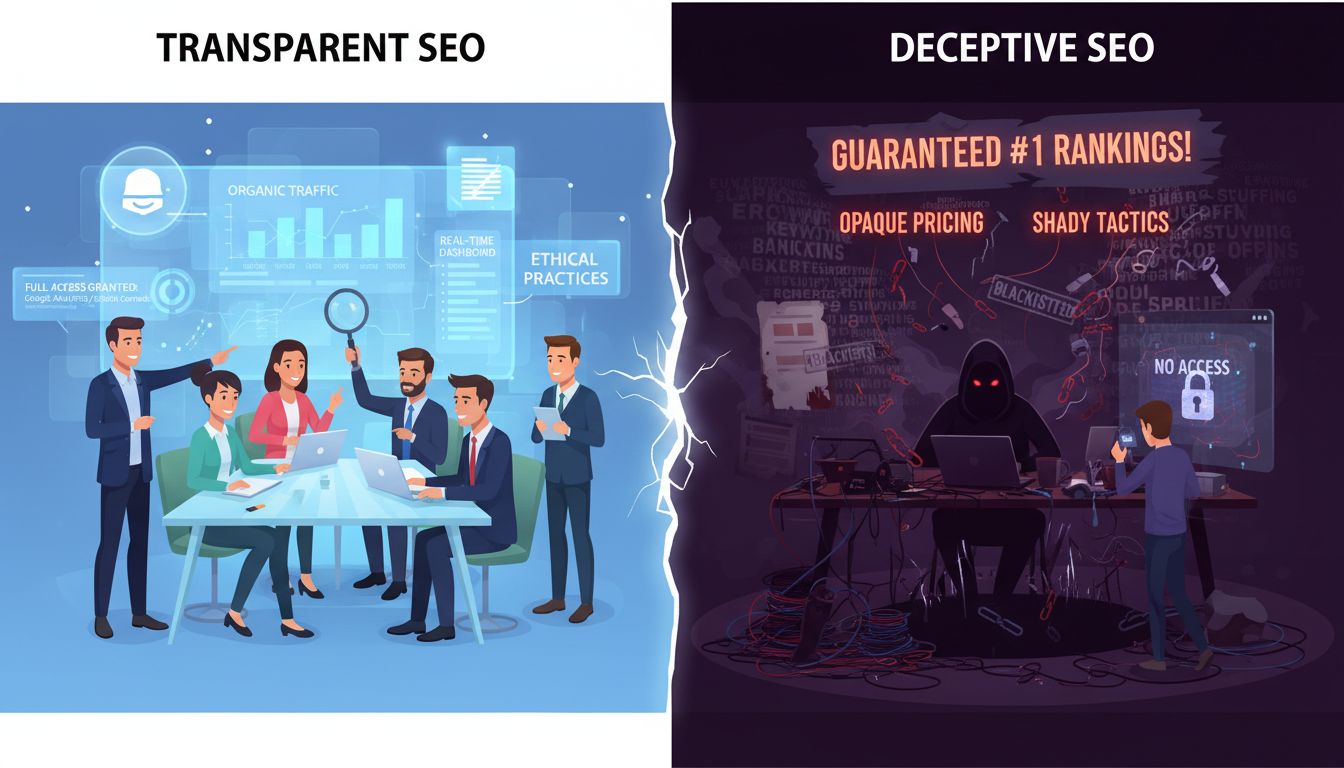
What you’re about to read cuts through the noise. Are SEO agencies scamming their clients, or is there a defensible model that actually drives measurable results? The short answer: there are scams, but there are also honest, high-integrity practitioners who deliver real value. The problem is the signals are noisy, promises are grand, and audits are rarely transparent. If you’re a marketer looking for a sturdy north star, you need a framework to separate genuine capability from smoke and mirrors. This piece lays out concrete indicators, real-world case studies, and practical steps you can deploy now to protect your budget, optimize outcomes, and decide with confidence.
Clear indicators of legitimate SEO work
Legitimate SEO agencies share data, define milestones, and tie activity to business outcomes. They avoid vague jargon and spell out what they will do, how it will be measured, and when you will see effects. Look for a clear, written plan that includes keyword strategy, on-page improvements, content distribution, technical fixes, and earned media tactics. A trustworthy partner will present a model that scales with your needs, including multi-site management on platforms like WordPress, where centralized controls help maintain consistency.
Key early signals include transparent pricing, scheduled performance reviews, contract language that permits data access, and the ability to audit work. If an agency dodges invoices, hides costs, or promises instant traffic without explaining the mechanism, that’s a red flag. Real SEO demands time, iteration, and a feedback loop that aligns with your business goals. A strong agency will also provide a robust content framework, leveraging AI wisely to augment expertise rather than replace it. This is where practical, repeatable systems matter most.
Case studies: what good looks like in practice
Consider a mid-sized e-commerce company that managed multiple WordPress sites across product categories. A disciplined agency would synchronize product pages, category hubs, and blog content with a unified SEO content calendar. They would run technical audits to fix crawl errors, implement schema where applicable, and optimize internal linking to support site architecture. The result is a measurable lift in organic visibility, higher click-through rates, and improved conversion metrics. The key is a documented process with visible milestones, not vague promises of “better rankings.”
Another example involves a B2B software client with several regional sites. A credible partner sets a measurable baseline, defines regional SEO targets, and creates templates for scalable content creation. They deploy a content pipeline that includes topic research, content briefs, production, optimization, and performance tracking. They publish monthly dashboards that show traffic growth, lead quality, and revenue attribution. When outcomes align with forecasts, trust solidifies; when they don’t, the plan adjusts promptly. This is the flavor of agency work that earns respect rather than suspicion.
Red flags that should trigger closer scrutiny
Over-reliance on vanity metrics, such as rankings alone or traffic spikes unrelated to business goals, is a red flag. Promises of instant results without acknowledging the sustainability of those gains also raise doubt. A lack of documented processes, inconsistent communication, or frequent scope changes without price adjustments signal a fragile engagement. If the agency cannot provide case-level details showing how their work translates into qualified traffic, conversions, and revenue, keep looking. You deserve evidence-backed decisions, not anecdotes.
What marketers should demand in a contract
Contracts, when written clearly, become an operating manual. They should specify deliverables, timelines, and success criteria tied to business metrics. At minimum, require: a) a documented SEO plan with milestones; b) access to analytics and raw data; c) explicit responsibilities for technical fixes, content creation, and link-building; d) a defined review cadence with executive summaries; e) a cancellation or reallocation clause so you aren’t trapped in a perpetually underperforming relationship. A fair agreement also addresses data ownership and export rights, ensuring you can move to another provider if needed without data lock-in.
Pricing should be transparent and itemized, with caps on monthly spend for content production, technical work, and distribution. If a proposal relies on “optional” add-ons that explode the cost, push back. A credible shop builds a predictable budget model, not a carnival of optional extras that inflate the final bill. Confidence grows when the contract includes access to performance dashboards and a mechanism for independent audits of results. These terms keep both sides honest and aligned.
Practical, actionable steps you can take today
First, map your multi-site environment. If you operate multiple WordPress sites, create a central taxonomy for topics, keywords, and content formats. This makes scaling doable rather than chaotic. Then, define a content governance system: who writes, who approves, and what escalation looks like. A scalable approach uses templates for briefs, standardized meta data, and guideline checklists to maintain consistency across sites.
Second, implement a measurable metrics stack. Don’t chase nonsense like total pageviews; track engagement, lead quality, and revenue impact. Establish a baseline for organic traffic, conversions, and average order value. Set quarterly targets that are ambitious yet achievable. Track improvements in core pages, category hubs, and blog articles published across sites. The objective is to see a correlation between optimization efforts and business outcomes, not just search rankings.
Third, optimize content creation using AI wisely. AI can draft outlines, generate first-pass meta descriptions, and propose internal linking opportunities, but human editors must refine and fact-check. You want content that is accurate, helpful, and aligned with brand voice. For agencies managing multiple WordPress sites, an AI-assisted workflow can publish content automatically across sites in one click, but governance is essential to avoid duplicate content and quality drift. This approach reduces manual overhead while preserving quality. See how AI-driven multi-site content automation can scale responsibly, as described in credible industry analyses.
Fourth, demand process transparency. Require weekly updates with a clear cadence: yesterday’s tasks, today’s priorities, and tomorrow’s milestones. Ask for a monthly performance report that includes traffic composition, conversion paths, and attribution models. If the agency hides data or makes it hard to access analytics, that’s a warning sign. You should own the data and be able to export it at any time. Data portability matters when performance hinges on messenger reliability and reproducible results. It’s your prerogative to demand clarity around attribution, especially when multiple channels drive the same conversions. This is not optional; it’s essential.
Strategic approaches that actually move the needle
Adopt a systems mindset. Build an engine that produces repeatable improvements across all client sites. A robust engine includes a) a centralized keyword library; b) standardized content briefs; c) a scalable publishing pipeline; d) a technical audit routine; e) a performance dashboard with actionable insights. In this framework, you don’t rely on luck; you rely on structured processes that produce consistent outcomes. The core capability is not a magic trick but a disciplined workflow backed by data.
In practice, this means focusing on high-impact actions: improving site speed, implementing structured data, optimizing cornerstone content, and refining internal linking structures. For agencies, it means assigning dedicated teams for each site or cluster of sites and enforcing consistent quality controls. The more you can standardize, the more you can measure, compare, and optimize. This is how you turn SEO from a cost center into a strategic growth driver.
Sectioned strategies for different client profiles
For startups with limited budgets: prioritize quick wins that cascade into long-term gains. Target long-tail opportunities, optimize mobile experiences, and publish high-value content at a steady clip. Use a lean content calendar, track ROI by content asset, and scale once positive signals prove out. For established ecommerce brands: amplify product-category pages, accelerate content diversification, and leverage user-generated content to deepen trust signals. Balance paid and organic efforts, ensuring that organic growth feeds sustainable margins. For global enterprises: harmonize regional sites with a master content strategy, but respect local intent and language. Create templates that can be localized without reinventing the wheel each time. For nonprofit or educational sites: focus on authority, accessibility, and community engagement metrics. Align content with mission-driven goals while maintaining compliance and transparency.
What to do if you suspect a scam
Trust your instincts when promises don’t align with action. If an agency cannot produce a recent client reference list, or if multiple clients report similar inflated promises, investigate further. Request a performance baseline, a staged roadmap, and a real-world forecast with check-in points. If you hear “we can guarantee rankings” or “instant traffic,” push back with questions about the underlying methodology, lead quality, and attribution. A reputable partner will welcome scrutiny, not dodge it. You’re not being cynical; you’re guarding a critical asset: your brand visibility and budget.
Document everything. Save emails, contracts, performance reports, and meeting notes. Build a dossier that demonstrates what was promised, what was delivered, and what failed to materialize. This record helps in negotiations, renewals, or disengagements. If you need to switch providers, ensure you can transfer plans, data, and content without disruption. A smooth transition reduces risk and preserves momentum. These steps protect you from the most common forms of misalignment and misrepresentation.
As the field evolves, trust becomes the ultimate currency. A genuine SEO partner earns it through transparency, measurable outcomes, and a willingness to adjust when reality diverges from projection. If you hold them to the same standards you apply to any critical vendor, you’ll likely separate the reliable players from the charlatans in short order. That clarity is worth more than any flashy pitch could deliver.
According to industry insights on scalable content automation, systematic, data-driven approaches outperform ad-hoc optimization plans over time. This underscores a broader trend: platforms that empower marketers to manage multiple WordPress sites with consistency are reshaping the economics of SEO. The implication for agencies is simple: embrace scalable systems, not just clever shortcuts.
Actionable best practices and checklists
Use these 10 steps to tighten control and maximize value from any SEO engagement:
- Define a shared vision: business goals, target metrics, and a realistic timeline.
- Document a living SEO plan with quarterly revisions and clear milestones.
- Establish a data-access policy: you own the analytics, not the agency.
- Implement a scalable content framework for WordPress sites with consistent templates.
- Set up a transparent pricing model with explicit line items.
- Demand weekly task updates and monthly performance dashboards.
- Verify technical foundations: crawlable architecture, fast hosting, structured data.
- Measure impact beyond rankings: conversions, revenue, and customer lifetime value.
- Maintain content quality controls: human review, fact-checking, and voice consistency.
- Plan an exit strategy: data export, asset transfer, and minimal downtime.
These steps aren’t theoretical; they’re the practical guardrails that separate credible providers from opportunists. When you implement them, you gain leverage, clarity, and the ability to scale with confidence. You’ll also avoid the sunk-cost trap that comes with lingering in a non-performing relationship for too long. The moment you replace ambiguity with structure, results follow.
“The best SEO is not a secret weapon but a reproducible system that compounds value over time.” — Jane Doe, Digital Growth Analyst
In the real world, the best results come from teams that treat SEO as an ongoing discipline rather than a one-off project. The difference between a scam and a solid partnership is often in the details: transparent metrics, repeated validation, and a shared commitment to improvement. If you demand those elements up front, you’ll expose most questionable practices within the first 90 days. Then you can accelerate the good stuff and retire the rest.
Finally, the question isn’t whether scams exist; the question is how you defend against them. Build your own internal playbook, demand the same playbook from partners, and force a culture of accountability. In a market saturated with promises, your best defense is a well-constructed plan, verifiable data, and a willingness to move on when results don’t materialize. The alternative is wasting time and money chasing shadows while real growth remains elusive.