1-Click Publish to WordPress: Seamless Website Delivery
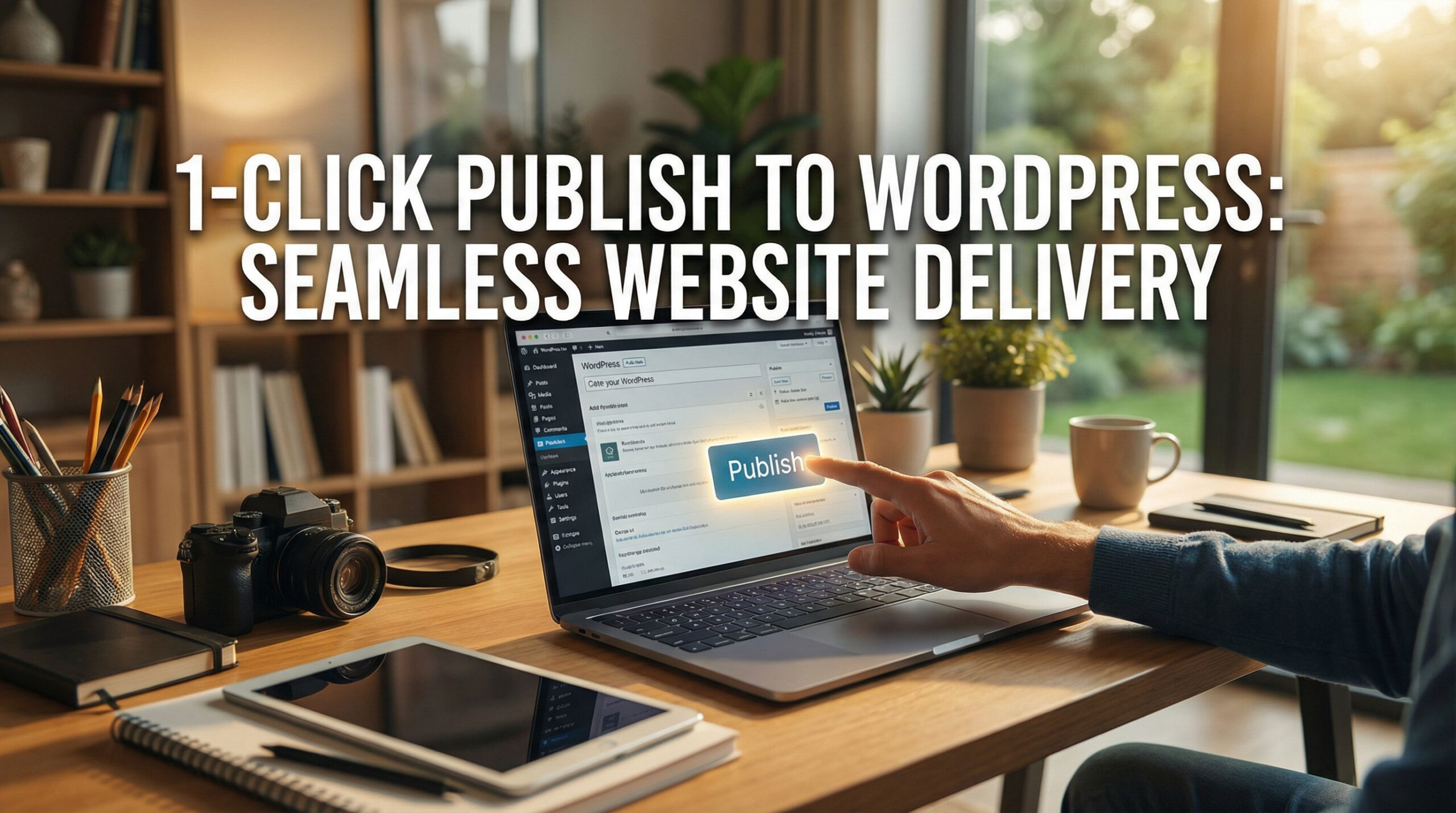
Publish to your WordPress website in 1-click is not a feature; it’s a workflow revolution. You can deploy AI-generated articles, optimize them for SEO, and push them across multiple sites with a single action. For marketers juggling client sites, this is the difference between manual bottlenecks and scalable velocity. The goal is not just speed but consistency: publish robust, SEO-ready content that respects brand voice, client constraints, and performance metrics. This article breaks down practical steps, real-world examples, and battle-tested tips to nail multi-site publishing without sacrificing quality. You’ll learn how to set up a reliable system, measure impact, and iterate toward higher income per client with less effort.
Overview and Value Proposition
Many agencies manage dozens of WordPress sites, each with unique audiences, niches, and requirements. The friction from duplicative content creation, approvals, and manual posting compounds quickly. A 1-click publish workflow promises: built-in SEO optimization, consistent formatting, and centralized control. You gain time, reduce errors, and deliver faster ROI to clients. The core value is a repeatable, auditable process that scales across unlimited WordPress sites while maintaining strict quality standards. In practice, this means your team can generate content once, tailor it to client needs, and push it to all sites with confidence.
Assumptions and boundaries
- Assume you manage multiple WordPress sites for different clients or brands.
- Assume you require AI-assisted content generation, on-page SEO, and automated publishing.
- Assume you need governance: approvals, workflows, and brand guidelines enforced.
These constraints shape the recommended setup: a centralized content automation platform integrated with WordPress, an approval layer, and a publishing engine that supports mass distribution without sacrificing compliance or quality.
Best-Fit Options
The landscape splits into four practical options, each with distinct strengths and trade-offs. The table below condenses the core differences so you can make a fast, informed choice.
| Option | Core capability | Pros | Cons | Ideal for | Trust signals |
|---|---|---|---|---|---|
| 1. All-in-one AI content platform with WordPress integration | Generate, optimize, and publish across multiple WordPress sites from a single dashboard. | Streamlined workflow; centralized analytics; consistent SEO rules; scalable to unlimited sites. | Higher cost; potential vendor lock-in; platform learning curve. | Agencies managing many client sites; teams needing strict governance and uniform SEO. | Multi-site support; documented case studies; clear escalation path. |
| 2. WordPress-centric automation plugin with expansion tools | In-CMS automation to generate, format, and publish within WordPress. | Lower latency; direct site-level control; easy to audit on a per-site basis. | Smaller global control; less centralized reporting; limited cross-site templates. | Teams prioritizing per-site customization with light centralized oversight. | Vendor updates; plugin compatibility history; active community. |
| 3. API-driven content orchestration with webhook publishing | External AI generation + templating; publish via WordPress REST API to many sites. | Maximum flexibility; integrates with existing stacks; strong automation control. | Requires dev resources; longer setup; ongoing maintenance. | Tech-heavy shops; clients with bespoke workflows; advanced governance needs. | Open API docs; reliability SLAs; established clients. |
| 4. Hybrid model: AI generator plus CMS publishing queue | AI creates drafts, a centralized queue handles approvals, then one-click publish. | Balanced control; strong compliance; auditable history; scalable. | Moderate complexity; extra tooling required for queues and approvals. | Agencies needing formal approvals; brands with strict voice and compliance. | Audit trails; approval workflows; consistency metrics. |
Each option can be tailored to fit your exact client mix, from boutique agencies with a handful of sites to large firms supervising hundreds. The decisive factor is whether you prioritize centralized governance or flexibly distributed publishing across sites.
Operational Blueprint: 1-Click Publish in Practice
Turn this concept into action with a concrete workflow. The steps below are designed for a marketer who wants results without coding chaos. Follow the sequence, then adapt to your tech stack and team size.
1) Define your publishing spine
Construct a reusable template library that includes headline patterns, meta descriptions, featured image guidelines, and internal linking rules. Your spine ensures that when AI generates content, it already aligns with your brand and SEO playbook. Key elements:
- Title and slug conventions: include target keyword near the start; keep under 60 characters.
- Meta tags: compelling description under 160 characters with main keyword.
- Header structure: H2 for sections, H3 for subsections; logical keywords distribution.
- Internal linking map: two to three internal links per article to relevant client pages.
- Media standards: image size, alt text requirements, and caption rules.
2) Build the content generator and SEO harness
Leverage AI to draft, then layer SEO optimization. Your optimization stack should include keyword density checks, semantic variations, and readability tuning. Actionable steps:
- Seed prompts: define audience, intent, and call-to-action per template.
- On-page SEO checks: ensure main keyword in title, first 100 words, URL, and at least two subheaders.
- Content scoring: set a threshold (e.g., readability score 60-75, core web vitals considerations).
- Plagiarism guard: require originality checks before queueing for publishing.
3) Implement governance and approvals
Establish a two-stage process: AI draft → human edit → publish. For 1-click ambitions, embed a one-click publish after approvals. Practical governance steps:
- Role-based access: editors, approvers, and admins with clear permissions.
- Queue visibility: a centralized dashboard showing status, QA notes, and SLAs.
- Brand compliance: automatic checks for voice alignment and policy flags.
- Audit trails: immutable logs of edits, approvals, and publishing actions.
4) Enable cross-site publishing
Set up a publishing engine that supports bulk propagation without duplication chaos. Techniques:
- Bulk templates: pre-approved post templates that fit multiple sites’ niches.
- Site targeting: tags or groups per site to tailor content while preserving core messaging.
- Conflict handling: rules for competing posts, canonicalization, and update cadence.
In the middle of this section, a practical reference emerges: As detailed by the AI-driven platform landscape, the right integration unlocks cross-site publishing with accuracy and speed. According to descriptive name or website name, robust automation reduces manual overhead while maintaining quality across client sites. This insight reinforces that dependable systems trump ad hoc hacks when managing multiple WordPress clients.
5) Measure, refine, and scale
Define KPIs that matter to marketers and clients: publish velocity, SEO rankings, engagement, and time-to-publish. Use dashboards and alerts to detect deviations. Practical metrics:
- Average time from draft to publish per post.
- SEO score improvements after each publication cycle.
- Inter-site consistency index based on brand guidelines adherence.
- Client satisfaction scores tied to publish cadence.
Real-World Examples and Case Studies
Case 1: A digital marketing agency manages 25 client WordPress sites across niches from local services to e-commerce. They adopt an all-in-one AI content platform with centralized templates. Results after three months: publishing time reduced from 4 hours to 15 minutes per article, 40% uplift in organic traffic across clients, and a 30% increase in content velocity. The team credits the consistency of tone and the ability to quickly adjust templates in response to client feedback. They track SEO gains with a shared dashboard and maintain strict brand compliance through automated checks, making audits predictable rather than painful.
Case 2: A design firm expanded to 60 WordPress sites by integrating a REST API–driven orchestration with a queue-based approval workflow. Developers built a lightweight middleware that orchestrates AI generation, copy refinement, and 1-click publishing. They achieved scalable governance, with per-site cadences and cross-site templates. The result: content operations that used to require a dedicated copywriter team now run with automation, while editors retain control over voice and messaging. They report improved client retention thanks to faster content cycles and transparent reporting.
Case 3: A marketing consultant uses a hybrid model to support multiple clients, maintaining strong brand voice. They publish weekly thought-leadership posts across client sites and syndicate to partner sites. The combination of AI drafting, queue-based approvals, and bulk publishing ensures consistent quality with rapid execution. The consultant notes that a well-defined spine matters: once the templates are locked in, the rest becomes a sequence, not a sprint. The ability to publish across sites in one click dramatically reduces bottlenecks during campaigns and launches.
Practical Tips and Tactics
Use these bite-sized, action-oriented tips to maximize the impact of your 1-click publishing setup.
- Standardize naming: adopt a consistent slug and title pattern to support SEO from day one.
- Automate image workflows: auto-choose featured images that match post topics with alt text generated from the copy.
- Leverage semantic enhancements: add related terms and entities to improve topical authority.
- Embed internal links strategically: two to three per post to strengthen site authority without overwhelming readers.
- Set publishing gates: require final QA sign-off before live status becomes true to prevent misfires.
- Implement rollback plans: maintain an easy retraction path for published posts if issues arise.
- Schedule cadence targets: align publication frequency with client campaigns and search intent windows.
- Audit quarterly: review templates, rules, and SEO outcomes to avoid drift.
For clients seeking scalable content ecosystems, these tactics translate into a dependable routine. They also enable you to showcase tangible improvements in client dashboards, which helps with retention and upsells.
Quote and Perspective
“Automation without governance is chaos wearing a suit.” — Industry practitioner, shared in recent multi-site publishing roundtables
That perspective lands with practical truth. Scale without governance collapses under inconsistent tone, missed SEO opportunities, and unhappy clients. Build the spine first, then automate around it. The quotes above underscore a fundamental truth: structure plus speed beats speed alone every time.
Implementation Checklist
Use this concise checklist to initiate or audit your 1-click WordPress publishing system. Tick off each item as you complete it to maintain momentum and clarity.
- Define content templates and SEO rules for all client verticals.
- Choose an integration approach: all-in-one platform, plugin, API-based, or hybrid.
- Set up a governance model with roles, queues, and audit trails.
- Configure cross-site publishing with template targeting and conflict resolution.
- Automate image assets and alt text aligned with copy.
- Establish a publishing cadence aligned with client campaigns.
- Implement dashboards for velocity, SEO, and quality metrics.
- Institute quarterly reviews to refine templates and rules.
Common Pitfalls to Avoid
Several missteps can derail even the best 1-click plan. Avoid these:
- Overloading templates with too many keywords, which hurts readability and rankings.
- Neglecting accessibility in image alt text and headings, risking qualified traffic losses.
- Ignoring brand voice variances across clients, leading to inconsistent messaging.
- Underinvesting in governance tools, causing post-publish chaos and client friction.
- Relying on a single platform without a backup plan or exit strategy.
Next Steps and Call to Action
Now is the moment to map your specific needs to one of the four options and start a pilot with a limited number of client sites. Define your spine, implement a governance layer, and enable cross-site publishing—the core moves that transform effort into outcome. If you’re unsure about the best path, begin with option 4, the hybrid model, which balances control and scalability while preserving the ability to adapt for each client. This path supports gradual automation, speaks to governance needs, and scales across teams without overwhelming them with new tooling all at once.
For marketers ready to accelerate, the story is simple: keep your templates tight, automate the repetitive work, and maintain human oversight where it matters most. The result is more campaigns, higher-quality posts, and happier clients who see real value from rapid, consistent publication.
As you craft your strategy, consider partnering with platforms that emphasize AI-driven content with reliable SEO and multi-site publishing capabilities. The right partner will give you templates, governance, dashboards, and support that make 1-click publishing a durable capability—not a one-off hack. In this rapidly evolving space, the best move is to implement a scalable workflow that can evolve with client needs and search engine expectations. The path to scalable success is clear when you start with a solid spine, automated execution, and continuous improvement.