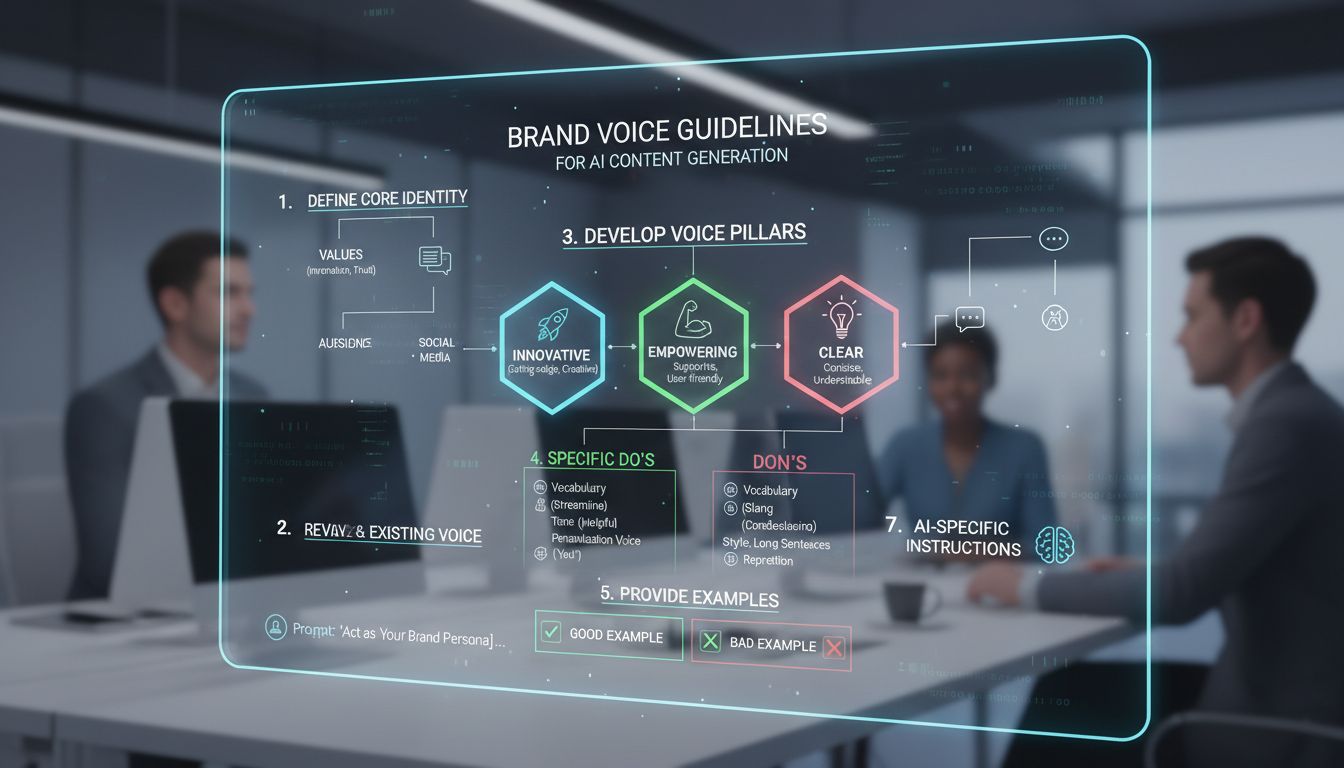
Develop Clear Brand Voice Guidelines for Consistent AI Content Creation
Mastering Clear Brand Voice Guidelines for Consistent AI-Generated Content
Traditional marketing teams anymore., Building a recognizable brand voice isn’t for Need a solid framework., If you want your AI-generated content to reflect your brand’s personality—whether that’s professional, playful, or somewhere in between—you With AI tools taking a bigger slice of content creation, understanding how to develop clear brand voice guidelines becomes essential. Otherwise, you risk inconsistent messaging that confuses your audience or dilutes your brand identity. We’ll also for what it’s worth, look at practical tips, real-world examples, and how to integrate AI tools to make this process easier and more reliable. In this article, we’ll explore how to craft effective brand voice guidelines that steer AI content creation, ensuring your website, social media, and marketing materials all speak with one clear, authentic voice. Whether you’re new to AI for content or want to refine your existing approach, this guide aims to give you actionable steps to keep your brand voice consistent across all channels.
Understanding the Importance of a Clear Brand Voice
Before diving into how to develop guidelines, let’s pause for a moment. Why bother? Well, a consistent brand voice helps your audience recognize and connect with your brand. frankly speaking, Think of brands like Nike or Apple. Their voice is so distinct that even without logos, you know who’s speaking. It builds trust and familiarity, making customers more likely to buy, recommend, or engage. But here’s the catch: if your AI content creation isn’t guided properly, the tone, style, and messaging can become a muddled mess. One article might sound formal, the next casual, and another overly salesy. That inconsistency can turn off visitors or make your brand seem unprofessional. Plus, with the rise of AI content generators—like those that help with SEO or automate social media posts—you need a clear set of guidelines. Otherwise, for what it’s worth, these tools might produce content that’s technically correct but misses the mark emotionally or stylistically. Think of in my view, your brand voice as the personality of your business. When you use AI to create content, your guidelines act as the script to keep that personality intact. It’s what makes you unique in a crowded digital space. Without them, AI might generate copy that doesn’t fit your brand, leading to a disconnect that costs you trust and engagement.
Step 1: Define Your Core Brand Attributes
What are your brand’s fundamental qualities?
From experience, this is the foundation. Are you professional and authoritative? You need to ask: What three words best describe your brand? Friendly and approachable? Fun and quirky? These attributes should guide your entire content voice. Or maybe serious and trustworthy? a financial advisory firm might choose attributes like trustworthy, clear, and professional. A lifestyle blog might prefer friendly, inspiring, and casual. They’ll serve for what it’s worth, as the backbone for your guidelines. Wouldn’t you agree? Qualities, write them down. Once you’ve identified these core Let’s say you decide your brand is “playful, helpful, and confident.” Your content should reflect these traits consistently. When creating AI guidelines, include specific examples of language that embodies these qualities. For instance, using humor or colloquial phrases may suit a playful brand, but would be out of place for a corporate legal firm.
Practical tip:
- Make a list of 3-5 adjectives that define your brand personality.
- Write short descriptions or examples of how these adjectives translate into your tone and style.
Step 2: Develop Tone and Style Guidelines
How do you want your brand to sound?
While core attributes set the stage, tone and style are about how you deliver your message. Tone can shift depending on the context—serious for legal advice, light for a holiday sale—but overall, it should stay within your brand’s personality. Style refers to language choices, sentence structure, and formatting. For instance, if your brand voice is playful and helpful, your tone might be friendly and encouraging. Your style might favor short sentences, contractions, and idiomatic expressions. Conversely, a B2B tech company might prefer a more formal tone, with precise language and longer, informative sentences. Creating clear examples helps AI tools emulate your style. For example, instead of “Our services are designed to help you succeed,” you might prefer “We’re here to help you crush your goals.” These nuances matter, especially when AI is generating content en masse.
Actionable tip:
- Write sample sentences that reflect your tone and style for various scenarios—social posts, website copy, email newsletters.
- Note words or phrases to avoid, such as jargon, slang, or overly formal language.
Step 3: Establish Language and Voice Rules
What specific language rules should AI follow?
Many overlook the details., Now, this is where Your guidelines should include rules about vocabulary, sentence length, punctuation, and formatting. Do you prefer simple words or are technical terms acceptable? Should your sentences be punchy or more descriptive? Do you want to avoid passive voice? All these decisions shape the voice. Suppose your brand is eco-friendly and community-focused. You might specify that sentences should be under 20 words for clarity and that contractions (like “we’re” instead of “we are”) are preferred for a conversational tone. You might choose words like “sustainable,” “local,” and “friendly,” avoiding corporate jargon. Remember, AI content generators often default to more generic language unless guided otherwise. The more detailed your rules, the better the AI can mimic your voice. Also, specify formatting preferences—bullets, headings, bold text—to ensure visual consistency.
Example:
“Use active voice whenever possible. Avoid complex jargon unless necessary. Keep sentences short and punchy. Use contractions for a friendly tone. Format lists with bullet points for clarity.”
Step 4: Train and Fine-tune Your AI Content Tools
How do you teach AI to follow your guidelines?
Most AI content tools allow you to input style prompts or provide sample content. For instance, if you’re using an AI content generator like HitPublish, you can input sample articles or specify tone instructions to guide the output. The key is to feed them enough examples that match your desired voice. Some platforms let you create custom prompts or templates. Over time, as you review generated content, you can refine your instructions, making the AI better at matching your brand voice. Use these to set the tone, style, and language rules. It’s worth noting that AI tools aren’t perfect. They require oversight. Wouldn’t you agree? Always review content before publishing to catch tone mismatches or awkward phrasing. This way, you maintain quality while still benefiting from automation.
Tip:
- Start with small batches of content to test how well AI follows your guidelines.
- Adjust prompts based on feedback—if the tone is too formal, specify “more casual” or “friendly.”
- Keep a repository of your best examples to serve as references for future AI outputs.
Step 5: Regularly Review and Update Your Guidelines
Why is this ongoing?
Brands evolve, and so should your guidelines. Maybe your target audience shifts, or your marketing goals change. Perhaps you want to incorporate new keywords for SEO or adapt your voice for new platforms. Regular reviews ensure your AI-generated content stays aligned with your current brand identity. Set a from experience, schedule—quarterly or bi-annually—to revisit your guidelines. How AI content performs., Gather feedback from your team and monitor If you notice inconsistencies or a drift in tone, update your rules accordingly. Also, watch out for emerging trends or language shifts in your industry. For example, if a new slang term or phrase becomes popular, consider whether it fits your brand voice before adopting it.
Pro tip:
- Keep a document of past guidelines and note changes over time.
- Use analytics to assess how AI content impacts engagement and traffic.
Real-World Example: Using AI for SEO-Optimized Content
Let’s consider a small e-commerce site selling eco-friendly products. They want to boost site traffic with SEO-optimized content but also want to keep their friendly, helpful voice. They set clear guidelines: use simple language, include keywords naturally, and maintain a conversational tone. Posts, and meta descriptions., They use an AI content generator, like HitPublish, to create product descriptions, blog The team for what it’s worth, provides the AI with sample content and style instructions. They review outputs and refine prompts, ensuring keywords like “sustainable,” “eco-friendly,” and “local” appear naturally. Over time, the AI produces consistent, engaging content that ranks well in search results and resonates with their audience. This approach saves hours and keeps their site fresh, all while maintaining their voice.
Wrapping Up: Making Your Brand Voice Stick
Requires attention and refinement, It’s a continuous process that Developing clear brand voice guidelines isn’t a one-and-done task. Remember, frankly speaking, automation can make your content creation faster, but it’s your guidelines that make sure it’s also on point. Engages your audience effectively., With the let’s face it, right rules, examples, and AI tools, you can create content that sounds authentic, aligns with your brand, and As Philip Kotler once said, “Marketing isn’t the art of finding clever ways to dispose of what you make. It is the art of creating genuine customer value.” The same applies to your brand voice. It’s about creating authentic, consistent content that builds trust and loyalty—whether human or AI helps you craft it. If you’re for what it’s worth, ready to streamline your content creation process while keeping your brand identity intact, consider exploring tools like HitPublish. Setting up clear guidelines now will pay off in the long run, ensuring your message stays consistent and your audience keeps coming back for more.